Nursing is one of those degrees where theory alone is never enough. At the Medical University of Białystok students learn it in English, in small groups, with an international crowd and a lot of practice: first on training manikins, then in realistic clinical scenarios in a simulation centre built to look like a real hospital ward. It is a three-year BSc for people who want to look after patients, not just read about them — and at the end you can check whether this path suits you.
The Nursing BSc at the Medical University of Białystok (MUB) is a three-year, first-cycle programme taught entirely in English. It combines theoretical knowledge with practical experience shared by the academic staff, and it puts a strong emphasis on the ethical principles of the profession. The university stresses that students study in small groups and stay in close contact with their lecturers.
The first-cycle degree programme in nursing at MUB has received a positive assessment from the Polish Accreditation Committee and from the National Accreditation Council for Nursing and Midwifery Schools. The university also points out that its diplomas are internationally recognised.
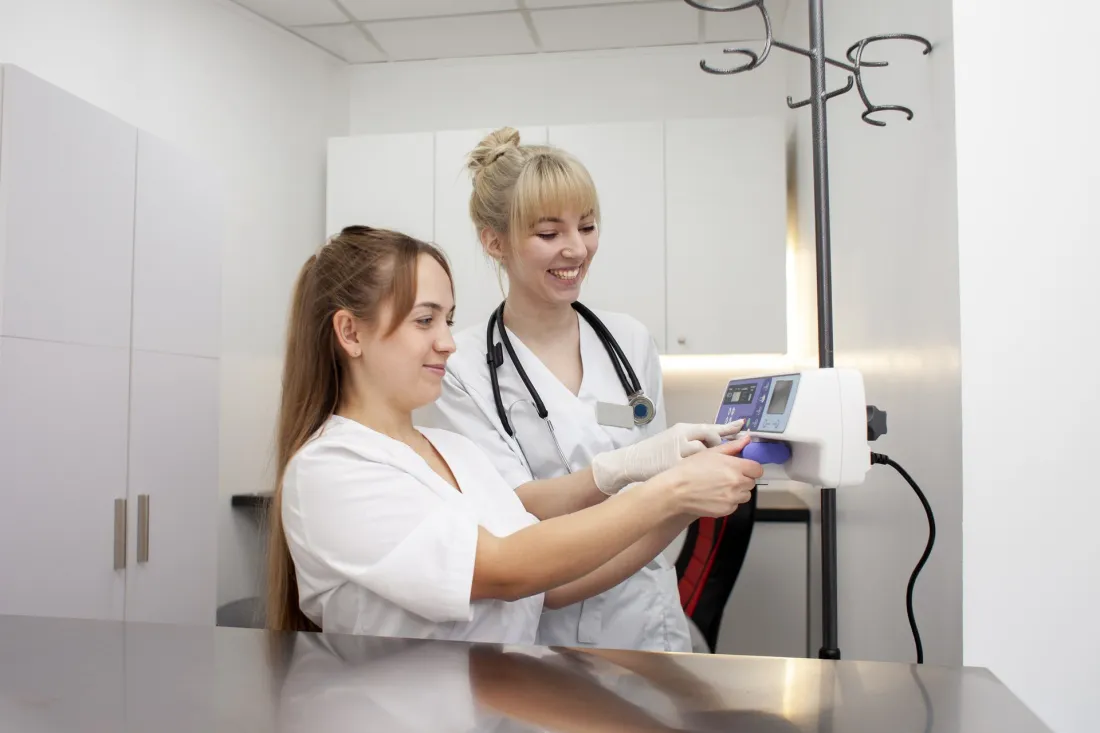
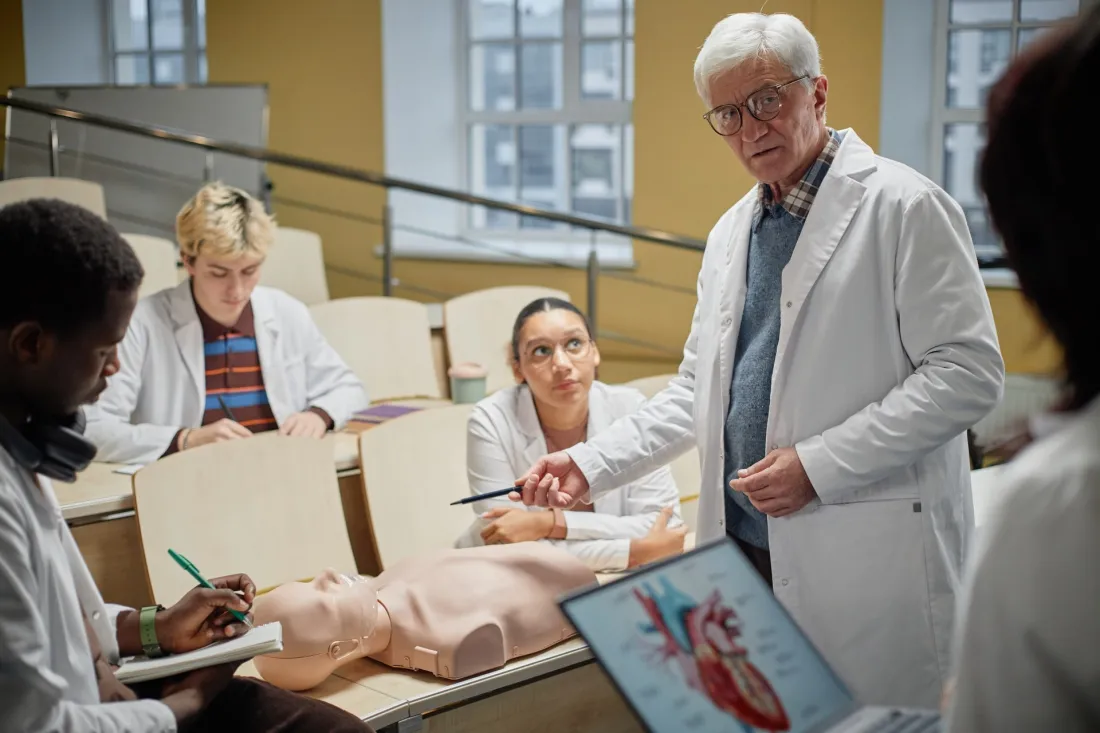
The heart of practical training is the Nursing Simulation Centre, funded under the National Recovery Plan. Here students practise basic and advanced nursing procedures before they perform them on real patients. They start with individual procedures on manikins and anatomical models and gradually move on to complex clinical simulations, in which they make decisions on their own and work as part of a team.
The manikins and patient simulators represent different genders and ages, from newborns and children to adults and elderly patients. Thanks to this, students learn how to assess a patient’s condition, decide what to do next, carry out procedures and cooperate with others in situations that look and feel like everyday hospital work.
The centre has 12 rooms for skills training, clinical simulations and OSCE exams (Objective Structured Clinical Examinations). They were designed to reflect the real working conditions of nurses in hospitals and other parts of the healthcare system:
Students work with the same kind of equipment they will later meet on the ward: hospital beds, cardiac monitors, defibrillators, ECG machines, ventilators, infusion pumps, suction units, oxygen therapy equipment and operating theatre equipment.
The programme suits secondary school graduates who are comfortable with science. To apply, a candidate needs a school leaving certificate that gives access to higher education, with grades in science subjects: chemistry, biology, physics or mathematics. An important part of admission is an online interview, which checks knowledge of these subjects and English used in medical studies and the medical profession. Candidates from outside the EU and EEA also need an English certificate at B2 level or higher.
Before the first semester, all first-year students complete a mandatory online pre-course. It revises biology, chemistry and physics, helps students get used to English medical and scientific terminology and offers a first taste of the Polish language, which is useful in everyday life in Białystok.
MUB welcomes students from 47 countries, including Norway, Spain, India, China, Saudi Arabia, Canada, the United States, Nigeria, Brazil and even Fiji. The university’s Welcome Centre helps people from abroad settle in, and the calendar includes international cooking workshops, a sports day, karaoke nights and sightseeing trips, as well as a welcome meeting for first-year students.
The campus has bilingual Polish-English signage, the library offers modern learning tools such as AMBOSS and BrowZine, and a dedicated mobile app helps students find their way around the university and the city. The university also highlights living costs that are affordable compared with Western Europe.
Nursing in English at the Medical University of Białystok is a three-year BSc built around practice. Students learn in small groups, train on simulators of patients of all ages and work in rooms that copy a hospital ward, an operating theatre and an intensive care unit. It is a good choice for people who like biology and chemistry, want to help others and feel at home in an international environment. Current admission rules and costs are always worth checking on the university’s admission pages.
10 questions · two minutes



 EN

 CS
 DE
 ES
 FR
 HU
 IT
 PL
 PT
 РУ
 SK
 TR
 УК
 AR
 中文