Hybrid conflicts, disinformation, sanctions and great power rivalry are no longer topics reserved for diplomats. The Law and International Security bachelor’s programme at Lazarski University in Warsaw combines law, security studies, information analysis and new technologies, teaching students how legal frameworks work when crises hit. It lasts three years, is taught in English and puts practical analytical skills at its core — and at the end you can check whether it suits you.
Law and International Security is a three-year, full-time bachelor’s programme taught entirely in English at Lazarski University in Warsaw. The university presents it as an interdisciplinary degree that brings together law, security, information and new technologies. Its aim is to prepare students for work in complex international environments that change quickly and rarely follow a script.
The programme deals with issues that dominate the news: hybrid conflicts, disinformation, migration, sanctions and competition between great powers. Legal theory is constantly linked to practice, so students see how legal frameworks function during international crises, geopolitical tensions and periods of rapid technological change.
The curriculum is split roughly into 55% law and 45% security studies. Classes are taught by lecturers from two faculties: the Faculty of Law and Administration and the Faculty of Economics and Management. Among the courses the university highlights are:
The first semester already sets the tone, with subjects such as Academic Skills, State and Law in an Era of Global Change, Geopolitics 2.0: The Global Order After the Era of Hegemony, Constitutional Foundations of the Polish Political System, and National and International Security: Legal Aspects.
Students look at the world through key regions and relationships: the USA, China, the EU and Russia, the Indo-Pacific, MENA and the Sahel, and the Arctic. They also study emerging technologies such as artificial intelligence, drones and cyber systems. A separate strand covers information warfare, psychological operations, propaganda, polarisation and radicalisation, which matters for anyone heading towards administration, media or the security sector.
From the start, the programme focuses on hands-on analytical work. Students learn to analyse information, verify sources, assess risks and build scenarios. The practical side includes:
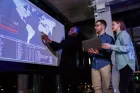
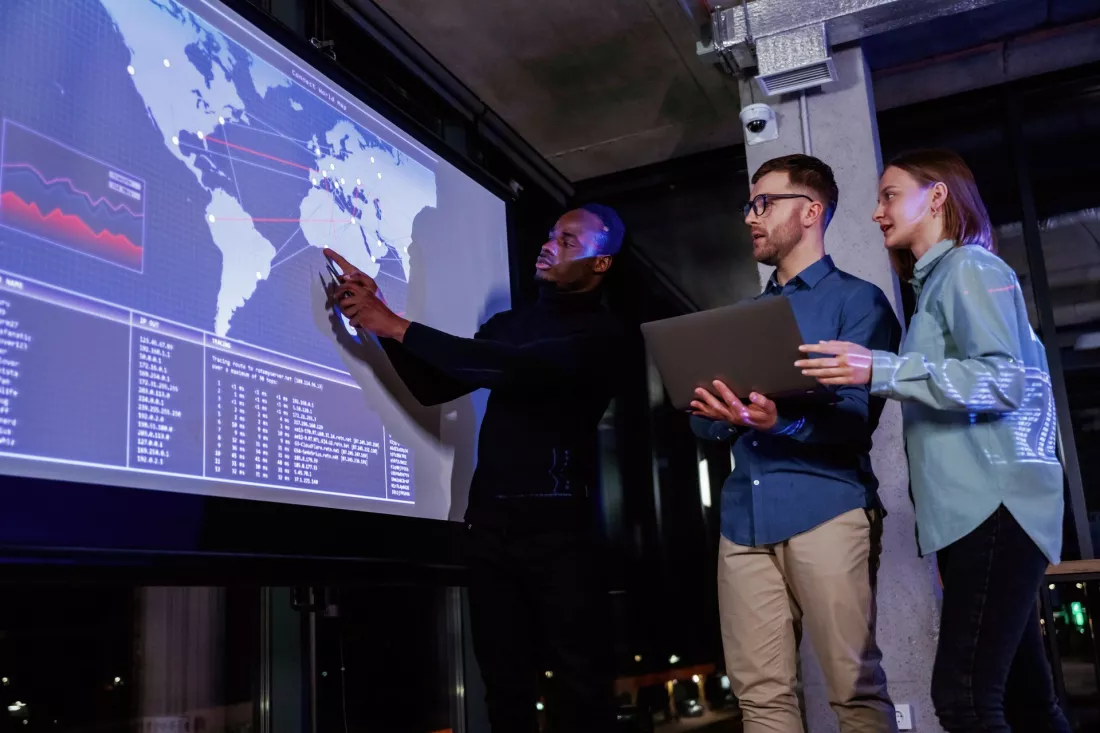
Simulations are designed to build teamwork, prioritisation, quick decision-making and argumentation under pressure. Results are also presented in a modern way, with dashboards, maps and storytelling.
During their studies, students choose one of two paths. Global Law is about applying law in international settings: public administration, global organisations, business, media and NGOs. It covers EU and international law, human rights, the law of armed conflict, international courts, market regulation and sanctions, as well as law in geopolitical and geoeconomic contexts such as resources, currencies and trade wars.
Intelligence and Security Services concentrates on state security, threat analysis and the way security services operate under the rule of law. Students explore the legal aspects of intelligence, information protection, counter-terrorism, international crime and the role of security services in policy, along with threats such as disinformation, terrorism and psychological operations.
The university addresses the programme to people interested in international politics, global security, law or technology, who want to understand how law works in a crisis, have analytical skills and enjoy working with information. Graduates leave with a portfolio of work samples: OSINT reports, risk maps and dashboards, forecasting scenarios and policy briefs. Possible career areas include:
Current admission rules and fees are worth checking on the university’s admissions website, as they vary between intakes.
Law and International Security at Lazarski University is a three-year, English-taught bachelor’s programme that mixes law with security studies, geopolitics and modern analytical tools. With OSINT and forecasting labs, crisis simulations and a choice between Global Law and Intelligence and Security Services, it is aimed at analytically minded students who want to understand how law operates when the world is under pressure.

10 questions · two minutes



 EN

 CS
 DE
 ES
 FR
 HU
 IT
 PL
 PT
 РУ
 SK
 TR
 УК
 AR
 中文