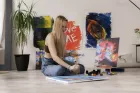

Some painters work at an easel, others think in walls, facades and public squares. The Painting master's programme at Jan Długosz University in Częstochowa, taught in English, lets students choose between easel painting and painting in architecture and urbanism, while mixing classic techniques with new media, scenography and photography — and at the end you can check whether this path suits the artist in you.
The Painting programme at the Faculty of Art of Jan Długosz University in Częstochowa (UJD) is a second-cycle degree taught entirely in English. It is a full-time, two-year programme with a general academic profile, and graduates receive the professional title of magister sztuki, the equivalent of a Master of Arts.
The aim is clear: to prepare graduates for independent artistic work and for active participation in the art market. The programme also prepares students to act as animators of cultural activities, coordinators of and participants in projects in culture and art, and independent, critical and ethical artists.
Students choose one of two paths:
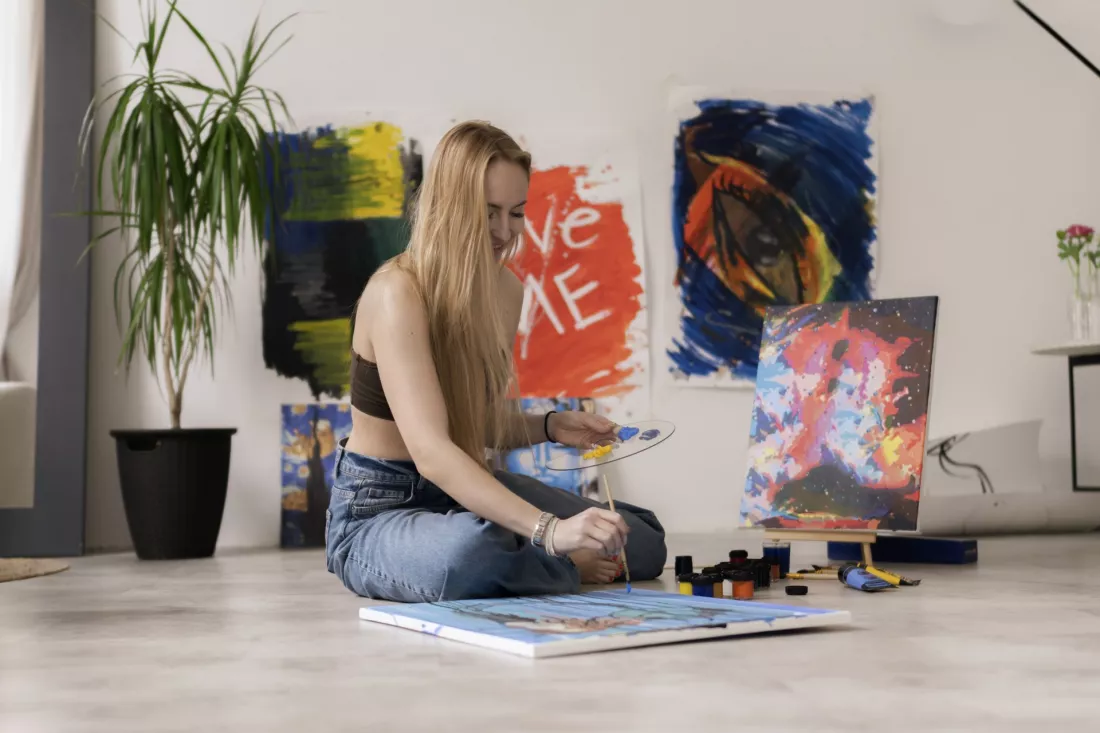
The syllabus combines the latest research in broadly understood painting with traditional craft. On one side there are new media, scenography, graphics, photography, intermedia and the basics of interior design. On the other there are classic easel and architectural painting techniques, technical skills and a broad knowledge of art history.
The programme also stresses personal growth. Its goal is to build awareness of the need for constant improvement of artistic skill, personality and creativity, and for searching for one's own place in a rapidly changing reality.
Teaching methods encourage students to take an active part in scientific and artistic life outside the university. In practice this means organising exhibitions, taking part in conferences of students and young academics, and joining the activities of student groups.
Faculty members organise or co-organise many artistic events of international, national and local character, such as international plein-airs, exhibitions, creative workshops, symposiums and conferences. They cooperate with institutions of science, culture and art in many countries, including Germany, Austria, Italy, Croatia, Romania, Czechia, Lithuania, Ukraine, Slovakia, Hungary, China, Canada and the USA.
Students are encouraged to spend part of their studies abroad, for example through Erasmus. Partner institutions include:
Graduates are qualified painters with broad artistic skills. They understand contemporary media and their role in art, culture and society, and have in-depth knowledge of classical and contemporary painting and drawing techniques. They can use both old and new techniques depending on their creative concept.
They also know the theory and history of painting and art history, and can critically evaluate art, both historical and contemporary. Equally important are practical skills: initiating solo and joint projects, managing teamwork, building contacts with cultural institutions, and finding partners and funding for artistic projects. Graduates understand the basics of copyright, industrial property protection and intellectual property management, and are ready to continue at doctoral level.
The programme is open to holders of a degree in painting or a related field, and also to graduates of other fields. Admission is based on a qualifying interview held by videoconference, combined with a review of the candidate's work. Candidates prepare a portfolio with a short biography and artworks in various techniques; films and animations can be included as links. Current admission rules are best checked in the university's online recruitment system.
The Painting master's at UJD is a programme for artists who want to grow their craft in an international setting. It combines traditional easel and architectural painting with new media, scenography and photography, and offers two specialisations: easel painting or painting in architecture and urbanism. Exhibitions, plein-airs, a wide Erasmus network and project skills help graduates build a career as independent artists and cultural organisers.
10 questions · two minutes



 EN
EN 
 CS
CS DE
DE ES
ES FR
FR HU
HU IT
IT PL
PL PT
PT РУ
РУ SK
SK TR
TR УК
УК AR
AR 中文
中文