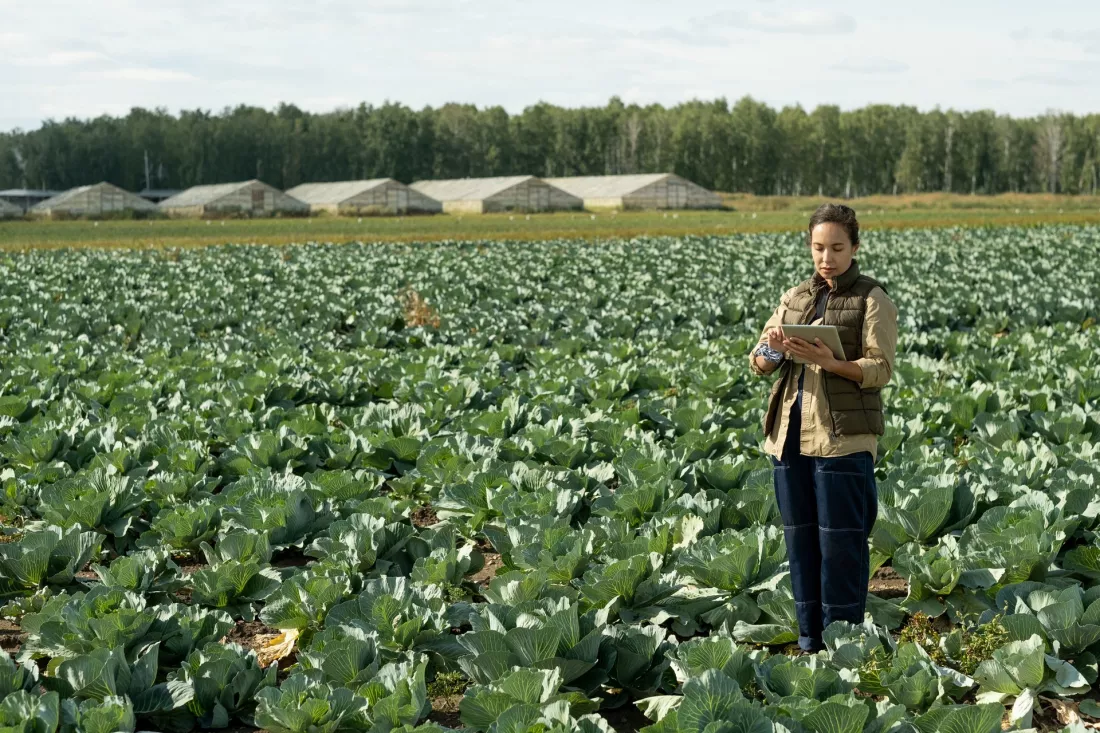
Organic food has to be grown, processed, traded and checked before it reaches the consumer, and each of these stages needs people who understand it. At the Warsaw University of Life Sciences – SGGW, the English-taught first-cycle programme Organic Agriculture and Food Production covers organic plant and animal production as well as food quality, and prepares graduates for work along the whole organic food chain — and at the end you can check whether this path suits you.
Organic Agriculture and Food Production is a first-cycle programme run by the Warsaw University of Life Sciences – SGGW within its Faculty of Agriculture and Ecology. Its focus is organic farming in the broad sense: both organic plant production and organic animal production, together with the question of food quality. In other words, the programme follows food from the field to the point where it becomes a product that can be traded, processed and certified.
The university describes the programme as one that combines specialised knowledge with solving concrete, practical problems. The curriculum was designed with the expectations of employers from the organic food sector in mind, so its content is meant to reflect what the industry needs rather than theory alone. Specialists from abroad are involved in teaching, and SGGW stresses the use of innovative teaching methods intended to prepare students for their future work.
The detailed list of courses is not set out on the programme page itself. The full study programme and the syllabuses are published in the SGGW syllabus system, where they are arranged by semester. Anyone who wants to see exactly which subjects appear at a given stage of the studies can check them there before applying.
The studies end with a diploma thesis and a diploma examination. The faculty gives students materials that make this final stage more predictable: a list of questions for the diploma exam, guidelines on preparing a thesis, the anti-plagiarism rules and lists of proposed thesis topics. Thanks to this, students can see fairly early what kinds of issues they may explore in their final project.
Admission is based on the result in one subject chosen from biology, chemistry or mathematics. Because the programme is taught in English, candidates need to confirm their command of the language with a certificate at least at B2 level; the university publishes a list of accepted documents. Foreign applicants whose school certificates were issued outside the EU, OECD, EFTA, China and Ukraine also have to pass an entrance examination. Current admission rules and fees are worth checking on the university’s admissions website, as they vary between intakes.
According to the university, graduates are prepared to work at every stage of the organic food chain. That chain covers:
The example employers named by SGGW include organic farms, organic food processing plants, companies dealing with organic production and the wider agribusiness sector. There is also a less obvious path: editorial offices of agricultural magazines and of radio and TV programmes, where knowledge of farming and food can be combined with media work.
The programme is likely to appeal to people who are interested in where food comes from, how its quality is ensured and how farming can work with organic methods. Since admission draws on biology, chemistry or mathematics, a liking for science subjects is an advantage. Teaching in English and the involvement of specialists from abroad make it a natural choice for those who want to study agriculture in an international setting, especially as the organic food trade also crosses borders. A practical mindset helps as well, given the programme’s emphasis on solving real problems.
Organic Agriculture and Food Production at SGGW is a three-year, full-time bachelor’s programme taught in English at the Faculty of Agriculture and Ecology. It covers organic plant and animal production and food quality, puts weight on practical problem-solving and was shaped around the needs of employers in the organic food sector. Graduates can look for work along the whole organic food chain – on farms and in processing plants, in trade, certification and inspection, as well as in agricultural media.
10 questions · two minutes



 EN

 CS
 DE
 ES
 FR
 HU
 IT
 PL
 PT
 РУ
 SK
 TR
 УК
 AR
 中文