

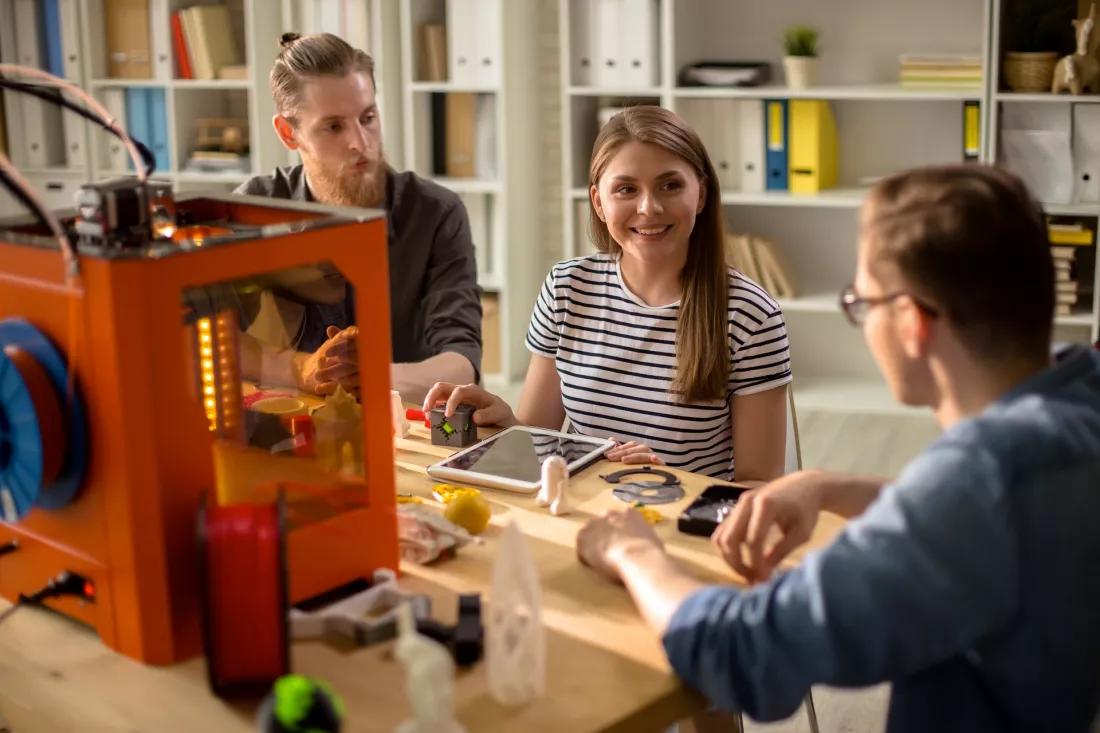
Some people sketch chairs in the margins of their notebooks, others take a lamp apart just to see how it is put together. The Design programme at School of Form, part of SWPS University in Warsaw, turns that instinct into a profession: four years of studying in English, ten workshops in one building and a diploma you earn by making things, not only by writing about them.
Design at School of Form is an undergraduate programme leading to a bachelor's degree. It lasts four years, which adds up to eight terms, and it is a full-time course taught entirely in English. The idea behind it is collaboration: designers working with researchers, scientists, humanists and craftsmen, and a curriculum that puts traditional craft, advanced technology and humanistic science in the same room.
All first-year students go through the same foundation programme. You get into the core of the design process, work with both two-dimensional and three-dimensional concepts and learn the tools and software that professionals use.
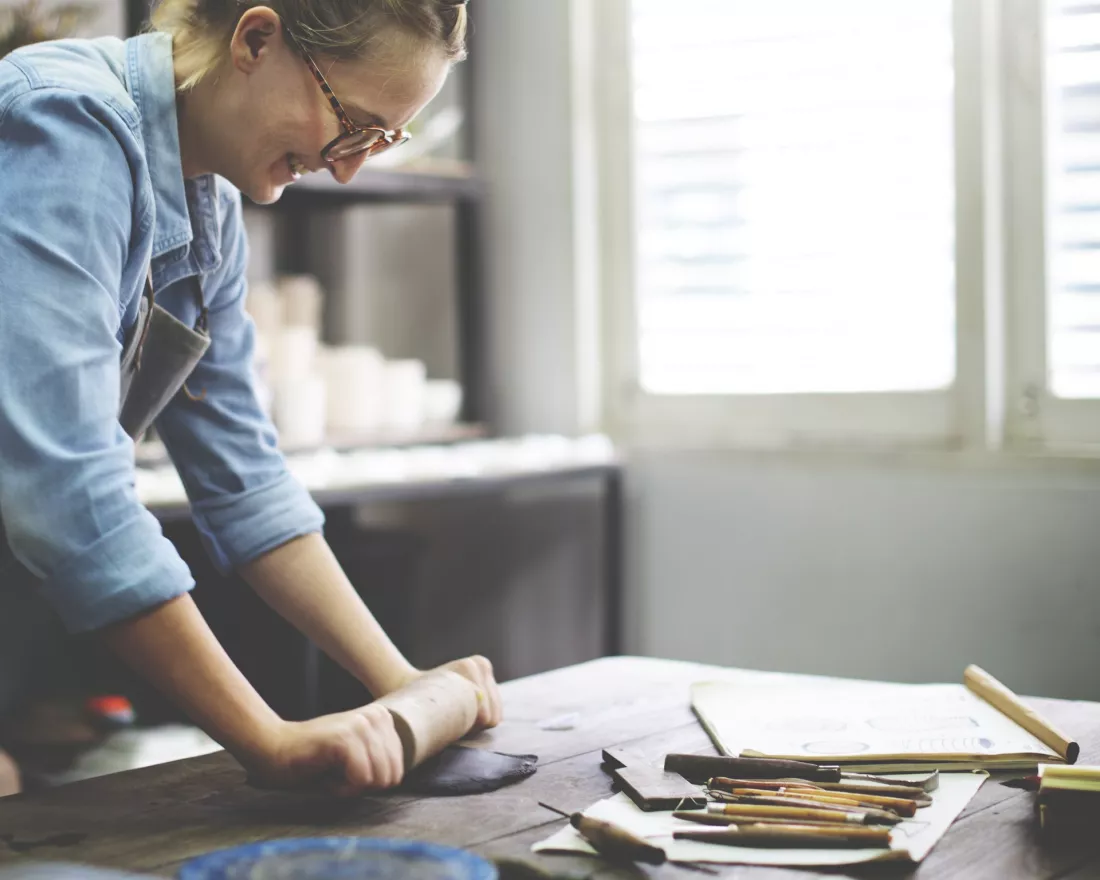
This is also the year for experiments. You spend time in professionally equipped workshops, learning traditional craft techniques next to modern machine operation — hands-on from day one. Some students discover a talent they did not know they had; others confirm an interest they have been carrying for years.
The workshops are the backbone of the programme:
With the foundation behind you, the second year brings a choice of specialization. Message, also called communication design, prepares you for the virtual environment: graphics, film, photography, mobile applications, augmented reality and coding. Object, or product design, is about the three-dimensional world — furniture, utensils, everyday things, materials and processes. Space, spatial design, covers temporary architecture, interiors and public spaces, from pavilions to places for work, culture and leisure.
Whichever path you take, you keep working with students from the other groups in shared interdisciplinary classes. Group formation depends on the number of candidates; if there are enough students for only one group, the specialization is chosen by a majority vote.
The third year is about style. You concentrate on the specific tools, technologies and methods that match your interests, and the work starts to look like yours rather than like an exercise.
The last year is devoted mainly to the graduation project, which has two parts: the design itself and a written component. Two supervisors guide you through the process. Alongside it, students take part in inter-specialization projects with business and community partners — real briefs, real constraints, and a portfolio piece at the end.
The faculty is a mix of acclaimed designers, researchers and educators who treat students as collaborators rather than an audience. The programme is directed by Agnieszka Jacobson-Cielecka, Dean of SWPS University's Faculty of Design in Warsaw, and the workshops are run by their own heads: a master tailor in the sewing workshop, a photographer in the photo-video studio, designers in the ceramics, metal and digital workshops.
Design rewards curiosity about how things work and patience with the fifth version of the same idea. It also means accepting critique: your project is discussed openly, and the point of that conversation is the object, not you. If both parts sound appealing, the programme is worth a closer look. Admission requirements and fees are best checked on the university's admissions pages, as they differ between intakes.
Design at School of Form is a four-year, English-taught bachelor's programme in Warsaw that moves from a shared foundation year, through a choice between communication, product and spatial design, to a graduation project supervised by two tutors. Ten workshops — from ceramics and sewing to robotics and an AI lab — make it a course for people who want to learn design by making things.


 EN
EN 
 CS
CS DE
DE ES
ES FR
FR HU
HU IT
IT PL
PL PT
PT РУ
РУ SK
SK TR
TR УК
УК AR
AR 中文
中文