Why do people leave their homes against their will, and what happens at Europe’s borders and reception centres afterwards? PATHS Forced Migration: Europe in a Global Context is a four-semester joint master’s programme run by SWPS University in Warsaw with five partner universities. Students rotate between countries, complete an internship in the field and write a thesis supervised by academics from at least two institutions — and at the end you can check whether this programme is right for you.
PATHS Forced Migration: Europe in a Global Context is a joint master’s programme (second cycle) offered by SWPS University (Uniwersytet SWPS) in Warsaw together with partner universities of the European Reform University Alliance (ERUA). It lasts four semesters, carries 120 ECTS credits, is studied full-time and is taught entirely in English. Graduates receive a joint master’s degree awarded by six ERUA partner universities and recognised across Europe. The programme deals with forced migration, border management and refugee reception.
PATHS Forced Migration at SWPS University is grounded in sociology and enriched with political science, law, pedagogy and psychology. The university links forced migration to geopolitical instability, environmental concerns and socio-economic factors, and the aim is to prepare professionals who can understand and address it. Students learn qualitative and quantitative research methods and study research in multicultural settings.
Sample courses include concepts and theories of forced migration, its empirical study, social research methodology and research in multicultural settings.
Every student of PATHS Forced Migration follows one of three study paths. The path decides which partner universities the student attends. The admissions committee may assign a path different from the one chosen by the applicant, so it is worth treating the choice as a preference rather than a guarantee.
Fun fact: each of the three paths takes students through three different countries, for example Germany, Poland and Greece on the EU Border Regimes path.
The first semester of PATHS Forced Migration is the foundation stage. Students start at one of three entry universities – Europa-Universität Viadrina in Frankfurt (Oder), Université Paris 8 or New Bulgarian University – and take joint online or hybrid foundation courses regardless of the path they have chosen.
In the second semester the whole cohort meets at SWPS University in Warsaw for the methods block, followed by an internship. The third semester takes students to the University of the Aegean or the University of Macerata for path-specific courses, and all of them join a joint research colloquium. In the fourth semester students write a master’s thesis in English, co-supervised by academics from at least two partner institutions. The defence is hybrid: one member of the examination committee is present on site and the others may join online.
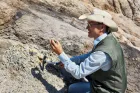
The internship in the second semester is a central element of PATHS Forced Migration at SWPS University. Students complete it at an organisation of their choice, in public institutions, intergovernmental organisations or NGOs, and have direct contact with people who have been forced to migrate and with experts whose topics range from children’s rights to border control.
PATHS Forced Migration is aimed at holders of a bachelor’s degree in social sciences or humanities. Graduates of other fields may also be considered if they can show relevant work experience in migration, which is assessed case by case. Candidates need English at CEFR level B2 or higher.
The application includes a motivation letter explaining the choice of path, a CV, up to two recommendation letters and an online entrance test that consists mainly of sociology questions. Current admission rules and fees are worth checking on the university’s admissions website, as they vary between intakes.
Graduates of PATHS Forced Migration are expected to combine theoretical depth with practical expertise in migration governance, border systems and policymaking. The programme points to a wide range of possible employers.
PATHS Forced Migration: Europe in a Global Context at SWPS University is a four-semester, 120-ECTS joint master’s programme taught in English, built on sociology and supported by political science, law, pedagogy and psychology. Students choose one of three paths – EU Border Regimes, Inclusion of Children and Minors, or Politics and Policies – and move between partner universities in several European countries.
Along the way they learn research methods, complete an internship in the field and write a thesis co-supervised by academics from at least two institutions. The programme suits graduates of the social sciences and humanities who want to work on migration, borders and refugee protection in an international setting.

10 questions · two minutes


 EN

 CS
 DE
 ES
 FR
 HU
 IT
 PL
 PT
 РУ
 SK
 TR
 УК
 AR
 中文