
Gdynia, Poland

Navigation

Bachelor's - engineer
Table of contents
annie-spratt-GPCgLbBevQg-unsplash

⇑Navigation at UMG

Language: EnglishStudies in English
Subject area: engineering and engineering trades
Kind of studies: full-time studies
  • Description:

  • pl

⇑Why study Navigation at UMG?

dlaczego-warto-studiowac-na-umg
Why study it:

Uniwersytet Morski w Gdyni (UMG) – Gdynia Maritime University – runs Navigation in English as full-time, eight-semester engineering studies with a practical profile at the Faculty of Navigation. The programme is for people who see their future at sea and in shipping, and want to work as ship officers trained to the international STCW standards.

Programme: from astronavigation to GMDSS

Core subjects and skills include:

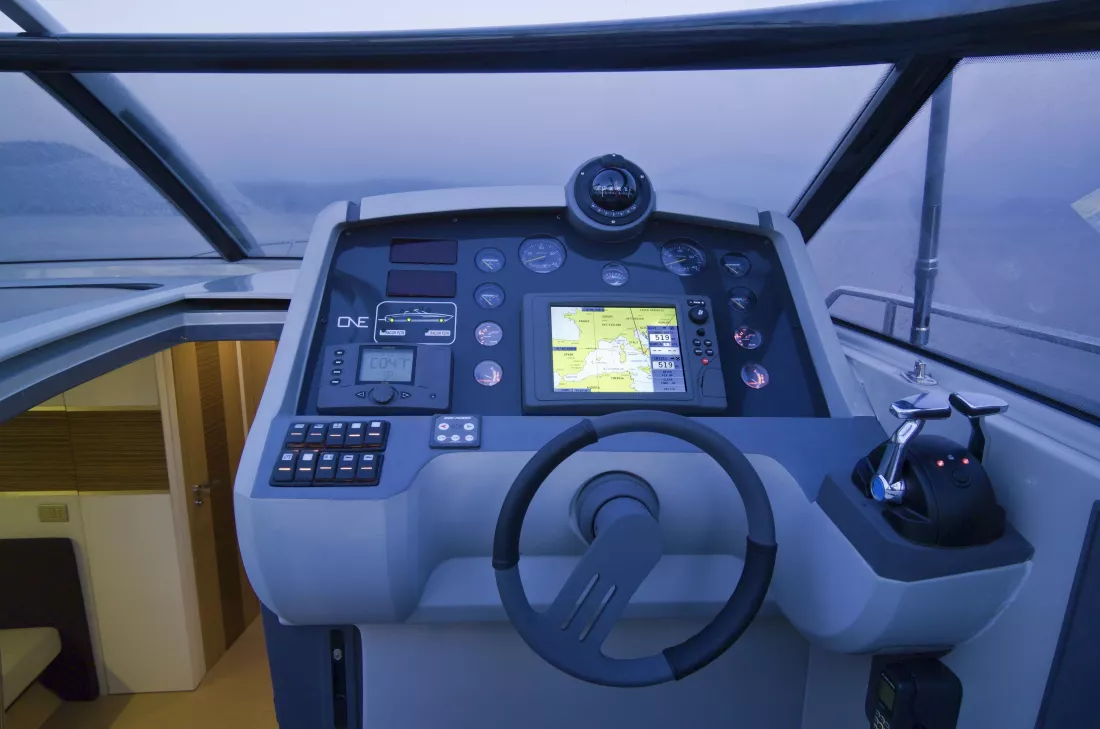
  • navigation, astronavigation and navigational equipment
  • ship stability and construction, and carriage of goods by sea
  • meteorology and oceanography
  • voyage planning, navigational watchkeeping and ship handling in line with COLREG
  • communication using GMDSS and operation of basic shipboard systems
  • fire-fighting, evacuation and life-saving systems at sea

Specialisation: maritime transport

One maritime specialisation: the programme is taught as Maritime Transport (Transport Morski), and candidates need a secondary-school leaving certificate and a maritime health certificate.

Placements: Dar Młodzieży, Horyzont II and merchant ships

Sea training in brief

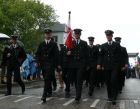
  • Before studies7–10 days on the Dar Młodzieży – ship routine, teamwork, emergencies and drills
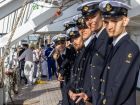
  • Dar Młodzieżyseaman's and navigation placements, 30–36 days each – ropes and sails, manoeuvring stations, ECDIS, astronavigation
  • Horyzont II14 days of ship handling and radar navigation
  • Merchant shipsthe remaining 9 months of sea service on selected vessels

Qualifications: officer of the watch diploma

After the first year you complete the basic safety and security course needed for sea training on the Dar Młodzieży; with these certificates and a maritime health certificate you receive a seaman's book to record supervised sea service. After the 6th semester and a three-month placement you can obtain a seafarer's certificate, which can help you find a placement on merchant ships, and after the 7th semester you can hold all the certificates required by STCW for the officer of the watch diploma. Part of the specialist training is built into classes, and extra courses are run according to shipowners' needs.

Your engineering degree, together with the required sea service and specialist training, allows you to obtain the officer of the watch diploma confirmed by the Maritime Administration – the first step towards officer and then captain positions.

After graduation: at sea and ashore

Graduates can work on almost all types of merchant ships worldwide, including specialised vessels, for example in the offshore sector. With experience as an officer of the watch, you can move on to shipowners' offices. Another path is a specialist role in companies that design, supply and service navigation, safety and security systems and other installations used on seagoing ships.

As of the 2026/27 admissions, based on the programme pages at umg.edu.pl.

⇑Test: Is Navigation the right fit for you?

students-plotting-a-course-on-a-nautical-chart-test

10 questions · two minutes

1. You’re on a boat and the electronic navigation system suddenly fails. What do you do?

2. How do you feel about spending weeks or months at sea, away from home?

3. How do you get on with maths, physics and geography?

4. A storm warning is issued while you’re planning a voyage. How do you react?

5. Classes are in English, with students from many countries – and English is also the working language at sea. How does that sound?

6. How do you cope with strict discipline, watch schedules and following procedures to the letter?

7. Imagine a night watch on the bridge, keeping track of the radar and other vessels nearby. How do you feel?

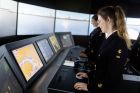
8. Would you enjoy practising manoeuvres on a ship simulator?

9. A crew member is injured during a drill and the others are confused. What do you do?

10. What motivates you most to study Navigation?

⇑Definitions and quotes

Navigation
Navigation is a field of study that focuses on the process of monitoring and controlling the movement of a craft or vehicle from one place to another. The field of navigation includes four general categories: land navigation, marine navigation, aeronautic navigation, and space navigation.
Navigation
Upon the gale she stoop'd her side,
And bounded o'er the swelling tide,
As she were dancing home;
The merry seamen laugh'd to see
Their gallant ship so lustily
Furrow the green sea-foam.
Walter Scott, Marmion (1808), Canto II, Stanza 1.
Navigation
A strong nor'wester's blowing, Bill!
Hark! don't ye hear it roar now?
Lord help 'em, how I pities them
Unhappy folks on shore now!
The Sailor's Consolation; attributed to Billy Pitt, Colman.
Navigation
The winds and waves are always on the side of the ablest navigators.
Edward Gibbon, Decline and Fall of the Roman Empire, Chapter LXVIII.

Contact:

Morska 81-87 str.
81-225 Gdynia
StudentNews Group Websites for students and future students — in Poland since 2007, across Europe since 2014. Over 50 websites and millions of users a year (Google Analytics). Studies in Europe Universities in Europe Bachelor’s Master’s Doctorate MBA Study guide Work abroad Travel For partners Advertising and cooperation Reach (online report) Contact advertising@studentnews.eu © 2003–2026 Grupa StudentNews.pl sp. z o.o., Modlnica, Poland
Privacy Policy