
Częstochowa, Poland

Nuclear Safety and Radiological Protection
(field of studies: Physics)

Bachelor's
Table of contents
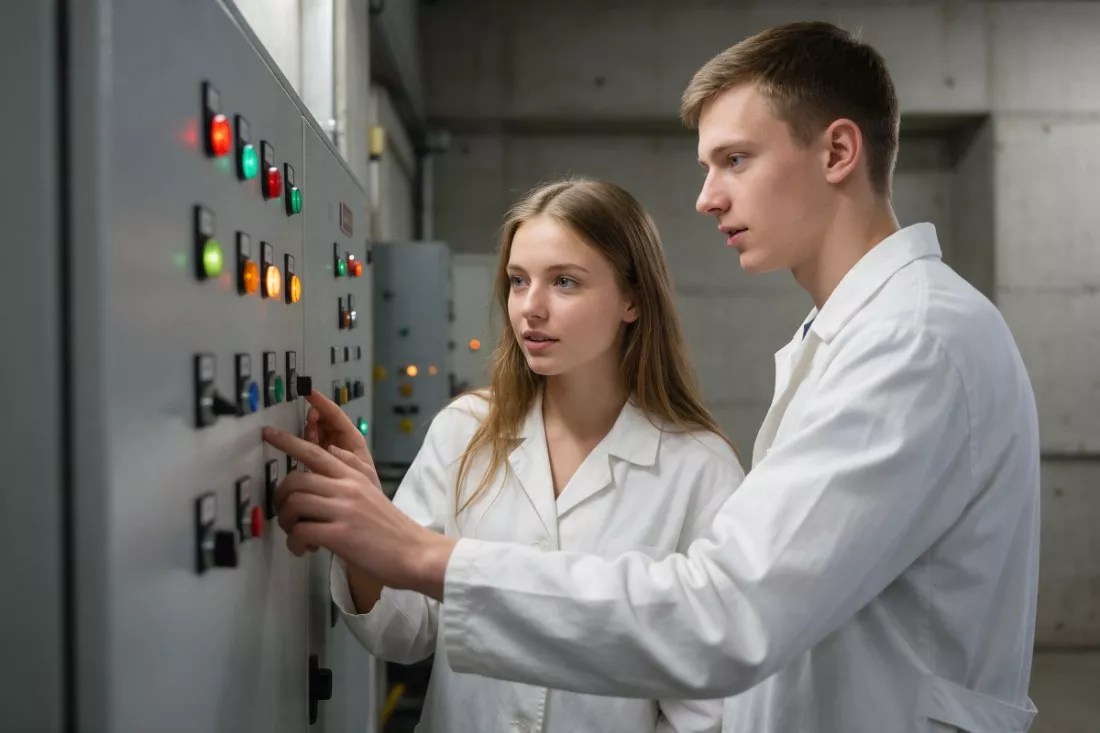
studenci-sprawdzaja-panel-kontrolny-w-osrodku-szkoleniowym

⇑Nuclear Safety and Radiological Protection at UJD

Field of studies: Physics
Language: EnglishStudies in English
Subject area: engineering and engineering trades
Kind of studies: full-time studies
  • Description:

  • pl
University website: www.en.ujd.edu.pl

⇑Why choose the Nuclear Safety and Radiological Protection specialisation at UJD?

Dlaczego warto studiować na UJD
Why study it:

Nuclear Safety and Radiological Protection is a specialisation in the Physics programme (first-cycle studies, taught in English) at Jan Długosz University in Częstochowa. It is for people who want to work with ionising radiation and supervise safety wherever radioactive sources are used.

Programme: general physics first, then radiation and reactors

The first two semesters cover general education in the exact sciences, and specialisation subjects begin in the third semester. They include a block on nuclear facilities: types of reactors and how they work, small modular reactors, scientific and industrial uses of reactors, and assessing the hazard in and around a nuclear power plant. A separate course on radioecology explains where natural and artificial radionuclides in the environment come from, including the Chernobyl and Fukushima accidents.

Specialisation: the core of the path

The core subjects run from nuclear physics to the legal rules:

  • introduction to nuclear physics – radioactive decays and decay series, natural and artificial isotopes, nuclear and thermonuclear reactions
  • dosimetry of ionising radiation – detectors, dosimetric instruments, dose-rate and contamination measurements, personal and radon dosimetry
  • legal aspects of radiological protection – atomic law, permits for work involving exposure, dose limits, records and security of radioactive sources
  • safe work with radioactive sources – controlled and supervised areas, radioactive waste, decontamination and transport
  • radiobiology, including stochastic and deterministic effects

Labs: measurement techniques

The programme also includes measurement methods: luminescence detectors and passive dosimetry, X-ray methods for studying materials, laboratory electronics and computer simulations.

Qualifications: route to radiological protection inspector

Classes give the theoretical and practical knowledge needed in the work of a radiological protection inspector, with emphasis on practical aspects. Completing the studies removes the need for additional training and lets you sit the state examination for Radiological Protection Inspector, after approval by the President of the National Atomic Energy Agency.

After graduation: where graduates work

Graduates find employment in places such as:

  • government agencies responsible for nuclear supervision
  • the metallurgical and mining industries and research units using ionising radiation
  • institutions that control doses and calibrate dosimetric devices
  • companies designing shielding for isotope, X-ray and accelerator laboratories
  • future nuclear facilities, as personnel responsible for radiological supervision

Based on the study plan and the UJD admissions page.

⇑Test: Is Nuclear Safety and Radiological Protection the right fit for you?

trainees-measuring-radiation-around-a-sealed-container

10 questions · two minutes

1. Your friends are having a heated debate about nuclear power. What do you do?

2. How do you feel about physics, especially radioactivity?

3. A lab has a long list of safety procedures. How do you approach them?

4. When you have an X-ray, the radiographer leaves the room. What goes through your mind?

5. A friend is scared of having a CT scan because of the radiation. How do you respond?

6. You’ll study in an international environment, in English: classes, standards and technical reports, with students from many countries. How does that sound?

7. In class you’re given a radiation meter to measure background levels in different places. What do you do with the readings?

8. How do you behave in stressful situations, such as an evacuation drill?

9. What kind of work can you see yourself doing in future?

10. What motivates you most to study Nuclear Safety and Radiological Protection?

⇑Definitions and quotes

Safety
Safety is the state of being "safe" (from French sauf), the condition of being protected from harm or other non-desirable outcomes. Safety can also refer to the control of recognized hazards in order to achieve an acceptable level of risk.
Protection
If you are not ready, and did not know what to do, it could hurt you in different ways. It could knock you down, hard, or throw you against a tree or a wall. It is such a big explosion, it can smash in buildings and knock signboards over, and break windows all over town, but if you duck and cover, like Burt [the Turtle], you will be much safer.
From Duck and Cover (1951), about protecting yourself from an atomic explosion.
Safety
When you have overcome one temptation, you must be ready to enter the lists with another. As distrust, in some sense, is the mother of safety, so security is the gate of danger. A man had need to fear this most of all, that he fears not at all.
Thomas Brooks, p. 532. cited in Josiah Hotchkiss Gilbert, Dictionary of Burning Words of Brilliant Writers (1895).
Safety
Now, it is true that the nature of society is to create, among its citizens, an illusion of safety; but it is also absolutely true that the safety is always necessarily an illusion. Artists are here to disturb the peace.
James Baldwin "An interview with James Baldwin" (1961)

Contact:

Waszyngtona str. 4/8
42-200 Częstochowa
phone +48 34 378 41 00
StudentNews Group Websites for students and future students — in Poland since 2007, across Europe since 2014. Over 50 websites and millions of users a year (Google Analytics). Studies in Europe Universities in Europe Bachelor’s Master’s Doctorate MBA Study guide Work abroad Travel For partners Advertising and cooperation Reach (online report) Contact advertising@studentnews.eu © 2003–2026 Grupa StudentNews.pl sp. z o.o., Modlnica, Poland
Privacy Policy