
Częstochowa, Poland

Chemistry

Master's
Table of contents
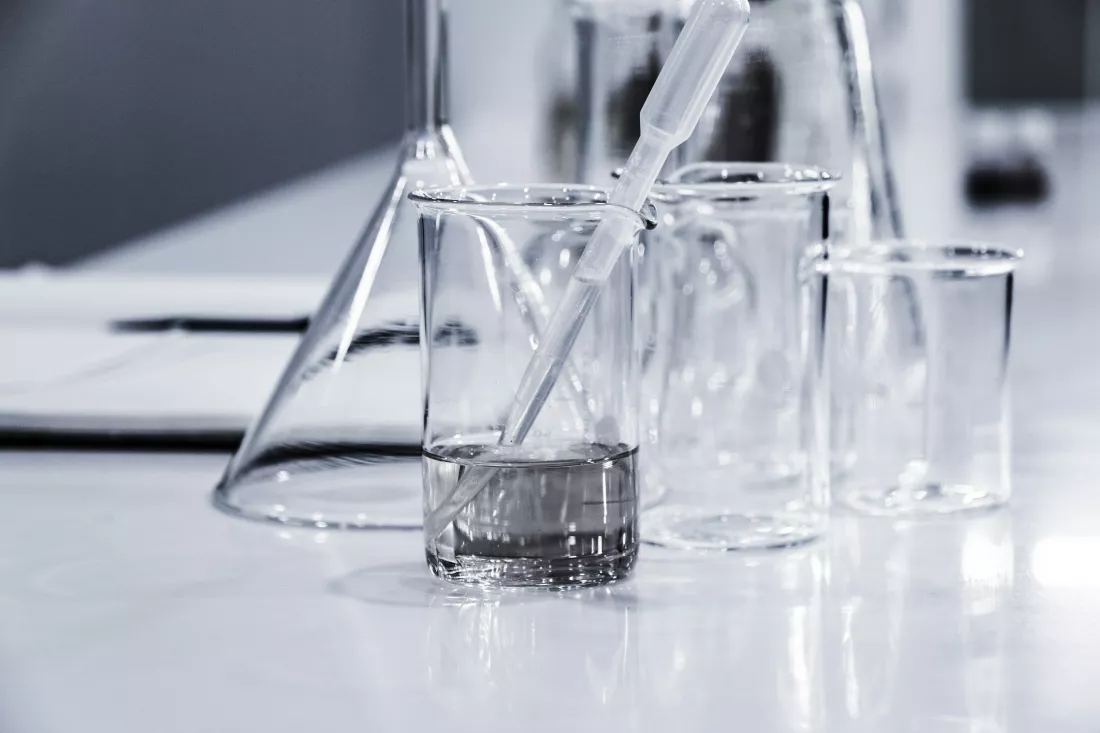
hans-reniers-lQGJCMY5qcM-unsplash

⇑Chemistry at UJD

Language: EnglishStudies in English
Subject area: physical science, environment
Kind of studies: full-time studies, part-time studies
  • Description:

  • pl

⇑Why study Chemistry (Master's) at UJD?

dlaczego-warto-studiowac-na-UJD
Why study it:

Chemistry at Jan Długosz University in Częstochowa (UJD) is a two-year (4-semester) Master's programme (second-cycle) with a general academic profile, taught in English. It is addressed to graduates of first-cycle Chemistry and to holders of other degrees who have the chemical background needed to continue at Master's level.

Programme: advanced chemistry and teamwork

The programme develops, among others:

  • advanced knowledge of chemical sciences, related natural sciences, biochemistry and materials engineering,
  • synthesis, separation, composition analysis and structure determination of compounds, polymers and metal alloys with classical and instrumental methods,
  • planning laboratory work and chemical processes with risk minimisation,
  • formulating hypotheses and conclusions from experiments and analyses carried out in a team,
  • linking chemical processes taking place in the broadly understood environment with chemical knowledge.

Specialisation: drugs or the environment

Drug Chemistry covers the synthesis, isolation and identification of pharmacopoeial substances, modern methods of controlled drug release, pharmacopoeial methods of quantitative analysis of pharmaceuticals and phytotherapy. It also develops your technical English in chemistry.

Environmental Chemistry and Technology focuses on environmental chemistry, water and sewage technology, soil remediation and separation techniques for removing pollutants.

Labs: mostly experimental classes

Classes are mostly experimental. You graduate with experience in laboratory work in chemical analysis and synthesis and in physicochemical measurements. You also have access to the department's computer lab, and research clubs let you take your interests further.

Exchanges: Erasmus+ and COLOURS

International programmes and trips are available, for example within the Erasmus+ programme and the COLOURS European University.

After graduation: expert and managerial roles, or a doctorate

After graduation you can:

  • work as a manager or expert in chemical, cosmetic and pharmacological laboratories – industrial and research – and in chemical and food industry plants,
  • take managerial roles in education, science, industry and administration,
  • work in marketing and sales for chemical, biotechnological, pharmaceutical and biomedical companies,
  • continue at the Doctoral School if you want to pursue scientific research.

As of the 2026/27 admissions, based on the programme description at rekrutacja.ujd.edu.pl.

⇑Test: check whether Chemistry is the right major for you!

Chemiaf

Answer all questions to see if a Master's in Chemistry is the right next step for you!

1. Do you want to deepen your understanding of molecular structure, reaction mechanisms, and chemical theory?

2. Are you interested in gaining advanced laboratory skills like spectroscopy, chromatography, or synthesis techniques?

3. Do you want to engage in research on areas such as materials chemistry, medicinal chemistry, environmental chemistry, or catalysis?

4. Are you willing to participate in interdisciplinary projects involving chemistry and fields like biology, physics, or engineering?

5. Do you believe that a two-year master's in Chemistry will significantly enhance your research skills or career prospects in industry/academia?

6. Are you interested in learning how to apply computational chemistry, modeling, or data analysis to chemical problems?

7. Do you value ethical and sustainable practices in chemistry, such as green chemistry, safe handling of chemicals, and reproducibility?

8. Are you motivated to apply chemical knowledge to real-world challenges like drug development, energy materials, or environmental remediation?

9. Are you comfortable collaborating with chemists, biologists, engineers, and data scientists to solve complex problems?

10. What motivates you most to pursue a Master’s in Chemistry?

⇑Definitions and quotes

Chemistry
Chemistry is the scientific discipline involved with compounds composed of atoms, i.e. elements, and molecules, i.e. combinations of atoms: their composition, structure, properties, behavior and the changes they undergo during a reaction with other compounds. Chemistry addresses topics such as how atoms and molecules interact via chemical bonds to form new chemical compounds. There are four types of chemical bonds: covalent bonds, in which compounds share one or more electron(s); ionic bonds, in which a compound donates one or more electrons to another compound to produce ions (cations and anions); hydrogen bonds; and Van der Waals force bonds.
Chemistry
Like literature, philosophy is not distinguished from other subjects by a specific approach to a subject-matter independent of it. Chemistry deals with chemicals, biology with life and astronomy with very large, very distant objects. Philosophy can boast no such definite subject-matter.
David Wood (philosopher) (1990) Philosophy At The Limit. p. 69
Chemistry
The alchemical tradition assumes that every physical art or science is a body of knowledge which exists only because it is ensouled by invisible powers and processes. Physical chemistry, as it is practiced in the modern world, is concerned principally with pharmaceutical or industrial research projects. It is confined within the boundaries of an all-pervading materialism, which binds labor to the advancement of physical objectives.
Manly Palmer Hall (1988) Meditation Symbols in Eastern & Western Mysticism
Chemistry
Modern warfare, we discovered, was to a far greater extent than ever before a conflict of chemists and manufacturers. Manpower, it is true, was indispensable, and generalship will always, whatever the conditions, have a vital part to play. But troops, however brave and well led, were powerless under modern conditions unless equipped with adequate and up-to-date artillery (with masses of explosive shell), machine-guns, aircraft and other supplies. Against enemy machine-gun posts and wire entanglements the most gallant and best-led men could only throw away their precious lives in successive waves of heroic martyrdom. Their costly sacrifice could avail nothing for the winning of victory.
David Lloyd George (1938) War Memoirs

Contact:

Waszyngtona str. 4/8
42-200 Częstochowa
phone +48 34 378 41 00
StudentNews Group Websites for students and future students — in Poland since 2007, across Europe since 2014. Over 50 websites and millions of users a year (Google Analytics). Studies in Europe Universities in Europe Bachelor’s Master’s Doctorate MBA Study guide Work abroad Travel For partners Advertising and cooperation Reach (online report) Contact advertising@studentnews.eu © 2003–2026 Grupa StudentNews.pl sp. z o.o., Modlnica, Poland
Privacy Policy