

Olsztyn, Poland

Veterinary Medicine

Integrated Master's degree
Table of contents
midsection-cat

⇑Veterinary Medicine at UWM

Language: EnglishStudies in English
Subject area: agriculture, forestry and fishery, veterinary
Kind of studies: full-time studies
  • Description:

  • pl
University website: uwm.edu.pl/en

⇑Why study Veterinary Medicine (long-cycle Master's) at UWM in Olsztyn?

Dlaczego warto studiować na UWM w Olsztynie
Why study it:

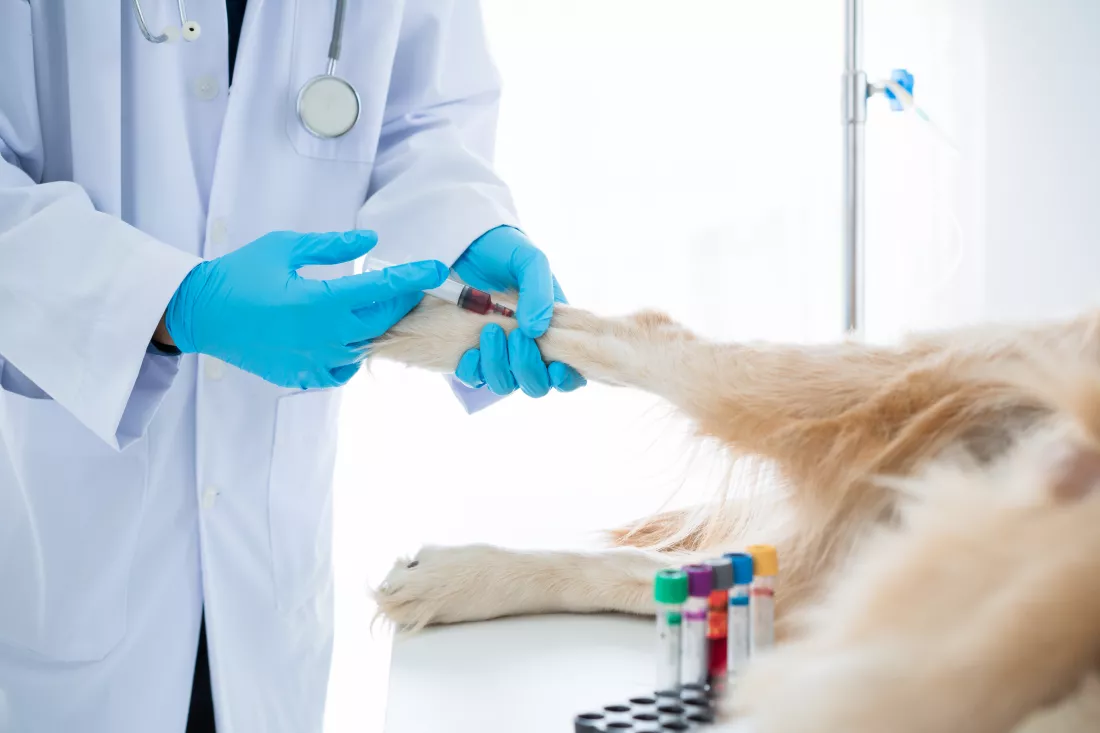
Veterinary Medicine at the University of Warmia and Mazury in Olsztyn is a full-time, long-cycle Master's programme taught in English and spread over 11 semesters. It is designed for people who want to learn how to treat both small and large animals and to practise as veterinarians.

Programme: from basic sciences to clinical practice

The programme combines basic and pre-clinical sciences, which give you a general understanding of how living organisms function, with clinical sciences that provide detailed knowledge of animal diseases, their treatment and their prevention.

Practical training teaches you to carry out basic surgical procedures on different animal species and to recognise, treat and control animal diseases.

Placements: classes and placements

Your timetable mixes several types of teaching and practice:

  • lectures and seminars
  • clinical clerkships
  • auditorium, laboratory, clinical, dissection and field classes
  • livestock-breeding placements
  • clinical placements
  • sanitary placements

Exchanges: exchange programmes

Studying abroad or elsewhere in Poland

  • Erasmus+exchanges and traineeships abroad, with financial support for participants
  • MOSTa semester or a year at another Polish university after the second semester of long-cycle studies
  • Supporta coordinator at each faculty explains the procedures and the partner universities

After graduation: where graduates work

Veterinary medicine is the body of knowledge, skills and competences required to practise as a veterinarian, and a degree opens several career paths beyond the clinic. You can work in veterinary clinics, diagnostic laboratories, the pharmaceutical and food industries, or in the research sector. Other options include supervisory institutions and organisations dealing with animal breeding and rearing.

Did you know? The programme has been accredited by the European Association of Establishments for Veterinary Education (EAEVE).

Based on the programme pages at uwm.edu.pl.

⇑Test: Is Veterinary Medicine the right fit for you?

veterinary-students-examining-a-dog-test

10 questions · two minutes

1. A neighbour’s dog suddenly stops eating and seems very tired. What do you do?

2. How do you feel about biology and chemistry at school?

3. In anatomy classes you’ll study real animal organs. How do you feel about that?

4. You need to calm a frightened cat so it can be examined. How do you go about it?

5. Would you be willing to work with farm animals – cows, horses or pigs – in a barn early in the morning?

6. Lectures, clinical training and textbooks will be in English, in an international group. How does that sound?

7. A pet’s owner can’t afford an expensive treatment. How would you handle the conversation?

8. Putting animals to sleep is sometimes part of a vet’s job. How do you feel about that?

9. Veterinary studies are long and demanding, with a lot to learn by heart. How do you feel about that?

10. What motivates you most to study Veterinary Medicine?

⇑Definitions and quotes

Medicine
Medicine is the science and practice of the diagnosis, treatment, and prevention of disease. Medicine encompasses a variety of health care practices evolved to maintain and restore health by the prevention and treatment of illness. Contemporary medicine applies biomedical sciences, biomedical research, genetics, and medical technology to diagnose, treat, and prevent injury and disease, typically through pharmaceuticals or surgery, but also through therapies as diverse as psychotherapy, external splints and traction, medical devices, biologics, and ionizing radiation, amongst others.
Veterinary Medicine
Veterinary medicine is the branch of medicine that deals with the prevention, diagnosis and treatment of disease, disorder and injury in non-human animals. The scope of veterinary medicine is wide, covering all animal species, both domesticated and wild, with a wide range of conditions which can affect different species.
Medicine
You behold in me
Only a travelling Physician;
One of the few who have a mission
To cure incurable diseases,
Or those that are called so.
Henry Wadsworth Longfellow, Christus, The Golden Legend (1872), Part I.
Medicine
I do remember an apothecary,—
And hereabouts he dwells,—whom late I noted
In tatter'd weeds, with overwhelming brows,
Culling of simples; meagre were his looks,
Sharp misery had worn him to the bones:
And in his needy shop a tortoise hung,
An alligator stuff'd, and other skins
Of ill-shaped fishes; and about his shelves
A beggarly account of empty boxes,
Green earthen pots, bladders and musty seeds,
Remnants of packthread and old cakes of roses,
Were thinly scatter'd to make up a show.
William Shakespeare, Romeo and Juliet (1597), Act V, scene 1, line 37.
Medicine
Who shall decide when doctors disagree,
And soundest casuists doubt, like you and me?
Alexander Pope, Moral Essays (1731-35), Epistle III.

Contact:

ul. Michała Oczapowskiego 2
10-719 Olsztyn
tel: +48 89 523 49 13
StudentNews Group Websites for students and future students — in Poland since 2007, across Europe since 2014. Over 50 websites and millions of users a year (Google Analytics). Studies in Europe Universities in Europe Bachelor’s Master’s Doctorate MBA Study guide Work abroad Travel For partners Advertising and cooperation Reach (online report) Contact advertising@studentnews.eu © 2003–2026 Grupa StudentNews.pl sp. z o.o., Modlnica, Poland
Privacy Policy