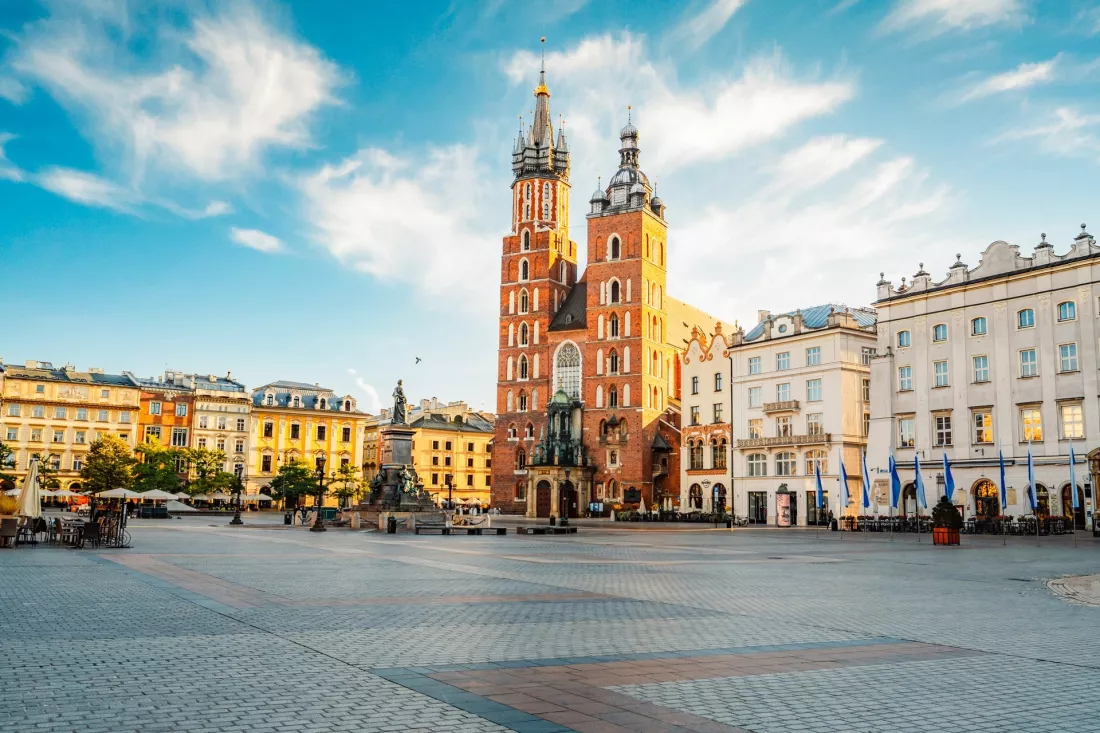


Cracow, Poland

Joint Bachelor in Sustainability

Bachelor's
Table of contents
studenci-skladaja-model-panelu-slonecznego

⇑Joint Bachelor in Sustainability at UJ

Language: EnglishStudies in English
Subject area: physical science, environment
Kind of studies: full-time studies
  • Description:

  • pl

⇑Why study the Joint Bachelor in Sustainability at UJ?

dlaczego-warto-studiowac-na-uj
Why study it:

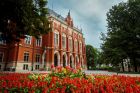
Jagiellonian University in Kraków (UJ) runs the Una Europa Joint Bachelor in Sustainability (BASUS) together with seven other universities of the Una Europa alliance – a three-year (six-semester), full-time, English-taught bachelor's programme with law as its leading discipline, administered by the Centre for Sustainable Development Law at the Faculty of Law and Administration. It is meant for students who already use English well enough to study in it and who want a cross-cutting, interdisciplinary understanding of sustainability.

Programme: from climate physics to ethics

Everyone starts together in Kraków and spends the whole first year at UJ. The first two semesters introduce the field of sustainability, its main concepts and theoretical approaches, alongside transversal courses that build your skills and competences. Across the programme you cover the physical basis of climate change, the Sustainable Development Goals, the circular economy and the ethical dimension of sustainability.

Specialisation: six tracks at six universities

From the second year you continue on one of six specialised tracks, each lasting three semesters and coordinated by one of the degree-awarding universities:

  • Sustainable chemistry and physics – University of Helsinki
  • Economics and geography – Université Paris 1 Panthéon-Sorbonne
  • Law and sustainability policy – Jagiellonian University in Kraków
  • Economics, management and engineering – KU Leuven
  • Social sciences and humanities – Universität Zürich
  • Environmental and life sciences – Universidad Complutense de Madrid

Languages: English and communication

The whole programme is taught in English, and transversal skills – language and communication skills in particular – get extra emphasis, so you learn to support dialogue between specialists from different fields.

Exchanges: a degree across Europe

Where you study

  • Year 1Jagiellonian University in Kraków, most classes in the Faculty of Law and Administration buildings
  • Semesters 3–5the university coordinating your track
  • Semester 6any of the partner universities
  • PartnersUJ, KU Leuven, Helsinki, Paris 1, Complutense Madrid, Zürich, Edinburgh and Freie Universität Berlin

After graduation: sustainability roles in both sectors

Graduates can look for work in both the public and the private sector, in roles such as Chief Sustainability Officer, Compliance Officer, Sustainability Consultant or Sustainability Communication Manager. The interdisciplinary background prepares you to work between specialists from different areas. You can also continue with a Master's degree or postgraduate studies, for example at the Faculty of Law and Administration.

Did you know? Sustainability is one of five priority areas chosen by the Una Europa partners, alongside European Studies, Cultural Heritage, Data Science and Artificial Intelligence, and One Health.

As of the 2026/27 admissions, based on the programme pages at studia.uj.edu.pl.
⇑Test: Is Joint Bachelor in Sustainability the right fit for you?

students-measuring-soil-in-a-community-garden

10 questions · two minutes

1. Your school launches a campaign to cut waste. What do you do?

2. Sustainability brings together ecology, economics and social issues. Which angle appeals to you?

3. You read that a product is ‘completely eco-friendly’. How do you react?

4. A joint programme means group work with people from many countries, reading reports and debating in English, and sometimes studying in more than one place. How does that sound?

5. In geography you’re looking at graphs showing climate change. What interests you?

6. The local council wants to cut down part of a park to build a car park. What do you think?

7. How do you make everyday shopping choices?

8. How do you handle projects that combine knowledge from several subjects?

9. What do you picture yourself doing in the future?

10. What motivates you most to study Joint Bachelor in Sustainability?

⇑Definitions and quotes

Sustainability
Sustainability (from 'sustain' and 'ability') is the process of change, in which the exploitation of resources, the direction of investments, the orientation of technological development and institutional change are all in harmony and enhance both current and future potential to meet human needs and aspirations. The organizing principle for sustainability is sustainable development, which includes the following interconnected domains: environment, economic and social. Sub-domains of sustainable development have been considered also: cultural, technological and political. Sustainable development, is the development that meets the needs of the present without compromising the ability of future generations to meet their own needs. Brundtland Report for the World Commission on Environment and Development (1992) introduced the term of sustainable development.
Sustainability
Our deep urge to evolve to a more spiritually mature level of understanding and living, and to create a social order that promotes more justice, peace, freedom, health, sanity, prosperity, sustainability, and happiness, absolutely requires us to stop viewing animals as food objects to be consumed and to shift to a plant-based way of eating.
Will Tuttle, The World Peace Diet (2005). Ch. 2
Sustainability
THE TERM (Sustainability) HAS BECOME so widely used that it is in danger of meaning nothing. It has been applied to all manner of activities in an effort to give those activities the gloss of moral imperative, the cachet of environmental enlightenment. “Sustainable” has been used variously to mean “politically feasible,” “economically feasible,” “not part of a pyramid or bubble,” “socially enlightened,” “consistent with neoconservative small-government dogma,” “consistent with liberal principles of justice and fairness,” “morally desirable,” and, at its most diffuse, “sensibly far-sighted.”
Eric Zencey, "Theses on Sustainability" in Orion, May/June 2010.
Sustainability
The key to understanding the future is one word: sustainability.
Patrick Dixon, Futurewise (1998)

Contact:

phone (+48 12) 663 11 00
Gołębia str. 24
31-007 Kraków
StudentNews Group Websites for students and future students — in Poland since 2007, across Europe since 2014. Over 50 websites and millions of users a year (Google Analytics). Studies in Europe Universities in Europe Bachelor’s Master’s Doctorate MBA Study guide Work abroad Travel For partners Advertising and cooperation Reach (online report) Contact advertising@studentnews.eu © 2003–2026 Grupa StudentNews.pl sp. z o.o., Modlnica, Poland
Privacy Policy