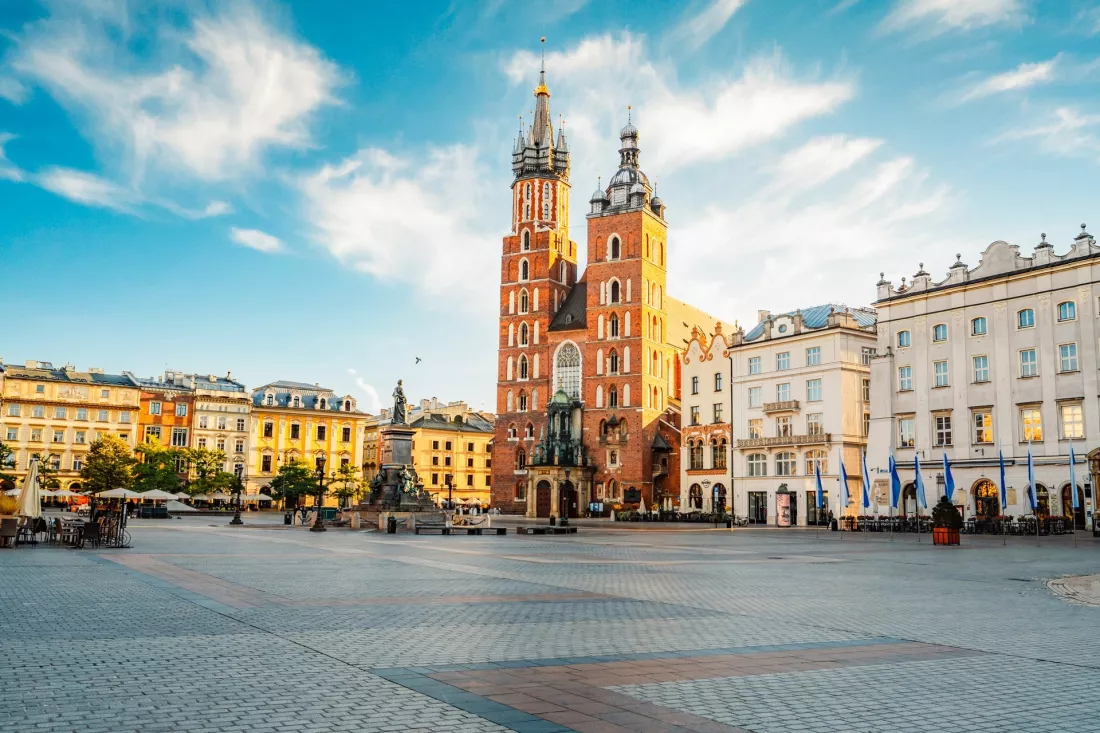


Cracow, Poland

International Relations

Master's
Table of contents
conceptual-business-handshake-with-dashboard-financial-data-analysis

⇑International Relations at UJ

Language: EnglishStudies in English
Subject area: journalism and information
Kind of studies: full-time studies
  • Description:

  • pl

⇑Why study International Relations (Master's) at UJ?

dlaczego-warto-studiowac-na-uj
Why study it:

Jagiellonian University in Kraków (UJ) offers International Relations as a two-year, full-time Master's programme (4 semesters) taught entirely in English, run by the Faculty of International and Political Studies within the VNDREAM consortium, with the specialisation Europe from Visegrad Perspective. It is meant for students who already have a good command of English and want to look at international relations, European politics, economy, society and culture from a Visegrad angle.

Programme: Central Europe in focus

The interdisciplinary programme covers, among other things:

  • core International Relations courses in the first semester at UJ
  • international relations, economics and security, mainly in the Central European context
  • the transformation of this part of the continent
  • the political systems of the countries in the region

Exchanges: four universities, four countries

Where you study

  • Kraków (Poland)Jagiellonian University – project coordinator, first semester
  • Brno (Czech Republic)Masaryk University
  • Pécs (Hungary)University of Pécs
  • Banská Bystrica (Slovakia)Matej Bel University – where the programme ends

After graduation: institutions, media and NGOs

Graduates are prepared to work in international institutions, public administration, the media and non-governmental organisations, as well as in central and local state bodies dealing with international cooperation and in companies operating across borders. They can prepare complex analyses, set up and coordinate research teams and explain international affairs to a wider audience. Those who want to continue their studies can apply to the Doctoral School in the Social Sciences.

Did you know? The Faculty's main building, which it moved into in 2021, stands near the Jagiellonian Library, close to Kraków's Błonia meadows and Jordan Park.

As of the 2026/27 admissions, based on the programme pages at studia.uj.edu.pl.

⇑Test: Is International Relations the right fit for you?

International Relations test en

Answer all the questions and find out if International Relations is the right field of study for you!

1. Are you prepared to study, write papers, and conduct debates exclusively in English?

2. Are you fascinated by the in-depth analysis of complex international conflicts and threats to global security?

3. Are you keen to study how the domestic politics of major powers (e.g., USA, China) influence their strategy on the international stage?

4. How do you view the requirement of writing a Master's thesis based on independent research and source analysis?

5. Are you interested in the interplay between the global economy and international politics (e.g., sanctions, trade wars)?

6. Are you comfortable with an interdisciplinary approach that combines knowledge from political science, law, history, and sociology?

7. Are you eager to understand the role of international law and organizations (like the UN or EU) in shaping the global order?

8. Where do you see your professional future after completing this degree?

9. Are you prepared for a critical analysis of international relations theories and their application to current events?

10. What is your main motivation for undertaking a two-year Master's degree program in this field?

⇑Definitions and quotes

International
International mostly means something (a company, language, or organization) involving more than a single country. The term international as a word means involvement of, interaction between or encompassing more than one nation, or generally beyond national boundaries. For example, international law, which is applied by more than one country and usually everywhere on Earth, and international language which is a language spoken by residents of more than one country.
International Relations
International Relations (IR) or International Affairs (IA) - commonly also referred to as International Studies (IS) or Global Studies (GS) - is the study of interconnectedness of politics, economics and law on a global level. Depending on the academic institution, it is either a field of political science, an interdisciplinary academic field similar to global studies, or an entirely independent academic discipline in which students take a variety of internationally focused courses in social science and humanities disciplines. In all cases, the field studies relationships between political entities (polities) such as sovereign states, inter-governmental organizations (IGOs), international non-governmental organizations (INGOs), other non-governmental organizations (NGOs), and multinational corporations (MNCs), and the wider world-systems produced by this interaction. International relations is an academic and a public policy field, and so can be positive and normative, because it analyses and formulates the foreign policy of a given state.
International Relations
We must distinguish between military and political power. Political power is a psychological relation between those who exercise it and those over whom it is exercised. It gives the former control over certain actions of the latter through the influence which the former exert over the latter's minds. That influence may be exerted through orders, threats, persuasion, or a combination of any of these.
Hans Morgenthau, Politics Among Nations (1948).
International Relations
The most dangerous states in the international system are continental powers with large armies.
John Mearsheimer, The Tragedy of Great Power Politics (2001).
International Relations
The bipolar world is over, but it not going to be replaced by a unipolar world empire that the United States controls alone. The world is already economically multipolar, and there will be a diffusion of power as the information revolution progresses, interdependence increases, and transnational actors become more important. The new world will not be neat, and you will have to live with that.
Joseph Samuel Nye, Jr.,Understanding International Conflicts - An Introduction to Theory and History (Sixth Edition).

Contact:

phone (+48 12) 663 11 00
Gołębia str. 24
31-007 Kraków
StudentNews Group Websites for students and future students — in Poland since 2007, across Europe since 2014. Over 50 websites and millions of users a year (Google Analytics). Studies in Europe Universities in Europe Bachelor’s Master’s Doctorate MBA Study guide Work abroad Travel For partners Advertising and cooperation Reach (online report) Contact advertising@studentnews.eu © 2003–2026 Grupa StudentNews.pl sp. z o.o., Modlnica, Poland
Privacy Policy