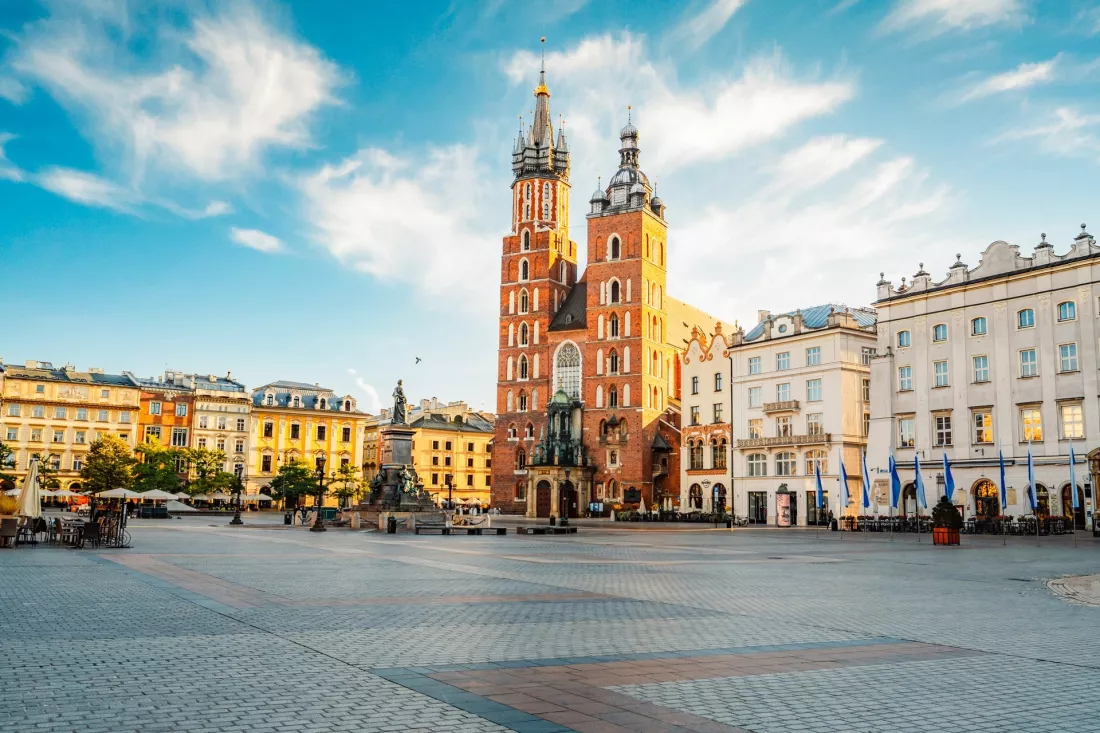


Cracow, Poland

Intellectual Property and New Technologies

Master's
Table of contents
man-installing-configuring-system-settings-laptop-computer-repair-technical-support-concept-sysadmin-it-administrator-profession

⇑Intellectual Property and New Technologies at UJ

Language: EnglishStudies in English
Subject area: law
Kind of studies: full-time studies
  • Description:

  • pl

⇑Why study Intellectual Property and New Technologies (Master's) at UJ?

dlaczego-warto-studiowac-na-uj
Why study it:

Jagiellonian University in Kraków (UJ) runs Intellectual Property and New Technologies at the Faculty of Law and Administration as a full-time Master's programme lasting 1.5 years (three semesters) and taught entirely in English. It is meant for people who want specialist knowledge of intellectual property law in relation to new technologies – including law graduates who want to strengthen their professional profile.

Programme: IP law meets new technologies

The programme covers intellectual property law in its relation to new technologies and presents European and global trends in how this law is developing. It is a field of great practical importance that changes quickly at a supranational level, and the programme reflects this in its language, form and content. Classes are highly interactive, based mainly on seminars and workshops in relatively small groups, also in courses taught online. They are taught by staff of the UJ Faculty of Law and Administration, by lecturers from academic centres in London, Amsterdam, Munich, Alicante and Singapore, by experts from WIPO and the Polish Patent Office, and by practitioners from the new technologies sector.

Languages: English as the working language

All classes are held only in English, which raises your professional skills and prepares you to work with foreign clients in an international setting.

After graduation: where IP and tech meet

Graduates are prepared to work in institutions and companies active in new technologies, in particular in:

  • technology companies – in legal departments and in other units working where intellectual property and new technologies meet
  • law firms specialising in intellectual property and new technologies
  • government institutions in this field – national, foreign and at EU level
  • non-governmental organisations working in related areas
  • research, for example at the Doctoral School in the Social Sciences

Did you know? The programme was created on the basis of an agreement with the World Intellectual Property Organization (WIPO) and the Patent Office of the Republic of Poland.

As of the 2026/27 admissions, based on the programme pages at studia.uj.edu.pl.

⇑Test: Is Intellectual Property and New Technologies the right fit for you?

lawyers-reviewing-a-tech-prototype-for-patent-protection

10 questions · two minutes

1. An AI system creates an image based on millions of existing works. Who should own the result?

2. A tech start-up asks whether its new algorithm can be patented. How would you approach the question?

3. How do you feel about reading complex legal texts alongside technical documentation?

4. A company discovers its brand is being copied by online sellers. What would you do?

5. How do you feel about open-source software and its different licence models?

6. Seminars are in English, and you’ll discuss case law with lawyers and specialists from many countries. How do you see that?

7. A university research team wants to license its invention to a company. Would you help negotiate the contract?

8. How do you feel about the debate on balancing creators’ rights with free access to knowledge?

9. Which future role sounds most like you?

10. What motivates you most to pursue a Master’s degree in Intellectual Property and New Technologies?

⇑Definitions and quotes

Intellectual
An intellectual is a person who engages in critical thinking, research, and reflection about society and proposes solutions for its normative problems. Some gain authority as public intellectuals. Coming from the world of culture, either as a creator or as a mediator, the intellectual participates in politics either to defend a concrete proposition or to denounce an injustice, usually by rejecting, producing or extending an ideology, and by defending a system of values.
Intellectual Property
Intellectual property (IP) is a category of property that includes intangible creations of the human intellect, and primarily encompasses copyrights, patents, and trademarks. It also includes other types of rights, such as trade secrets, publicity rights, moral rights, and rights against unfair competition. Artistic works like music and literature, as well as some discoveries, inventions, words, phrases, symbols, and designs, can all be protected as intellectual property. It was not until the 19th century that the term "intellectual property" began to be used, and not until the late 20th century that it became commonplace in the majority of the world.
Property
Property, in the abstract, is what belongs to or with something, whether as an attribute or as a component of said thing. In the context of this article, it is one or more components (rather than attributes), whether physical or incorporeal, of a person's estate; or so belonging to, as in being owned by, a person or jointly a group of people or a legal entity like a corporation or even a society. Depending on the nature of the property, an owner of property has the right to consume, alter, share, redefine, rent, mortgage, pawn, sell, exchange, transfer, give away or destroy it, or to exclude others from doing these things, as well as to perhaps abandon it; whereas regardless of the nature of the property, the owner thereof has the right to properly use it (as a durable, mean or factor, or whatever), or at the very least exclusively keep it.
Intellectual
“An intellectual? Yes. And never deny it. An intellectual is someone whose mind watches itself. I like this, because I am happy to be both halves, the watcher and the watched. "Can they be brought together?" This is a practical question. We must get down to it. "I despise intelligence" really means: "I cannot bear my doubts.”
Albert Camus, Notebooks (1942-1951).
Intellectual
Why do I think that we, the intellectuals, are able to help? Simply because we, the intellectuals, have done the most terrible harm for thousands of years. Mass murder in the name of an idea, a doctrine, a theory, a religion — that is all our doing, our invention: the invention of the intellectuals. If only we would stop setting man against man — often with the best intentions — much would be gained. Nobody can say that it is impossible for us to stop doing this.
Karl Popper, In Search of a Better World (1984)
Property
The superior man loves his soul; the inferior man loves his property.
Confucius, cited in A Little Book of Aphorisms (New York: 1947), p. 185.

Contact:

phone (+48 12) 663 11 00
Gołębia str. 24
31-007 Kraków
StudentNews Group Websites for students and future students — in Poland since 2007, across Europe since 2014. Over 50 websites and millions of users a year (Google Analytics). Studies in Europe Universities in Europe Bachelor’s Master’s Doctorate MBA Study guide Work abroad Travel For partners Advertising and cooperation Reach (online report) Contact advertising@studentnews.eu © 2003–2026 Grupa StudentNews.pl sp. z o.o., Modlnica, Poland
Privacy Policy