Gdańsk, Poland

Criminology and Criminal Justice

Bachelor's
Table of contents
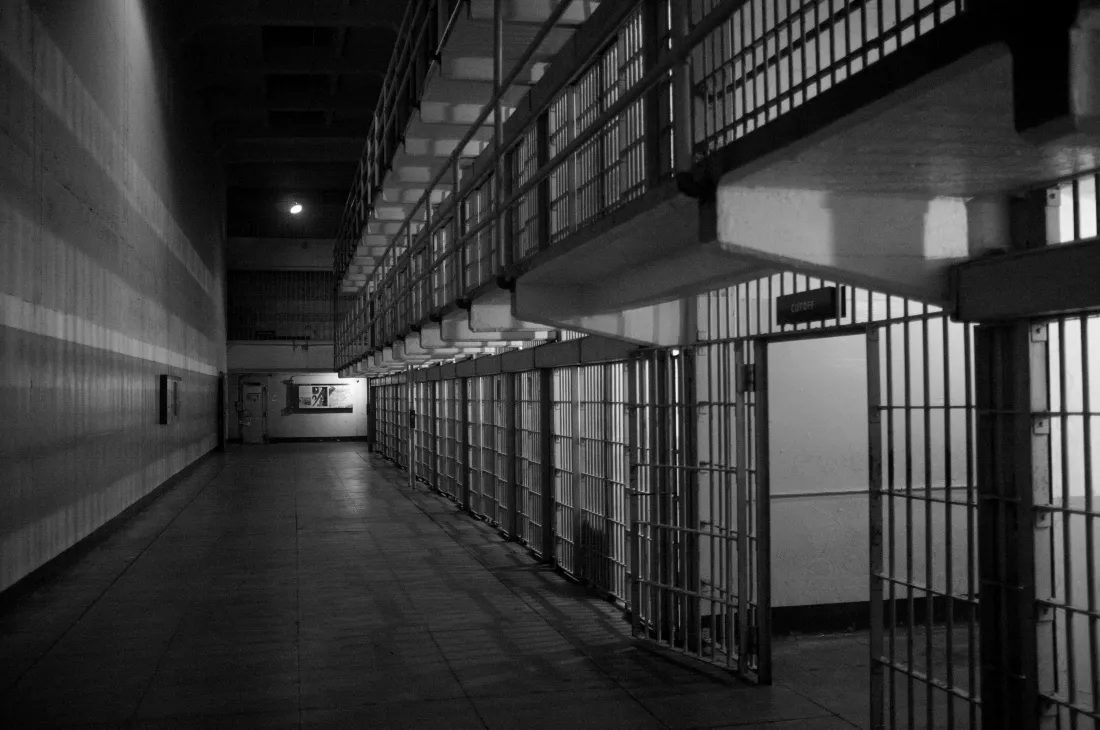
emiliano-bar-PaKHbtTDqt0-unsplash

⇑Criminology and Criminal Justice at UG

Language: EnglishStudies in English
Subject area: security services
Kind of studies: full-time studies
  • Description:

  • pl
University website: en.ug.edu.pl

⇑Why study Criminology and Criminal Justice at UG?

dlaczego-warto-studiowac-na-UG
Why study it:

Criminology and Criminal Justice at the University of Gdańsk (UG) is a 3-year (6-semester), full-time, English-taught first-cycle programme run by the Faculty of Law and Administration. It is meant for students who want to understand crime – its causes, patterns and consequences – and the institutions designed to prevent and respond to it.

Programme: criminology as a meta-discipline

Criminology is taught as a meta-discipline that brings together law, social sciences, psychology and biomedical perspectives. You study:

  • a criminal justice core: foundations of criminology, criminal law, European criminal law, comparative law, human rights and forensics
  • specialist subjects such as forensic medicine, psychopathology, resocialisation pedagogy and criminal biology
  • deviant behaviour, victimisation, crime prevention, and the philosophy and sociology of punishment
  • the organisation of the criminal justice system, seen from a comparative European and international perspective
  • classes delivered across five faculties and supervised by practitioners – judges, prosecutors, lawyers, probation officers, mediators, physicians and psychologists

Labs: ballistics, polygraph and EEG

The programme draws on more than 30 specialist laboratories. They include ballistics facilities, polygraph training and an experimental observation laboratory with one-way mirrors. You can also take part in laboratory-based research using psycho-neurophysiological methods, for example measuring brain activity with electroencephalography (EEG).

Placements: mandatory internship in the justice system

Internship at a glance

  • When4th semester
  • Statusmandatory part of the programme
  • Wheree.g. the Police, Prison Service, judiciary, Prosecutor’s Office, Customs Service or Border Guard

Languages: a fully English-taught degree

All classes are taught in English, and the comparative European and international approach prepares you to analyse different models of justice and criminal policy.

After graduation: justice, police, probation and research

Graduates are prepared for entry-level roles and further professional training in:

  • courts, prosecution support services and public administration dealing with justice policy
  • police and investigative services, including crime prevention and analytical units
  • prison and probation services, resocialisation and rehabilitation support
  • victim support, mediation and restorative justice, also in non-governmental organisations
  • insurance and risk-related sectors, e.g. fraud prevention and claims analysis
  • research and academia, as a foundation for postgraduate study

Did you know? The programme has been run at UG since 2013 and is continuously developed and updated.

As of the 2026/27 admissions, based on the programme pages at rekrutacja.ug.edu.pl.

⇑Test: Is Criminology and Criminal Justice the right fit for you?

Criminology and Criminal Justice test

Answer all questions and check if Criminology and Criminal Justice is the right field of study for you!

1. Do you find yourself interested in understanding the causes of crime and deviant behaviour?

2. How appealing is the idea of analysing laws and their impact on society?

3. Do you enjoy debates about justice, fairness, and human rights?

4. To what extent do you like analysing data, statistics, or reports to understand social problems?

5. How interested are you in learning about police, courts, and correctional systems?

6. Do you see yourself helping to design solutions for crime prevention?

7. How much do you value ethics and integrity in legal or social work?

8. Do you enjoy working in teams and discussing complex social problems?

9. How comfortable are you with speaking in public or presenting arguments clearly?

10. What motivates you most about studying Criminology and Criminal Justice?

⇑Definitions and quotes

Criminal Justice
Criminal justice is the delivery of justice to those who having committed crimes. The criminal justice system is a series of government agencies and institutions whose goal is to identify and catch the law-breakers and to inflict a form of punishment on them. Other goals include the rehabilitation of offenders, preventing other crimes, and moral support for victims. The primary institutions of the criminal justice system are the police, prosecution and defense lawyers, the courts and prisons.
Criminology
Criminology (from Latin crīmen, "accusation" originally derived from the Ancient Greek verb "krino" "κρίνω", and Ancient Greek -λογία, -logy|-logia, from "logos" meaning: “word,” “reason,” or “plan”) is the scientific study of the nature, extent, management, causes, control, consequences, and prevention of criminal behavior, both on the individual and social levels. Criminology is an interdisciplinary field in both the behavioral and social sciences, drawing especially upon the research of sociologists, psychologists, philosophers, psychiatrists, biologists, social anthropologists, as well as scholars of law.
Justice
Justice is the legal or philosophical theory by which fairness is administered. The concept of justice differs in every culture. An early theory of justice was set out by the Ancient Greek philosopher Plato in his work The Republic. Advocates of divine command theory say that justice issues from God. In the 17th century, theorists like John Locke advocated natural rights as a derivative of justice. Thinkers in the social contract tradition state that justice is derived from the mutual agreement of everyone concerned. In the 19th century, utilitarian thinkers including John Stuart Mill said that justice is what has the best consequences. Theories of distributive justice concern what is distributed, between whom they are to be distributed, and what is the proper distribution. Egalitarians state that justice can only exist within the coordinates of equality. John Rawls used a theory of social contract to show that justice, and especially distributive justice, is a form of fairness. Property rights theorists (like Robert Nozick) take a deontological view of distributive justice and state that property rights-based justice maximizes the overall wealth of an economic system. Theories of retributive justice are concerned with punishment for wrongdoing. Restorative justice (also sometimes called "reparative justice") is an approach to justice that focuses on restoring what is good, and necessarily focuses on the needs of victims and offenders.
Justice
This shows you are above
Your justicers; that these our nether crimes
So speedily can venge!
William Shakespeare, King Lear (1608), Act IV, scene 2, line 78.
Justice
Liberty, equality — bad principles! The only true principle for humanity is justice; and justice to the feeble becomes necessarily protection or kindness.
Henri-Frédéric Amiel, undated entry of December 1863 or early 1864, in Amiel's Journal : The Journal Intime of Henri-Frédéric Amiel as translated by Humphry Ward (1893), p. 215.
Justice
Law and justice are not always the same. When they aren't, destroying the law may be the first step toward changing it.
Gloria Steinem, Open Secrets : Ninety-four Women in Touch with Our Time (1972) by Barbaralee Diamonstein.

Contact:

Maii Janion 7 street
80-309 Gdańsk
tel. +48 58 523 25 32
Privacy Policy