
Warsaw, Poland

Organic Agriculture and Food Production

Bachelor's
Table of contents
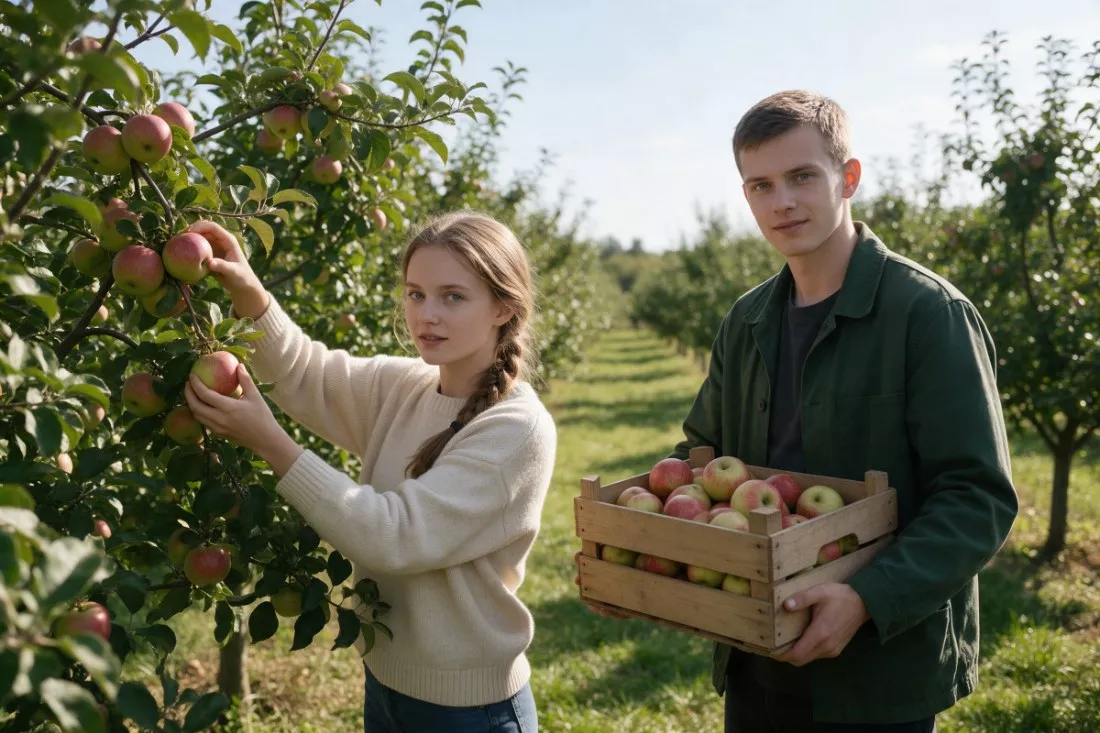
studenci-zbieraja-jablka-w-ekologicznym-sadzie

⇑Organic Agriculture and Food Production at SGGW

Language: EnglishStudies in English
Subject area: agriculture, forestry and fishery, veterinary
Kind of studies: full-time studies
  • Description:

  • pl
University website: www.sggw.edu.pl/en

⇑Why study Organic Agriculture and Food Production at the Warsaw University of Life Sciences – SGGW?

Dlaczego warto studiować w Szkole Głównej Gospodarstwa Wiejskiego w Warszawie
Why study it:

Organic Agriculture and Food Production is a three-year, full-time first-cycle programme taught in English at the Warsaw University of Life Sciences – SGGW, ending with a bachelor's degree. It is for you if you want to work in organic production along the whole chain, from the field to processing and certification.

Programme: from agroecology to organic processing

The first year gives you a base in environment protection, chemistry, botany, agrometeorology, soil science and agroecology, together with an introduction to organic agriculture and the control and certification system of organic production. Next you study organic crops and grassland farming, weed management, plant protection, fertilisation, plant breeding, livestock production, and organic vegetable and fruit production. In the final year you deal with conversion of a farm to the organic system, processing of organic plant and animal raw materials, economics and organisation of organic farms, international agricultural markets, herbs in organic farming and entrepreneurship in organic business. The programme was drawn up in line with the expectations of employers from the organic food sector, and some classes are taught by specialists from abroad.

Labs: study trips to farms and processing plants

Study trips: you visit organic farms in the second year and organic processing plants in the third, so you see in practice what you study in lectures.

Languages: English and other languages

Languages

  • Language of instructionEnglish; the same programme is also offered in Polish, with separate recruitment
  • Foreign language coursesEnglish, German, Russian, Spanish or Polish
  • Electivessome of them taught in a foreign language

Exchanges: Erasmus exchange

Erasmus from the second year: you can take part in international exchange under the Erasmus programme, and from the third semester you shape your own path with a wide range of electives.

After graduation: farms, certification and agribusiness

Graduates know the specifics of the organic food market and can work in:

  • organic farms
  • organic food processing and trade
  • certification bodies, government offices and agricultural advisory centres
  • international organisations connected with organic production
  • companies serving domestic and international organic production, and agribusiness
  • agricultural magazines, radio and television

Based on the programme pages at sggw.edu.pl and the SGGW syllabus.
⇑Test: Is Organic Agriculture and Food Production the right fit for you?

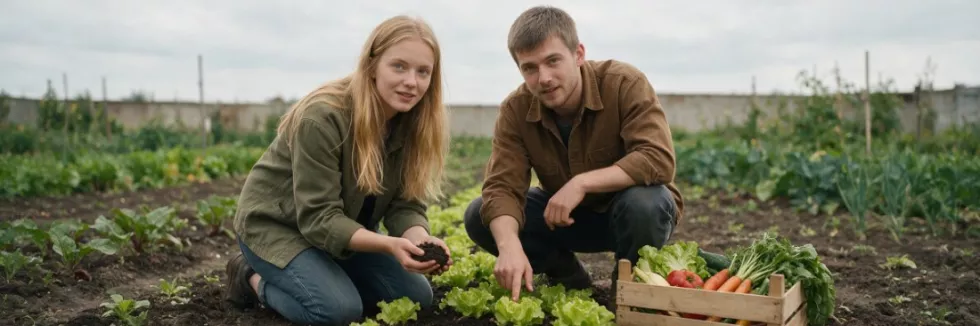
students-checking-soil-in-an-organic-vegetable-field

10 questions · two minutes

1. At a market you see vegetables labelled as organic. What are you curious about?

2. Do you garden or grow anything?

3. Pests have appeared in a vegetable bed. What do you do?

4. Do you ever wonder what’s going on in the soil?

5. You’ve got far too much fruit from the orchard. What do you do with it?

6. You’ll study in an international environment, in English: classes, fieldwork reports and discussions, with students from many countries. How does that sound?

7. How do you feel about working outdoors, even on cold or rainy days?

8. You’re thinking about running your own organic farm. What do you take into account?

9. What kind of work can you see yourself doing in future?

10. What motivates you most to study Organic Agriculture and Food Production?

⇑Definitions and quotes

Agriculture
Agriculture is the cultivation of land and breeding of animals and plants to provide food, fiber, medicinal plants and other products to sustain and enhance life. Agriculture was the key development in the rise of sedentary human civilization, whereby farming of domesticated species created food surpluses that enabled people to live in cities. The study of agriculture is known as agricultural science. The history of agriculture dates back thousands of years; people gathered wild grains at least 105,000 years ago, and began to plant them around 11,500 years ago, before they became domesticated. Pigs, sheep, and cattle were domesticated over 10,000 years ago. Crops originate from at least 11 regions of the world. Industrial agriculture based on large-scale monoculture has in the past century become the dominant agricultural method.
Food
Food is any substance consumed to provide nutritional support for an organism. It is usually of plant or animal origin, and contains essential nutrients, such as carbohydrates, fats, proteins, vitamins, or minerals. The substance is ingested by an organism and assimilated by the organism's cells to provide energy, maintain life, or stimulate growth.
Agriculture
But let the good old corn adorn
The hills our fathers trod;
Still let us, for his golden corn,
Send up our thanks to God!
John Greenleaf Whittier, The Corn-Song: Quoted in Hoyt's New Cyclopedia Of Practical Quotations (1922), Lemma "Agriculture" p. 18-19.
Food
Bhikkhus, this Kassapa is content with any kind of almsfood, and he speaks in praise of contentment with any kind of almsfood, and he does not engage in a wrong search, in what is improper, for the sake of a almsfood. If he does not get almsfood he is not agitated, and if he gets it he uses it without being tied to it, uninfatuated with it, not blindly absorbed in it, seeing the danger in it, understanding the escape. ...
Therefore, bhikkhus, you should train yourselves thus: 'We will be content with any kind of almsfood, and we will speak in praise of contentment with any kind of almsfood, and we will not engage in a wrong search, in what is improper, for the sake of almsfood. If we do not get almsfood we will not be agitated, and if we get it we will use it without being tied to it, uninfatuated with it, not blindly absorbed in it, seeing the danger in it, understanding the escape.'
Gautama Buddha, Samyutta Nikaya, as translated by B. Bodhi (2000), p. 662
Food
Moses … denied to the members of the sacred commonwealth unrestricted liberty to use and partake of the other kinds of food. All the animals of land, sea or air whose flesh is the finest and fattest, thus titillating and exciting the malignant foe pleasure, he sternly forbade them to eat, knowing that they set a trap for the most slavish of the senses, the taste, and produce gluttony, an evil very dangerous both to soul and body.
Philo, On The Special Laws, Part IV, p. 69

Contact:

Nowoursynowska 166 str.
02-787 Warszawa
tel. (48 22) 59 31 000
StudentNews Group Websites for students and future students — in Poland since 2007, across Europe since 2014. Over 50 websites and millions of users a year (Google Analytics). Studies in Europe Universities in Europe Bachelor’s Master’s Doctorate MBA Study guide Work abroad Travel For partners Advertising and cooperation Reach (online report) Contact advertising@studentnews.eu © 2003–2026 Grupa StudentNews.pl sp. z o.o., Modlnica, Poland
Privacy Policy