
Warsaw, Poland

Graphic Design and Multimedia Art

Bachelor's
Table of contents
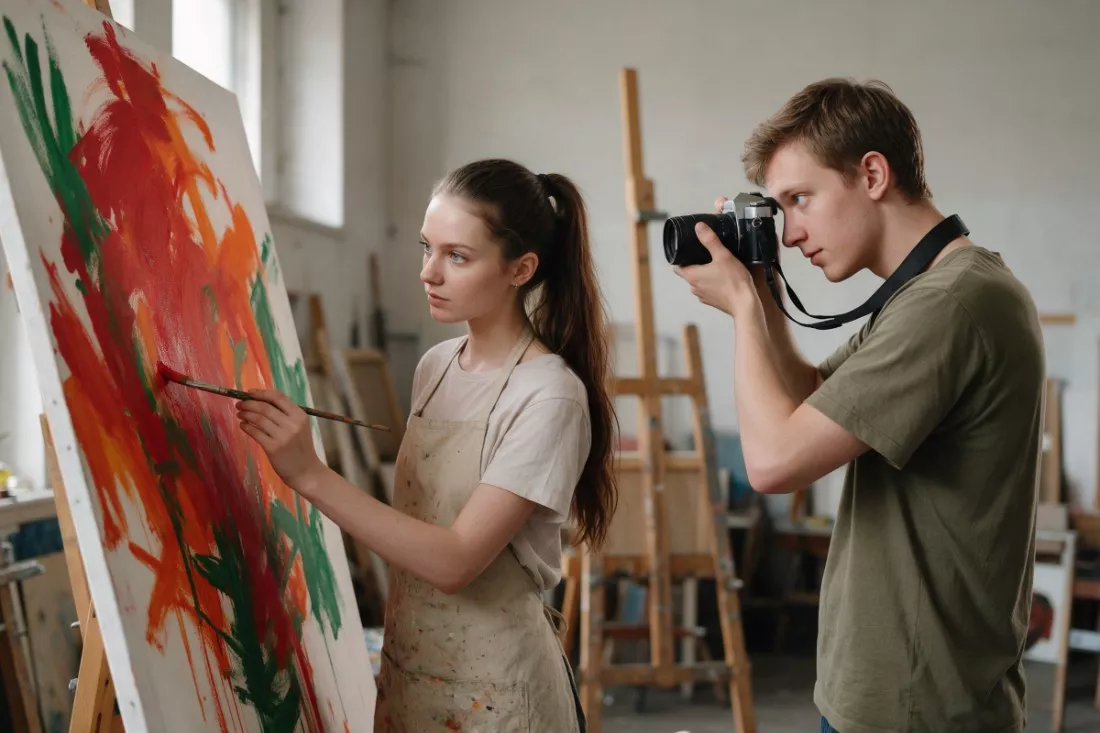
studenci-maluja-i-fotografuja-abstrakcyjny-obraz-w-pracowni

⇑Graphic Design and Multimedia Art at PJATK

Language: EnglishStudies in English
Subject area: arts
Kind of studies: full-time studies
  • Description:

  • pl

⇑Why study Graphic Design and Multimedia Art at the Polish-Japanese Academy of Information Technology?

Dlaczego warto studiować w Polsko-Japońskiej Akademii Technik Komputerowych
Why study it:

Graphic Design and Multimedia Art at the Polish-Japanese Academy of Information Technology (PJAIT) is a full-time bachelor's programme lasting 6 semesters and taught entirely in English. It is made for creative people who want to build a portfolio and an international career in design.

Programme: the whole design process, in English

You learn visual communication design, brand identity, illustration, animation, digital publishing and multimedia projects. The programme walks you through the entire design process, from problem analysis and concept work, through design and prototyping, to presenting the final solution. You combine creativity with technology, using multimedia and artificial intelligence in your projects. By the end of the third semester you follow the main curriculum, which builds fluency in design tools, and you choose the topic of your thesis in the fourth semester. Classes are led by artists, designers and engineers from different countries and backgrounds.

Specialisation: three directions for your thesis

Later in your studies you narrow your interests towards one of these areas:

  • designing intelligent, interactive spaces based on multimedia installations, built on individual artistic expression and the language of new media
  • designing communication and game graphics, as well as graphics for augmented reality applications, including testing and iteration of your games
  • user experience design, with a diploma thesis based on your own artistic statement made with the latest digital technologies

Labs: software, laboratories and traditional media

Day to day you work in Unity, Blender, Maya, TouchDesigner and Adobe CC, using the software and modern equipment in the academy's laboratories, and you can combine traditional media such as screen printing, riso printing and etching with computer, 3D and interactive animation.

After graduation: creative agencies, studios or your own business

After graduating you are prepared to work in 2D and 3D design, visual identity, storytelling and animated film production, and to think critically while using the latest AI solutions.

Selected projects are created together with companies and institutions and are put into practice, so you can test your skills while still studying. You can then aim for international creative agencies, design studios and cultural institutions, or start a creative business of your own.

Based on the programme pages at pja.edu.pl.
⇑Test: Is Graphic Design and Multimedia Art the right fit for you?

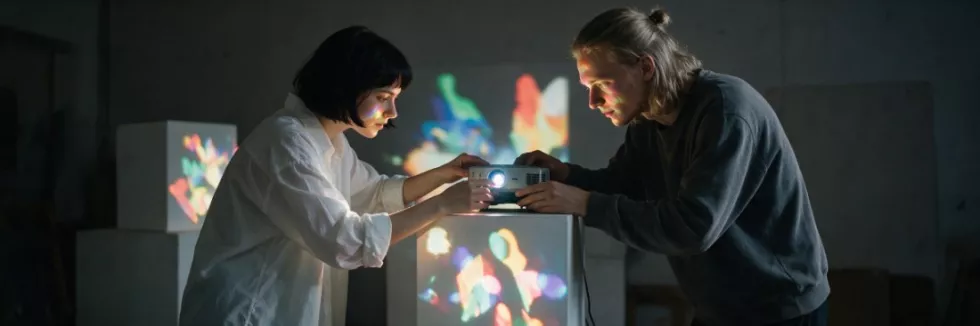
art-students-projecting-colourful-shapes-onto-white-cubes

10 questions · two minutes
1. You visit a contemporary art exhibition full of video and light installations. How do you react?

2. How do you feel about drawing and painting?

3. You’ve got a free afternoon plus a camera, a projector and a computer. What do you do?

4. Studio classes, critiques and discussions about art will all be in English, in a group with people from many countries and artistic traditions. How does that sound?

5. You need to make a piece on the theme of memory. Where do you start?

6. Someone criticises your project during a critique. How do you react?

7. Do you have a style of your own, or themes you keep coming back to?

8. What do you think about combining traditional techniques, such as drawing or printmaking, with animation and projection?

9. Where do you see yourself after graduating?

10. What motivates you most to study Graphic Design and Multimedia Art?

⇑Definitions and quotes

Art
Art is a diverse range of human activities in creating visual, auditory or performing artifacts (artworks), expressing the author's imaginative or technical skill, intended to be appreciated for their beauty or emotional power. In their most general form these activities include the production of works of art, the criticism of art, the study of the history of art, and the aesthetic dissemination of art.
Design
Design is the creation of a plan or convention for the construction of an object, system or measurable human interaction (as in architectural blueprints, engineering drawings, business processes, circuit diagrams, and sewing patterns). Design has different connotations in different fields (see design disciplines below). In some cases, the direct construction of an object (as in pottery, engineering, management, coding, and graphic design) is also considered to use design thinking.
Graphic Design
Graphic design is the process of visual communication and problem-solving using one or more of typography, photography and illustration. The field is considered a subset of visual communication and communication design, but sometimes the term "graphic design" is used synonymously. Graphic designers create and combine symbols, images and text to form visual representations of ideas and messages. They use typography, visual arts and page layout techniques to create visual compositions. Common uses of graphic design include corporate design (logos and branding), editorial design (magazines, newspapers and books), wayfinding or environmental design, advertising, web design, communication design, product packaging and signage.
Multimedia
Multimedia is content that uses a combination of different content forms such as text, audio, images, animations, video and interactive content. Multimedia contrasts with media that use only rudimentary computer displays such as text-only or traditional forms of printed or hand-produced material.
Design
Good design is also an act of communication between the designer and the user, except that all the communication has to come about by the appearance of the device itself. The device must explain itself.
Donald Norman (2002), The Design of Everyday Things, Introduction to the 2002 Edition
Design
The urge for good design is the same as the urge to go on living. The assumption is that somewhere, hidden, is a better way of doing things.
Attributed to Harry Bertoia, Knoll Design, p. 66 in: Carlotte & Peter Fiell (2005) 1000 Chairs. Introduction
Art
Most artists are surrealists. … always dreaming something and then they paint it.
Dong Kingman, Twenty-two Famous Painters and Illustrators Tell How They Work (1964).

Contact:

Koszykowa str. 86
02-008 Warsaw
phone: (+48) 22 58 44 500
fax: (+48) 22 58 44 501
StudentNews Group Websites for students and future students — in Poland since 2007, across Europe since 2014. Over 50 websites and millions of users a year (Google Analytics). Studies in Europe Universities in Europe Bachelor’s Master’s Doctorate MBA Study guide Work abroad Travel For partners Advertising and cooperation Reach (online report) Contact advertising@studentnews.eu © 2003–2026 Grupa StudentNews.pl sp. z o.o., Modlnica, Poland
Privacy Policy