Zielona Góra, Poland

Law and sustainability

Bachelor's
Table of contents
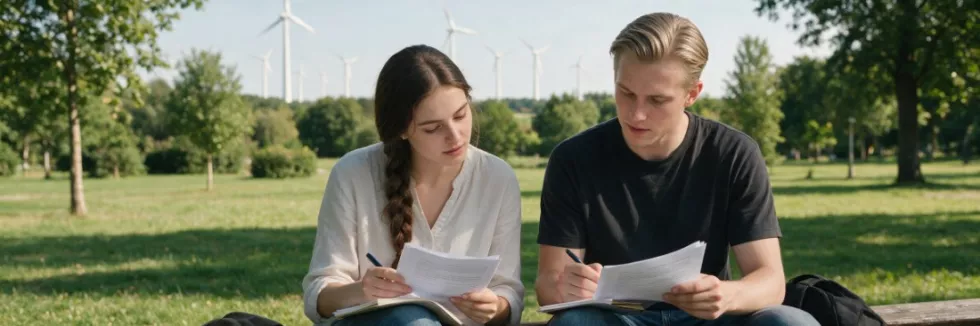
studenci-omawiaja-przepisy-o-ochronie-srodowiska

⇑Law and sustainability at UZ

Language: EnglishStudies in English
Subject area: law
Kind of studies: full-time studies
University website: www.uz.zgora.pl/index.php?en

⇑Test: Is Law and sustainability the right fit for you?

law-students-reading-documents-in-a-park-near-wind-turbines

10 questions · two minutes

1. A local company is discharging waste water into a river. What interests you most about the case?

2. Do you ever wonder how rules that change everyday habits come about – like bans on single-use plastics?

3. Should companies be held legally responsible for misleading green claims in their adverts?

4. Climate change is a global problem, and in class you’ll read treaties and analyses in English and debate them with people from many countries. How does that sound?

5. Someone in a discussion says ‘environmental protection holds back the economy’. How do you respond?

6. How do you feel about writing essays and justifying your point of view?

7. The local council is planning a wind farm, and some residents are against it. How do you see it?

8. How do you cope with learning lots of detailed information?

9. What do you picture yourself doing in the future?

10. What motivates you most to study Law and sustainability?

⇑Definitions and quotes

Law
Law is a system of rules that are created and enforced through social or governmental institutions to regulate behavior. Law is a system that regulates and ensures that individuals or a community adhere to the will of the state. State-enforced laws can be made by a collective legislature or by a single legislator, resulting in statutes, by the executive through decrees and regulations, or established by judges through precedent, normally in common law jurisdictions. Private individuals can create legally binding contracts, including arbitration agreements that may elect to accept alternative arbitration to the normal court process. The formation of laws themselves may be influenced by a constitution, written or tacit, and the rights encoded therein. The law shapes politics, economics, history and society in various ways and serves as a mediator of relations between people.
Sustainability
Sustainability (from 'sustain' and 'ability') is the process of change, in which the exploitation of resources, the direction of investments, the orientation of technological development and institutional change are all in harmony and enhance both current and future potential to meet human needs and aspirations. The organizing principle for sustainability is sustainable development, which includes the following interconnected domains: environment, economic and social. Sub-domains of sustainable development have been considered also: cultural, technological and political. Sustainable development, is the development that meets the needs of the present without compromising the ability of future generations to meet their own needs. Brundtland Report for the World Commission on Environment and Development (1992) introduced the term of sustainable development.
Law
As in elections, the law pretended universal rights, while securing the interests of powerful houses.
David Brin, Glory Season (1993), chapter 27.
Sustainability
These, then, are some of the basic principles of ecology—interdependence, recycling, partnership, flexibiility, diversity, and, as a consequence of all those, sustainability. ...the survival of humanity will depend on our ecological literacy, on our ability to understand these principles of ecology and live accordingly.
Fritjof Capra The Web of Life (1996) "Epilogue: Ecological Literacy." p.304
Sustainability
We have an economy where we steal the future, sell it in the present, and call it GDP [gross domestic product].
Paul Hawken Top 10 Myths About Sustainability at mindfully.org, 2009.
Privacy Policy