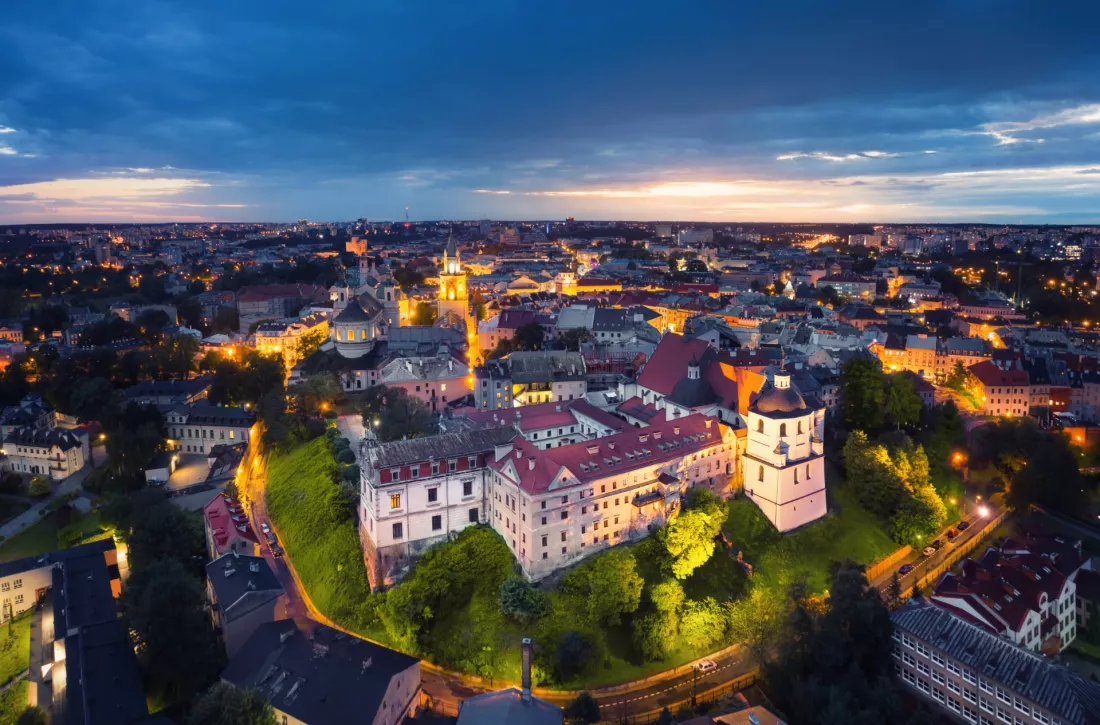
Lublin, Poland

Regional Studies – Central East Europe
(field of studies: International Relations)

Bachelor's
Table of contents
oleksandr-SNlO1GH-lXQ-unsplash

⇑Regional Studies – Central East Europe at UMCS

Field of studies: International Relations
Language: EnglishStudies in English
Subject area: social
Kind of studies: full-time studies
  • Description:

  • pl
University website: www.umcs.pl/en

⇑Test: Is Regional Studies – Central East Europe the right fit for you?

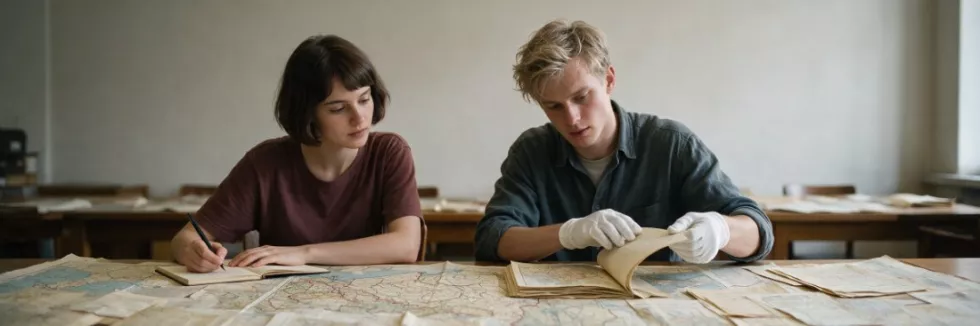
students-examining-old-maps-of-central-and-eastern-europe

10 questions · two minutes

1. How do you feel about exploring how the region changed after the fall of communism?

2. Your seminar group debates why some countries in the region joined the European Union and others did not. How do you take part?

3. How do you feel about learning a language of the region, perhaps one written in Cyrillic?

4. A news story about a border or minority conflict in the region appears. What do you do?

5. The programme is taught in English, and your classmates come from many countries. How do you feel about that?

6. Which project would you choose?

7. How do you feel about the region’s cultural heritage – literature, film, music, cuisine?

8. An organisation needs a short briefing on energy security in the region. How do you react?

9. Which future job sounds most like you?

10. What motivates you most to study Regional Studies – Central East Europe?

⇑Definitions and quotes

Central
Central is an adjective usually referring to being in the center of some place or (mathematical) object.
Europe
Europe is a continent located entirely in the Northern Hemisphere and mostly in the Eastern Hemisphere. It is bordered by the Arctic Ocean to the north, the Atlantic Ocean to the west, and the Mediterranean Sea to the south. It comprises the westernmost part of Eurasia.
Europe
Soon nostalgia will be another name for Europe.
Angela Carter (1940–92), British postmodern novelist. repr. Vintage (1992). Expletives Deleted, review of John Berger, Once in Europa, The Washington Post (1989)
Europe
Many of the traits on which modern Europe prides itself came to it from Muslim Spain. Diplomacy, free trade, open borders, the techniques of academic research, of anthropology, etiquette, fashion, various types of medicine, hospitals, all came from this great city of cities. (...) The surprise is the extent to which Islam has been a part of Europe for so long, first in Spain, then in the Balkans, and the extent to which it has contributed so much towards the civilisation which we all too often think of, wrongly, as entirely Western. Islam is part of our past and our present, in all fields of human endeavour. It has helped to create modern Europe. It is part of our own inheritance, not a thing apart.
Charles, Prince of Wales, 27th October 1993, Islam and the West
Europe
Europe dominated the world, but it failed to dominate itself. For five hundred years Europe tore itself apart in civil wars.
George Friedman, The Next 100 Years: A Forecast for the 21st Century (2009), Doubleday, p. 22

Contact:

Pl. Marii Curie-Sklodowskiej 5
20-031 Lublin
Department of Education
International Students Office
phone: (+48) 81 537 29 26
facebook International Student Office


Privacy Policy