

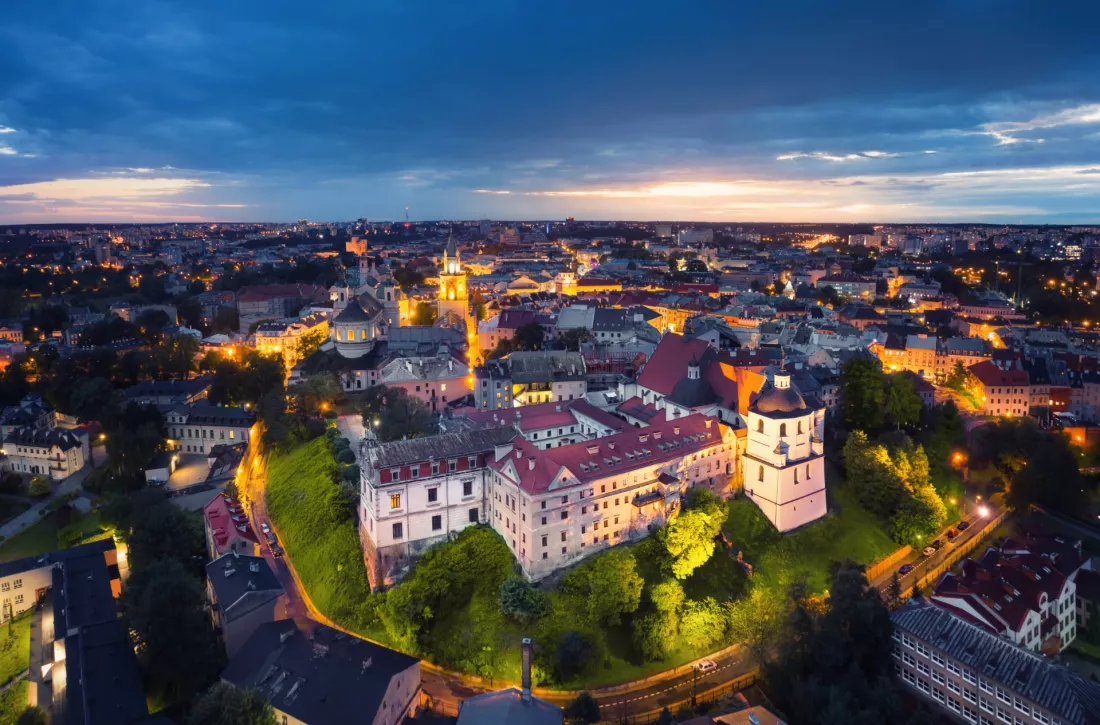
Lublin, Poland

Materials Chemistry
(field of studies: Chemistry)

Master's
Table of contents
yucel-moran-Xesi4nV-X9I-unsplash

⇑Materials Chemistry at UMCS

Field of studies: Chemistry
Language: EnglishStudies in English
Subject area: engineering and engineering trades
Kind of studies: full-time studies
  • Description:

  • pl
University website: www.umcs.pl/en

⇑Why choose the Materials Chemistry specialisation at UMCS?

Dlaczego warto studiować na UMCS
Why study it:

Materials Chemistry is a specialisation within the Chemistry programme (master's, second-cycle studies) at Maria Curie-Skłodowska University in Lublin. It is taught in English and is meant for graduates of bachelor's programmes who want to expand their knowledge of chemistry in the direction of modern materials.

Programme: areas of study

The study plan of this specialisation includes classes in areas such as:

  • physicochemistry of interfaces and crystallography;
  • solid state chemistry and theoretical chemistry;
  • technology and properties of new polymers;
  • optical fibres technology;
  • adsorbents, catalysts and heterogeneous catalysis;
  • instrumental analysis, spectroscopy and modern diffraction methods.

Specialisation: computer simulations and elective choices

Besides the core subjects you can choose elective courses that deepen your interests, for example physical adsorption on solid surfaces or an outline of green chemistry. The plan also includes computer simulations in materials chemistry. In the second semester a specialisation course is added to the plan.

Labs: your diploma project

A diploma seminar and a diploma project accompany you in the last two semesters, together with a monographic lecture and humanities or social science subjects.

Languages: studying in English

The programme is taught in English and is open to both Polish and international students.

Graduates of the master's studies should have the theoretical knowledge and skills to solve chemical problems, also in non-standard situations. They should be able to give opinions on the basis of limited information, discuss chemistry with specialists as well as non-specialists and lead teamwork.

After graduation: where this can take you

After graduation you are prepared to:

  • work in the chemical industry and related areas;
  • work in state and municipal administration;
  • work in education, after completing a teaching specialty;
  • take up research challenges and start PhD studies.

Based on the study plan and the UMCS admissions page.

Updated: 10.11.2026
⇑Test: Is Materials Chemistry the right fit for you?

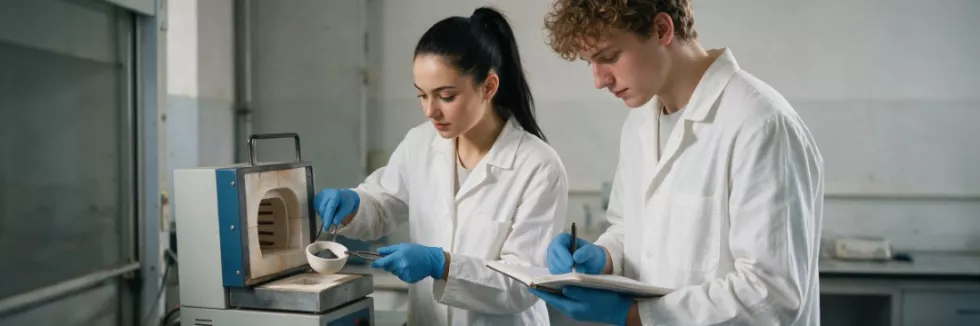
chemists-taking-a-ceramic-crucible-out-of-a-tube-furnace

10 questions · two minutes
1. You need a material that conducts ions well but stays stable at high temperature. How do you start?

2. How do you feel about interpreting X-ray diffraction patterns, spectra and electron microscope images?

3. Your synthesis fails for the fifth time. How do you react?

4. You’ll handle reactive precursors, solvents and high-temperature furnaces. How do you approach lab safety?

5. Which research topic attracts you most?

6. How do you feel about writing scientific papers and presenting your results at conferences?

7. The programme is taught in English, and you’ll work in research labs with students from many countries. How do you feel about that?

8. How do you feel about using computer modelling to predict a material’s structure before making it?

9. Which future path sounds most like you?

10. What motivates you most to pursue a Master’s degree in Materials Chemistry?

⇑Definitions and quotes

Chemistry
Chemistry is the scientific discipline involved with compounds composed of atoms, i.e. elements, and molecules, i.e. combinations of atoms: their composition, structure, properties, behavior and the changes they undergo during a reaction with other compounds. Chemistry addresses topics such as how atoms and molecules interact via chemical bonds to form new chemical compounds. There are four types of chemical bonds: covalent bonds, in which compounds share one or more electron(s); ionic bonds, in which a compound donates one or more electrons to another compound to produce ions (cations and anions); hydrogen bonds; and Van der Waals force bonds.
Chemistry
Once you are there you'll be like a drop of water in a piece of rock crystal- your medium will dignify your commonness.
Thomas Hardy, A Pair of Blue Eyes, 1873
Chemistry
I was an atheist, finding no reason to postulate the existence of any truths outside of mathematics, physics and chemistry. But then I went to medical school, and encountered life and death issues at the bedsides of my patients. Challenged by one of those patients, who asked "What do you believe, doctor?", I began searching for answers.
Francis Collins, a geneticist who led the U.S. government’s effort to decipher the human genome (DNA). cnn.com
Chemistry
The Joker: You IDIOT! You made me. Remember? You dropped me into that vat of chemicals. That wasn't easy to get over, and don't think that I didn't try.
Sam Hamm, Warren Skaaren Batman (1989 film)

Contact:

Pl. Marii Curie-Sklodowskiej 5
20-031 Lublin
Department of Education
International Students Office
phone: (+48) 81 537 29 26
facebook International Student Office


StudentNews Group Websites for students and future students — in Poland since 2007, across Europe since 2014. Over 50 websites and millions of users a year (Google Analytics). Studies in Europe Universities in Europe Bachelor’s Master’s Doctorate MBA Study guide Work abroad Travel For partners Advertising and cooperation Reach (online report) Contact advertising@studentnews.eu © 2003–2026 Grupa StudentNews.pl sp. z o.o., Modlnica, Poland
Privacy Policy