

Lublin, Poland

Business Analytics and Data Science

Master's
Table of contents
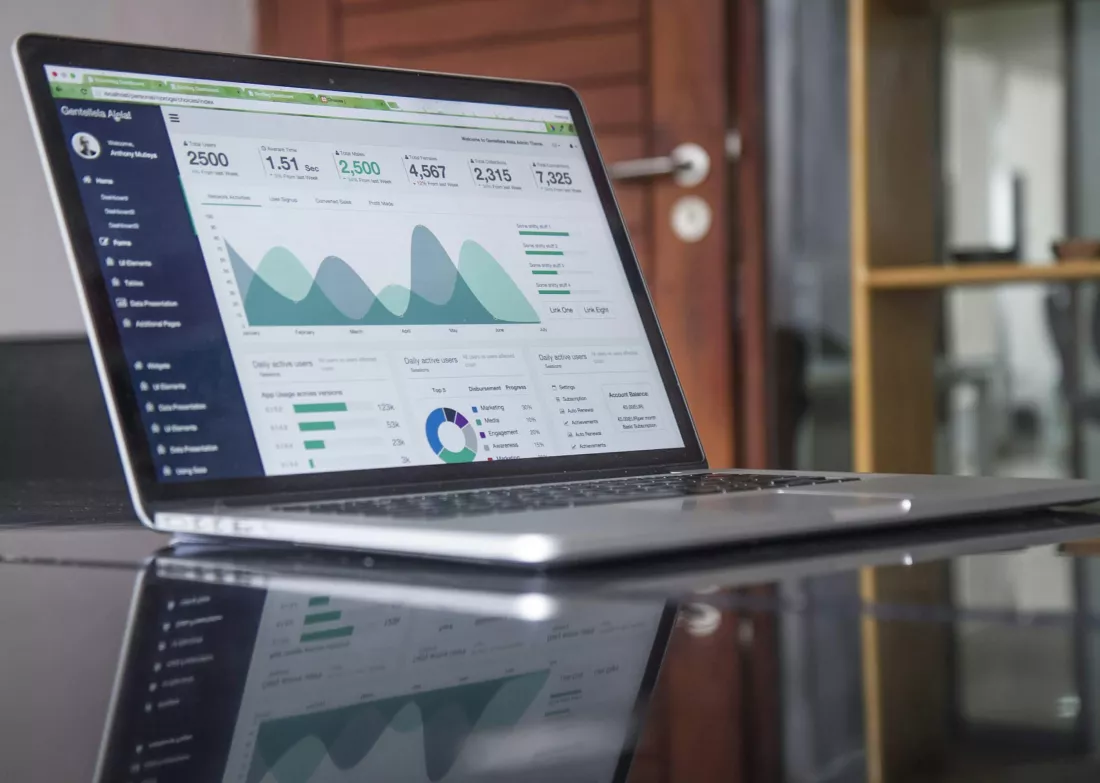
carlos-muza-hpjSkU2UYSU-unsplash

⇑Business Analytics and Data Science at UMCS

Language: EnglishStudies in English
Subject area: economy and administration
Kind of studies: full-time studies
  • Description:

  • pl
University website: www.umcs.pl/en

⇑Why study Business Analytics and Data Science (Master's) at UMCS?

dlaczego-warto-studiowac-na-UMCS
Why study it:

The Master's programme in Business Analytics and Data Science at Maria Curie-Skłodowska University in Lublin (UMCS) is a two-year, full-time course with a general academic profile, run in English by the Faculty of Economics. It is an interdisciplinary programme for graduates – mainly from abroad – who want to combine knowledge of the economic system with IT and work as analysts.

Programme: built with a technology partner

The programme is delivered in strategic collaboration with Sii, a Polish technology consulting, digital transformation, engineering and business services company. It is based on the experience of business practitioners and on solving problems taken from business practice, and it is updated together with practitioners.

Courses such as the Analytical Project, Soft Skills and Communication Training and Business Simulation build the skills needed in an analyst's daily work.

Specialisation: electives instead of minors

There are no minors – you shape your own path with electives taught in English and Polish; each starts with at least 20 students, and when places are limited your grade average decides.

Labs: analytics tools, AI and simulations

Classes go well beyond lectures and seminars:

  • analytical workshops with professional analytical tools and statistical and econometric software
  • using artificial intelligence in business analytics
  • interactive business simulations reflecting the dynamics of economic processes, where you make decisions and watch the results
  • group projects that train teamwork, communication and problem solving
  • some classes held remotely, with the option to enrol yourself in selected groups, seminars and lectures

Placements: optional, but encouraged

A work placement is not compulsory on this programme. You are, however, encouraged to take one voluntarily and gain professional experience while you study. Lublin's business services sector (BPO, SSC, IT) is a pillar of the city's development strategy and offers analysts work in international teams for global clients.

Exchanges: Erasmus+ and an international group

Exchanges at a glance

  • Erasmus+study at one of dozens of partner universities, already after the first semester
  • At UMCSa multinational group of students from all over the world

After graduation: analyst roles across industries

Graduates can work in enterprises, banks, insurance companies, research centres, marketing agencies and consulting firms – for example as business, database, financial, business operations or market research analysts – in Lublin, elsewhere in Poland or abroad.

As of the 2026/27 admissions, based on the programme pages at irk.umcs.pl.

⇑Test: Is Business Analytics and Data Science the right fit for you?

data-scientist-analysing-charts-on-two-monitors-test

10 questions · two minutes

1. A retailer wants to predict which customers are likely to stop buying. How do you approach it?

2. How comfortable are you with statistics, such as regression, hypothesis testing and probability?

3. How do you feel about writing code in Python or R to clean and analyse large datasets?

4. Your model shows excellent accuracy, but the business results don’t improve. What do you do?

5. You need to explain a complex analysis to a board with no technical background. How do you prepare?

6. A dataset includes sensitive customer information. What’s your attitude?

7. The programme is taught in English and your project team includes analysts from several countries. How do you see that?

8. You’re asked to lead a data project, from defining the question to deploying a dashboard. How do you feel?

9. Which of these topics would you most like to explore in your thesis?

10. What motivates you most to pursue a Master’s degree in Business Analytics and Data Science?

⇑Definitions and quotes

Analytics
Analytics is the discovery, interpretation, and communication of meaningful patterns in data. Especially valuable in areas rich with recorded information, analytics relies on the simultaneous application of statistics, computer programming and operations research to quantify performance.
Business
Business is the activity of making one's living or making money by producing or buying and selling goods or services. Simply put, it is "any activity or enterprise entered into for profit. It does not mean it is a company, a corporation, partnership, or have any such formal organization, but it can range from a street peddler to General Motors." The term is also often used colloquially (but not by lawyers or public officials) to refer to a company, but this article will not deal with that sense of the word.
Business Analytics
Business analytics (BA) refers to the skills, technologies, practices for continuous iterative exploration and investigation of past business performance to gain insight and drive business planning. Business analytics focuses on developing new insights and understanding of business performance based on data and statistical methods. In contrast, business intelligence traditionally focuses on using a consistent set of metrics to both measure past performance and guide business planning, which is also based on data and statistical methods.
Data
Data ( DAY-tə, DAT-ə, DAH-tə) is a set of values of qualitative or quantitative variables.
Data Science
Data science is an interdisciplinary field of scientific methods, processes, algorithms and systems to extract knowledge or insights from data in various forms, either structured or unstructured, similar to data mining.
Science
Science (from Latin scientia, meaning "knowledge") is a systematic enterprise that builds and organizes knowledge in the form of testable explanations and predictions about the universe.
Business
I believe that leaders and leadership teams working together in a proper design will run the business more effectively than by hierarchical, command-and-control managing. But I can't prove that. And there are no models.
Marvin Bower (1966) The Will to Manage p. 7.
Science
I was particularly interested in that, in working on Jurassic Park that aspect of what are the negative parts. Because in talking with the people who were doing this kind of research what I was hearing was that the most responsible of them were deciding not to proceed down certain lines of inquiry which is really a new phase in science. Traditionally in science what the scientists themselves have said is: "I might as well do it, because if I don't, someone else will. It is going to happen inevitably." I think there's recognition now, that it's no so inevitable and it's quite conceivable that if I don't do this research neither will anyone else. It's simply too dangerous.
Michael Crichton, interview Lost World section of Beyond Jurassic Park DVD.
Business
All businesses operate below their true potential. That is unavoidable, given the fallibility of human beings.
Robert Heller, British management journalist and author. 'The Competitors', Chapter 10, The Decision makers (1989).

Contact:

Pl. Marii Curie-Sklodowskiej 5
20-031 Lublin
Department of Education
International Students Office
phone: (+48) 81 537 29 26
facebook International Student Office


Privacy Policy