Cracow, Poland

Earth Sciences in a Changing World

Bachelor's
Table of contents
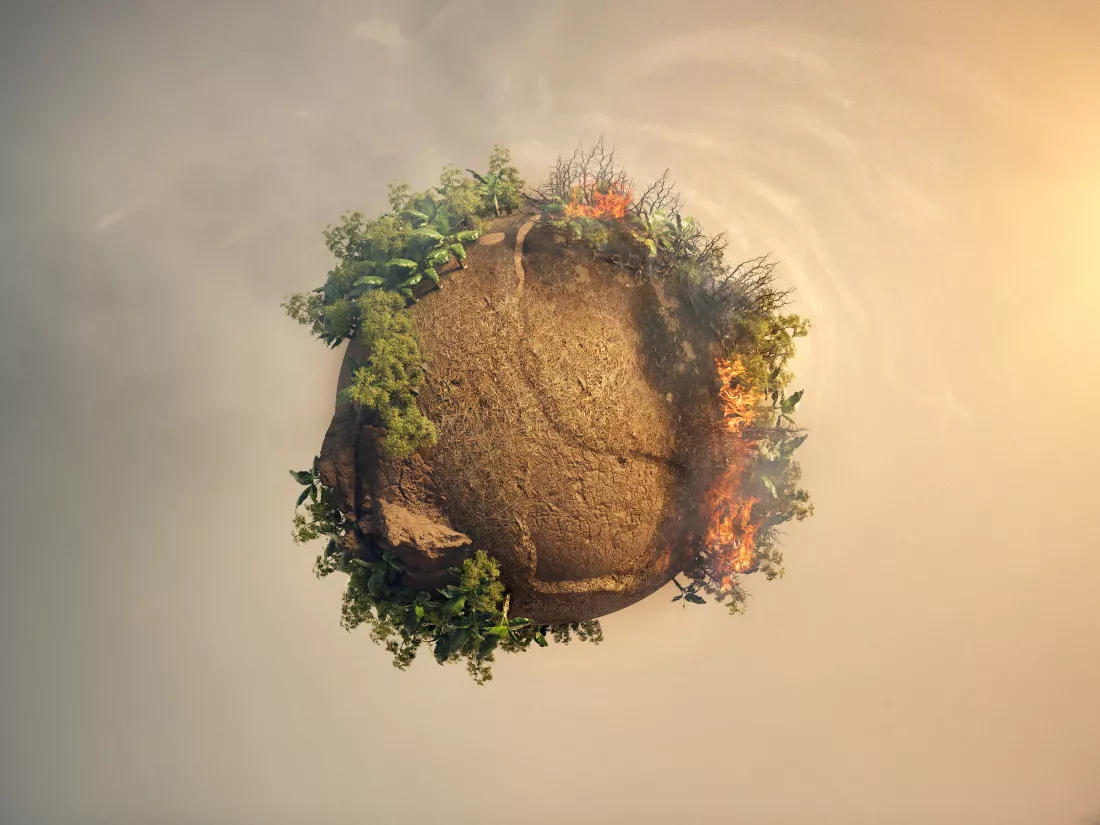
efekty-pogodowe-z-deserem-i-drzewami

Earth Sciences in a Changing World at UJ

Language: EnglishStudies in English
Subject area: physical science, environment
Kind of studies: full-time studies
  • Description:

  • pl

Why study Earth Sciences in a Changing World at UJ?

future-environmental-conservation-sustainable-esg-modernization-development
Why It's Worth It:

Interdisciplinary approach to global challenges

The Earth Sciences in a Changing World program at the Jagiellonian University offers a unique, interdisciplinary perspective on the most pressing environmental issues of the modern era. By combining elements of geography and geology, the curriculum provides students with a holistic understanding of the Earth’s systems. This comprehensive approach allows participants to analyze how natural processes and human activities intertwine, shaping the world we live in today.

Understanding anthropogenic environmental changes

A core focus of the studies is the analysis of human-induced transformations within the environment. Students examine the impact of these changes on both local communities and the global climate system. By identifying the root causes of environmental degradation, they learn to evaluate the social and economic consequences of such shifts, preparing them to address complex problems that require nuanced and well-informed solutions.

Hands-on learning and research methods

Education within this field is not limited to theoretical lectures; it places a heavy emphasis on practical skills. Students engage in intensive laboratory work and field trips, both in Poland and abroad, which allow them to apply their knowledge in real-world settings. These activities help them master modern research techniques, from mineralogical analysis to remote sensing, ensuring they are well-equipped for technical challenges.

Fostering intercultural and analytical skills

Since the program is conducted entirely in English, it attracts a diverse international student body, fostering an environment of cross-cultural exchange. This setting helps participants develop essential communication skills and a global mindset. The mission of the Jagiellonian University is to equip graduates with the analytical tools necessary to think critically about worldwide problems and to adapt to a rapidly changing socio-economic landscape.

Sustainable development and resource management

The curriculum introduces students to the principles of a green economy and sustainable development. They explore the challenges of managing natural resources in an era of increasing demand and diminishing traditional sources. By learning about environmental management methods, students become capable of proposing innovative strategies that balance industrial needs with the preservation of natural ecosystems.

Modern technological integration in science

Technological advancement plays a crucial role in contemporary Earth sciences. Participants gain proficiency in using Geographic Information Systems and other digital tools for data interpretation and environmental forecasting. This technical expertise is vital for modern environmental consulting and research, allowing graduates to provide accurate assessments and expert opinions based on precise data analysis.

Diverse career paths in a global market

Graduates are prepared for a wide range of professional roles in both the public and private sectors. They can find employment in governmental environmental agencies, research institutes, or international non-governmental organizations. Their ability to predict environmental phenomena and suggest sustainable solutions makes them valuable assets in fields such as urban planning, conservation, and ecological education.

Developing civic responsibility and independence

Beyond academic knowledge, the program aims to cultivate a sense of civic responsibility and intellectual independence. Students are encouraged to conduct individual research projects and work collaboratively in teams, mirroring the professional dynamics of the scientific community. This balanced approach ensures that UJ graduates are not only experts in their field but also conscious citizens ready to contribute to the global effort of protecting our planet.


Test: check whether Earth Sciences in a Changing World is the right major for you!

uklad-roslin-i-mikroskopow-pod-duzym-katem

Find Out if Earth Sciences in a Changing World Is the Right Major for You!

1. Are you curious about how Earth's systems (atmosphere, oceans, crust) interact and change over time?

2. Do you enjoy analyzing data to identify trends in climate, geology, or environmental change?

3. Are you motivated to understand and help address global challenges like climate change, natural hazards, or resource sustainability?

4. Do you enjoy fieldwork, being outdoors collecting samples, or observing environmental phenomena firsthand?

5. Are you interested in learning about geospatial tools (e.g., GIS, remote sensing) to map and monitor Earth changes?

6. Do you enjoy integrating knowledge from multiple disciplines (e.g., geology, ecology, policy) to understand environmental issues?

7. Are you comfortable communicating complex scientific ideas clearly to non-experts or stakeholders?

8. Do you enjoy keeping up with emerging research and evolving understanding of Earth's changing processes?

9. Are you intrigued by the policy and societal implications of environmental science, such as adaptation and mitigation strategies?

10. Do you enjoy solving open-ended problems where uncertainty is part of the process?

Definitions and quotes

Earth
Earth is the third planet from the Sun and the only object in the Universe known to harbor life. According to radiometric dating and other sources of evidence, Earth formed over 4.5 billion years ago. Earth's gravity interacts with other objects in space, especially the Sun and the Moon, Earth's only natural satellite. Earth revolves around the Sun in 365.26 days, a period known as an Earth year. During this time, Earth rotates about its axis about 366.26 times.
World
The world is the planet Earth and all life upon it, including human civilization. In a philosophical context, the "world" is the whole of the physical Universe, or an ontological world (the "world" of an individual). In a theological context, the world is the material or the profane sphere, as opposed to the celestial, spiritual, transcendent or sacred spheres. "End of the world" scenarios refer to the end of human history, often in religious contexts.
Earth
Облетев Землю в корабле-спутнике, я увидел, как прекрасна наша планета. Люди, будем хранить и преумножать эту красоту, а не разрушать её!
Orbiting Earth in the spaceship, I saw how beautiful our planet is. People, let us preserve and increase this beauty, not destroy it! Yuri Gagarin, Russian phrase, handwritten and signed after his historic spaceflight, photo of facsimile published in Syny goluboi planety 3rd.edition (1981) by L. Lebedev, A. Romanov, and B/ Luk'ianov; the first edition was translated into English as Sons of the Blue Planet (1973) by L. A. Lebedev Yuri Gagarin, Russian phrase, handwritten and signed after his historic spaceflight, photo of facsimile published in Syny goluboi planety 3rd.edition (1981) by L. Lebedev, A. Romanov, and B/ Luk'ianov; the first edition was translated into English as Sons of the Blue Planet (1973) by L. A. Lebedev
Earth
They will not cause any harm
Or any ruin in all my holy mountain,
Because the earth will certainly be filled with the knowledge of Jehovah
As the waters cover the sea.
Book of Isaiah 11:9.
World
This world surely is wide enough to hold both thee and me.
Laurence Sterne, The Life and Opinions of Tristram Shandy, Gentleman (1760-1767), Book II, Chapter XII; reported in Hoyt's New Cyclopedia Of Practical Quotations (1922), p. 911-17.

Contact:

phone (+48 12) 663 11 00
Gołębia str. 24
31-007 Kraków
Privacy Policy