Wrocław, Poland

Technical informatics

Master's
Table of contents
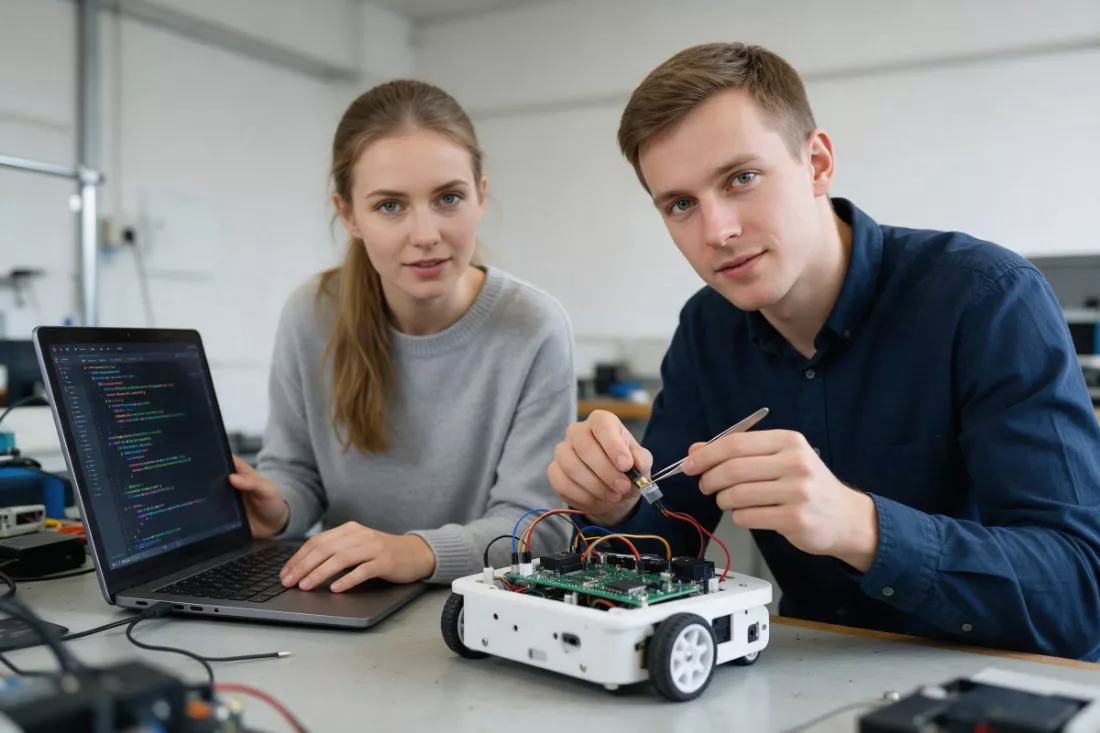
inzynierowie-testuja-platforme-robota-z-elektronika

⇑Technical informatics at PWr

Language: EnglishStudies in English
Subject area: engineering and engineering trades
Kind of studies: full-time studies
University website: pwr.edu.pl/en

⇑Test: Is Technical informatics the right fit for you?

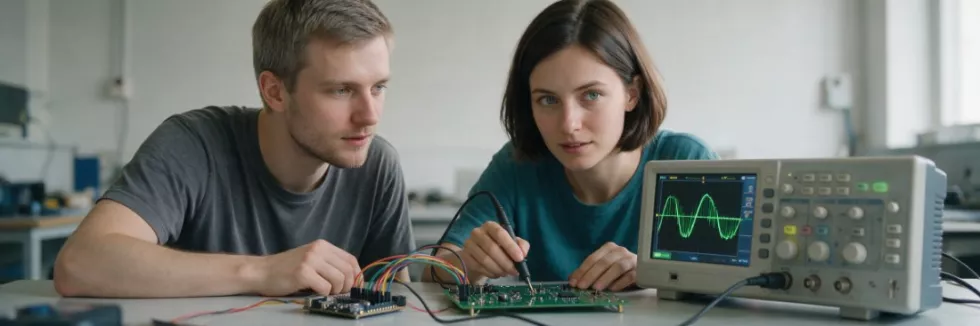
engineers-debugging-a-circuit-board-with-an-oscilloscope

10 questions · two minutes

1. On your internship, you get a report that a microcontroller in a device freezes at random. How do you track down the cause?

2. How would you rate your grounding in computer architecture and digital circuits?

3. You’re designing a control system that has to respond within strict time limits. What matters most to you?

4. You have to decide whether to implement an algorithm in software on a processor or in hardware on a programmable logic device. How do you choose?

5. Lectures, technical documentation and projects will be in English, and your teams will include engineers from different countries. How does that sound?

6. An IoT device you’re helping to build is about to ship to customers. How do you approach security?

7. How do you go about learning new technologies?

8. The code you’ve written works, but the device uses too much power and the battery drains fast. What do you do?

9. Where do you see yourself after graduating?

10. What motivates you most to pursue a Master’s degree in Technical informatics?

⇑Definitions and quotes

Informatics
Informatics is a branch of information engineering. It involves the practice of information processing and the engineering of information systems, and as an academic field it is an applied form of information science. The field considers the interaction between humans and information alongside the construction of interfaces, organisations, technologies and systems. As such, the field of informatics has great breadth and encompasses many subspecialties, including disciplines of computer science, information systems, information technology and statistics. Since the advent of computers, individuals and organizations increasingly process information digitally. This has led to the study of informatics with computational, mathematical, biological, cognitive and social aspects, including study of the social impact of information technologies.
Privacy Policy