Szczecin, Poland

Aquaculture and Fisheries

Bachelor's - engineer
Table of contents
fish-farm-sunrise-with-circular-nets-calm-waters-distant-mountains-background

⇑Aquaculture and Fisheries at ZUT

Language: EnglishStudies in English
Subject area: agriculture, forestry and fishery, veterinary
Kind of studies: full-time studies

⇑Test: Is Aquaculture and Fisheries the right fit for you?

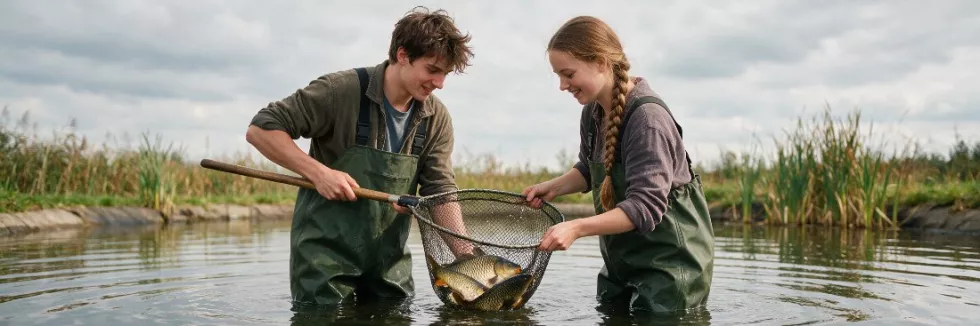
students-netting-carp-in-a-fish-pond-test

10 questions · two minutes

1. On a hot afternoon the fish in a pond start gasping at the surface. What do you do?

2. How do you feel about biology at school, especially ecology and animal physiology?

3. Fieldwork means standing in cold water in waders early in the morning. How does that sound?

4. People argue about overfishing and fishing quotas. Where do you stand?

5. Lectures, textbooks and group projects will be in English, with students from many countries. How do you feel about that?

6. You need to work out how much feed fish need as they grow. How does that sound?

7. Several fish in a tank are swimming strangely and have spots on their skin. How do you react?

8. In a hatchery, tiny fish fry need careful, regular care every day. How does that appeal to you?

9. How do you feel about handling live, slippery fish – and gutting them for analysis?

10. What motivates you most to study Aquaculture and Fisheries?

⇑Definitions and quotes

Aquaculture
Aquaculture (less commonly spelled aquiculture), also known as aquafarming, is the farming of fish, crustaceans, molluscs, aquatic plants, algae, and other organisms. Aquaculture involves cultivating freshwater and saltwater populations under controlled conditions, and can be contrasted with commercial fishing, which is the harvesting of wild fish. Mariculture refers to aquaculture practiced in marine environments and in underwater habitats.
Privacy Policy