Poznań, Poland

Microelectronics and Digital Communication

Bachelor's - engineer
Table of contents
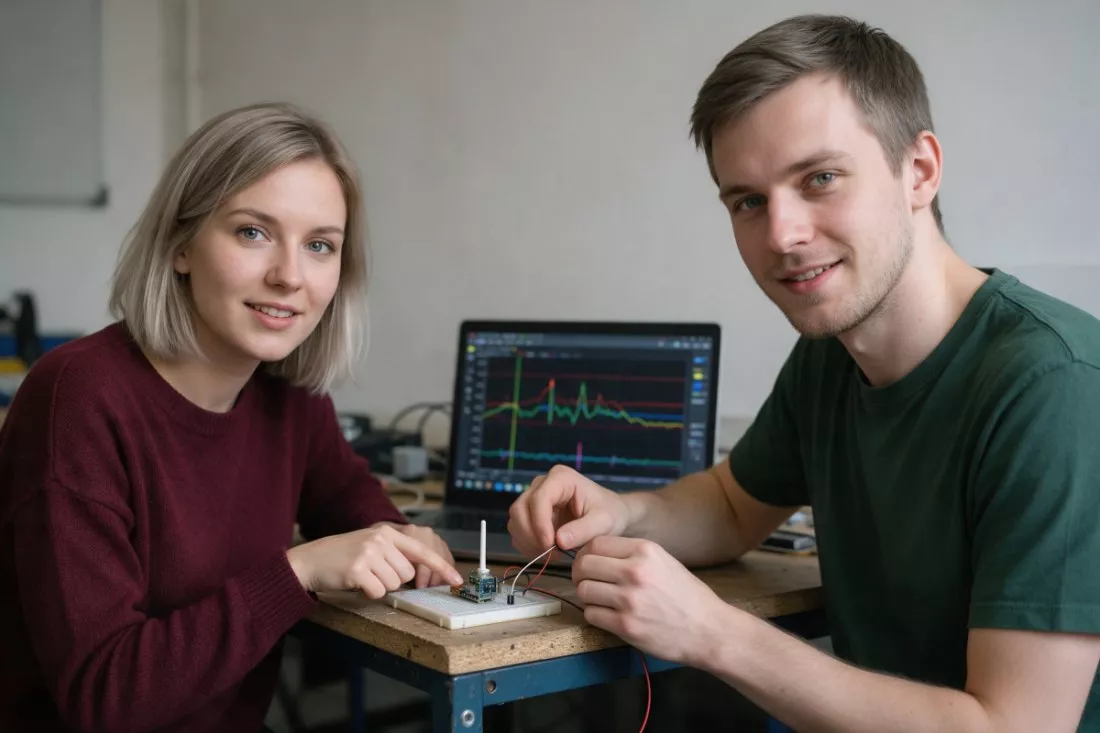
studenci-skladaja-bezprzewodowy-czujnik-na-plytce-prototypowej

⇑Microelectronics and Digital Communication at PP

Language: EnglishStudies in English
Subject area: computer science
Kind of studies: full-time studies
University website: www.put.poznan.pl/en

⇑Test: Is Microelectronics and Digital Communication the right fit for you?

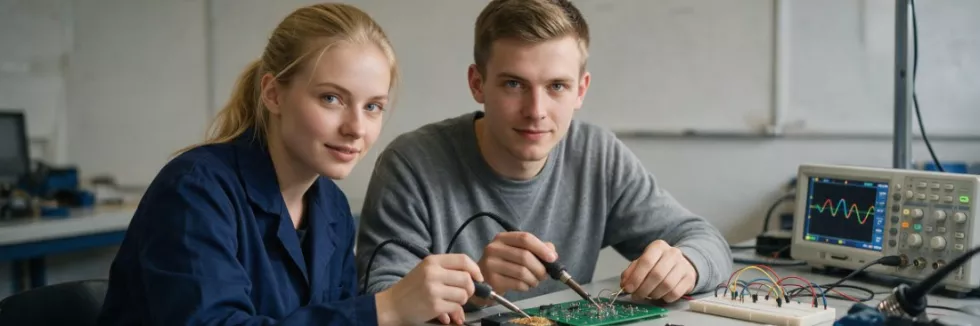
electronics-students-soldering-a-circuit-board-at-a-lab-bench

10 questions · two minutes

1. A charger or speaker at home stops working. What do you do?

2. How are you getting on with maths and physics at secondary school?

3. Have you ever built anything with a breadboard, a microcontroller or an electronics kit?

4. A phone can send a photo to the other side of the world in a split second. What intrigues you most about that?

5. Lectures, technical documentation and lab projects will be in English, and you’ll work in an international environment, in teams with students from different countries. How does that sound?

6. Your circuit doesn’t work, even though everything looks right. What do you do?

7. How do you feel about work where you spend hours analysing schematics and signal waveforms?

8. You hear that ever smaller chips use ever less power. How do you react?

9. Where do you see yourself after graduating?

10. What motivates you most to study Microelectronics and Digital Communication?

⇑Definitions and quotes

Communication
Communication (from Latin commūnicāre, meaning "to share") is the act of conveying intended meanings from one entity or group to another through the use of mutually understood signs and semiotic rules.
Digital
Digital usually refers to something using digits, particularly binary digits.
Microelectronics
Microelectronics is a subfield of electronics. As the name suggests, microelectronics relates to the study and manufacture (or microfabrication) of very small electronic designs and components. Usually, but not always, this means micrometre-scale or smaller. These devices are typically made from semiconductor materials. Many components of normal electronic design are available in a microelectronic equivalent. These include transistors, capacitors, inductors, resistors, diodes and (naturally) insulators and conductors can all be found in microelectronic devices. Unique wiring techniques such as wire bonding are also often used in microelectronics because of the unusually small size of the components, leads and pads. This technique requires specialized equipment and is expensive.
Privacy Policy