Opole, Poland

Mechanical Engineering

Bachelor's - engineer
Table of contents
259

Mechanical Engineering at PO

Language: EnglishStudies in English
Subject area: engineering and engineering trades
Kind of studies: full-time studies
University website: po.edu.pl/?lang=en

Test: check whether Mechanical Engineering is the right major for you!

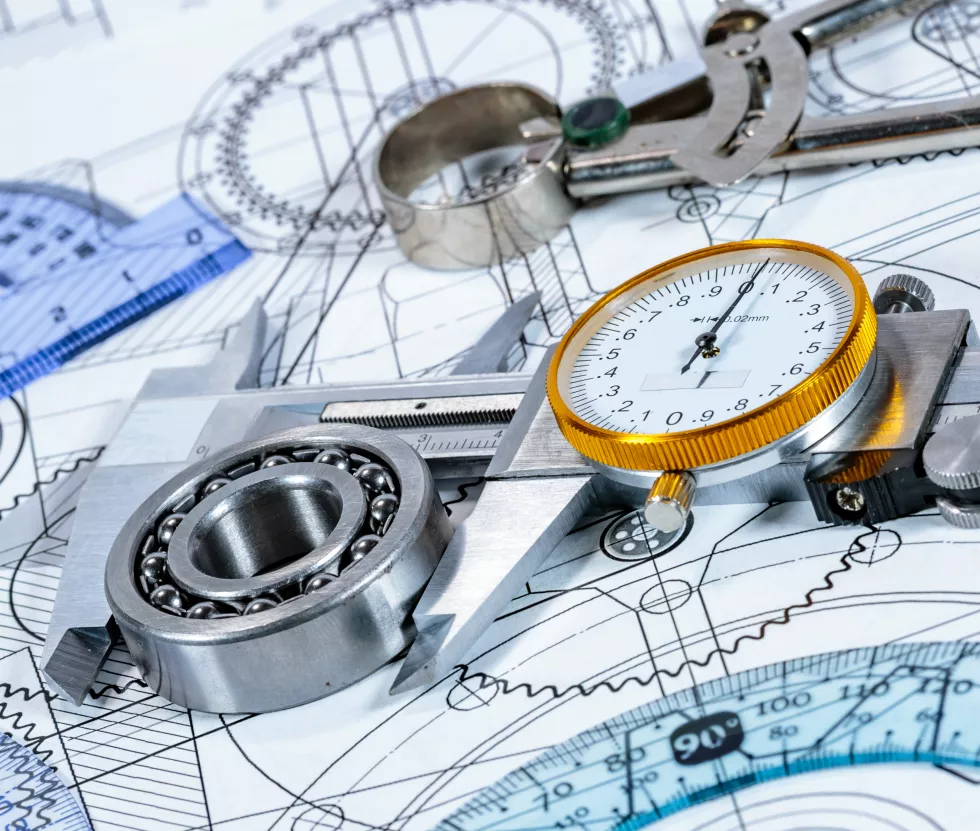
technical-drawing-tools

1. Do you enjoy understanding how machines and physical systems function and interact?

2. Are you interested in applying principles of dynamics, mechanics, and thermodynamics to solve engineering problems?

3. Do you enjoy designing parts or systems, including using CAD tools and iterating prototypes?

4. Are you drawn to manufacturing, material selection, and understanding how products are made?

5. Do you like solving multi-step problems that combine analysis, modeling, and practical constraints?

6. Are you interested in energy systems, heat transfer, or fluid mechanics?

7. Do you value precision, testing, and verifying that designs perform as expected?

8. Are you comfortable working in teams to bring a mechanical product from concept to reality?

9. Are you interested in incorporating automation, control, or smart systems into mechanical designs?

10. Do you care about sustainable design, efficiency, and reducing environmental impact in engineering?

Definitions and quotes

Engineering
Engineering is the creative application of science, mathematical methods, and empirical evidence to the innovation, design, construction, operation and maintenance of structures, machines, materials, devices, systems, processes, and organizations. The discipline of engineering encompasses a broad range of more specialized fields of engineering, each with a more specific emphasis on particular areas of applied mathematics, applied science, and types of application. See glossary of engineering.
Mechanical Engineering
Mechanical engineering is the discipline that applies engineering, physics, engineering mathematics, and materials science principles to design, analyze, manufacture, and maintain mechanical systems. It is one of the oldest and broadest of the engineering disciplines.
Mechanical Engineering
Theatrum Machinarum Generale: Schauplatz des Grundes Mechanischer Wissenschaften
Jacob Leupold (1724) Theatrum Machinarum Generale Title page: Title and subtitle
Mechanical Engineering
The number of our students of Engineering, especially of Civil and Mechanical Engineering, is becoming so great that we are somewhat embarrassed to make proper provision for them.
University of Michigan (1871) The President's Report to the Board of Regents for the Academic Year ...: Financial Statement for the Fiscal Year. p. 6
Mechanical Engineering
THEORY and practice principally distinguish science from arts, and accordingly most branches of knowledge pass under one or the other of these denominations; tho we must allow, that our ideas in this respect are not always sufficiently precise; for we are often at a loss in naming the branches of knowledge where speculation is joined with practice. There are rules for the operations of the mind, and others for those of the body; the latter being confined to external subjects, require no more than the assistance of the hand to perform them. Hence proceeds the distinction between the liberal and mechanic arts, and the preference given to the former, tho very unjustly in many respects. The mechanic arts depending upon manual operation, and confined to a certain beaten track, are assigned over to those whom prejudice places in a lower class: and necessity rather than taste and genius, compelling them to the exercise of these arts, the arts themselves in time became subject to contempt; whilst the free operations of the mind were claimed by others, who, because they were more exempt from indigence, possibly thought themselves more favoured by nature. But this assumed superiority of the liberal over the mechanic arts, from the former's employing only the attention of the mind, and from the difficulty of excelling therein, is sufficiently counter-balanced by the greater utility commonly arising from the latter.
Ralph Griffiths, ‎George Edward Griffiths (1754) The Monthly Review. Vol 11. p. 490

Privacy Policy