Łódź, Poland

Biomedical Engineering and Technologies

Bachelor's - engineer
Table of contents
woman-lab-wearing-white-coat-goggles-stands-front-large-computer-monitor

⇑Biomedical Engineering and Technologies at PŁ

Language: EnglishStudies in English
Subject area: engineering and engineering trades
Kind of studies: full-time studies
University website: www.p.lodz.pl/en

⇑Test: Is Biomedical Engineering and Technologies the right fit for you?

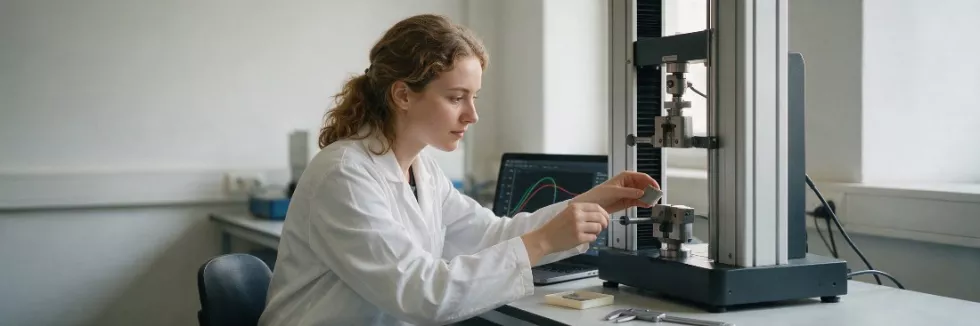
student-testing-biomaterial-sample-in-a-lab-test

10 questions · two minutes

1. You read about a smartwatch that can detect irregular heart rhythms. What do you want to know?

2. How do you feel about learning to program, for example to analyse signals or medical images?

3. A rehabilitation clinic wants a device that helps patients exercise their hand after a stroke. What’s your first idea?

4. In a lab, you’re asked to test how strong and flexible different biomaterials are. How does that sound?

5. How do you feel about the idea of working alongside doctors and nurses to understand what equipment they need?

6. The programme is taught in English and your classmates come from many different countries. How do you see that?

7. You see an X-ray, an ultrasound scan and an MRI image side by side. What interests you?

8. A device you helped build gives inconsistent readings. What do you do?

9. How do you feel about subjects like anatomy and physiology as part of an engineering course?

10. What motivates you most to study Biomedical Engineering and Technologies?

⇑Definitions and quotes

Biomedical Engineering
Biomedical engineering (BME) is the application of engineering principles and design concepts to medicine and biology for healthcare purposes (e.g. diagnostic or therapeutic). This field seeks to close the gap between engineering and medicine, combining the design and problem solving skills of engineering with medical biological sciences to advance health care treatment, including diagnosis, monitoring, and therapy. Biomedical engineering has only recently emerged as its own study, as compared to many other engineering fields. Such an evolution is common as a new field transitions from being an interdisciplinary specialization among already-established fields, to being considered a field in itself. Much of the work in biomedical engineering consists of research and development, spanning a broad array of subfields (see below). Prominent biomedical engineering applications include the development of biocompatible prostheses, various diagnostic and therapeutic medical devices ranging from clinical equipment to micro-implants, common imaging equipment such as MRIs and EKG/ECGs, regenerative tissue growth, pharmaceutical drugs and therapeutic biologicals.
Engineering
Engineering is the creative application of science, mathematical methods, and empirical evidence to the innovation, design, construction, operation and maintenance of structures, machines, materials, devices, systems, processes, and organizations. The discipline of engineering encompasses a broad range of more specialized fields of engineering, each with a more specific emphasis on particular areas of applied mathematics, applied science, and types of application. See glossary of engineering.
Engineering
Engineers should press forward with development to meet the diversified needs of people
Harold Chestnut (1981) attributed in: Dr. Harold Chestnut: 1981 Honda Prize Laureate in: Honda Prize Ecotechnology Quote
Engineering
Engineering is too important to wait for science.
Benoît Mandelbrot As quoted in "Fractal Finance" by Greg Phelan in Yale Economic Review (Fall 2005)
Engineering
A man should build a house with his own hands before he calls himself an engineer.
Alexander Solzhenitsyn (1963), One Day in the Life of Ivan Denisovich, p. 98
Privacy Policy