
Cracow, Poland

Space Technologies

Master's
Table of contents
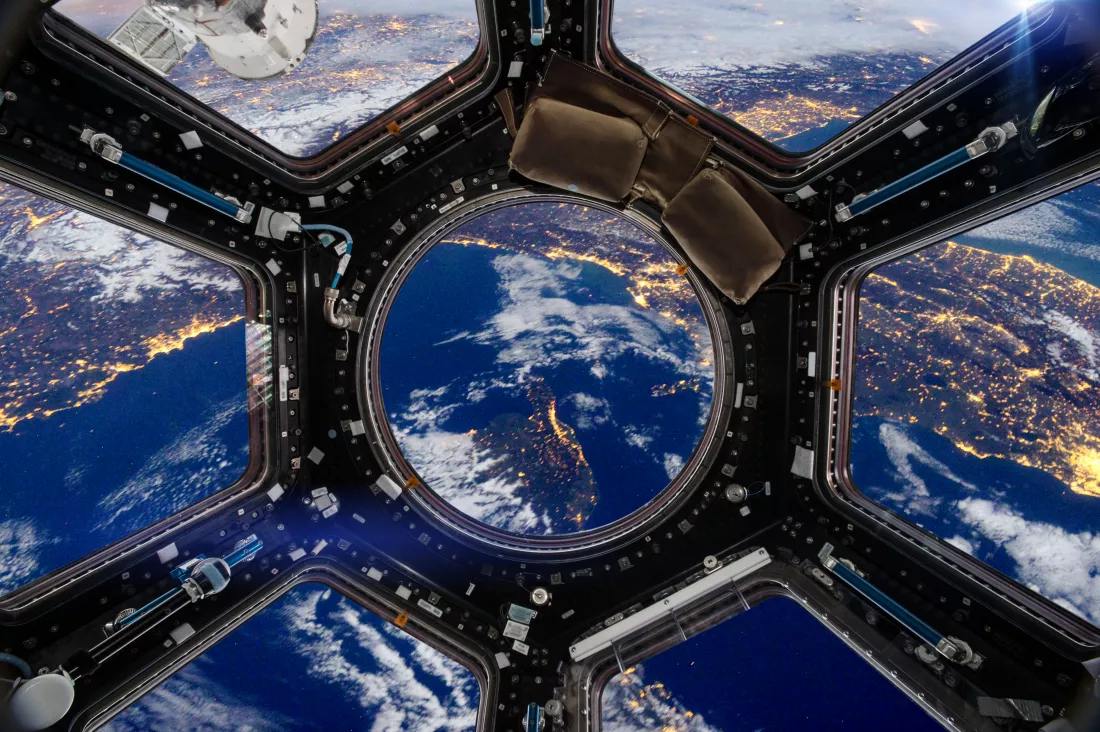
earth-spacecraft-elements-this-image-furnished-by-nasa

⇑Space Technologies at AGH

Language: EnglishStudies in English
Subject area: engineering and engineering trades
Kind of studies: full-time studies
  • Description:

  • pl

⇑Why study Space Technologies (Master's) at AGH?

dlaczego-warto-studiowac-na-AGH
Why study it:

Space Technologies at AGH University of Krakow is a full-time second-cycle programme leading to the Polish magister inżynier degree, with admissions in the winter. It is for graduates of first-cycle studies who want advanced, interdisciplinary skills for the space sector – from building spacecraft to working with the data they send back.

Programme: spacecraft, missions and satellite systems

Building on your first-cycle education, you gain expertise in:

  • spacecraft design
  • mission planning
  • satellite systems
  • artificial intelligence and robotics in space applications

Specialisation: Upstream or Downstream

The Upstream pathway focuses on building objects and launching them into space. You study spacecraft engineering, propulsion systems, mission planning and launch technologies, preparing you to take part in the design, development and deployment of space systems.

The Downstream pathway deals with data processing and communication with devices in space: satellite Earth observation, navigation, remote sensing and space-based communication systems. You learn to use data collected from space for environmental monitoring, urban planning and advanced analytics.

After graduation: the space industry, research and doctoral studies

Graduates can work in satellite development, mission analysis, biomedical engineering and space system operations, or in research and development roles at aerospace companies, biotechnology firms, research institutions and government agencies. Potential employers include companies specialising in Earth observation, navigation systems, space medicine and advanced manufacturing. The programme is also a foundation for doctoral studies in areas such as space exploration, planetary sciences and biomedical technologies.

As of the 2026/27 admissions, based on the programme page at rekrutacja.agh.edu.pl.
⇑Test: check whether Space Technologies is the right major for you!

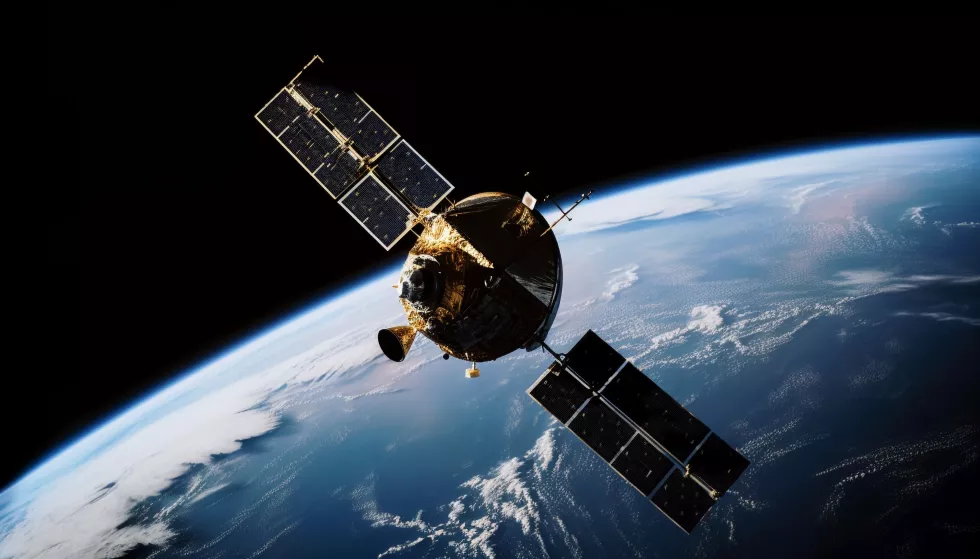
spacecraft-orbiting-planet-earth-global-communications-generated-by-ai

Answer all questions to see if Space Technologies (Master's) is the right fit for you!

1. Are you passionate about designing, building, or operating systems that work in space environments?

2. Do you want to develop expertise in satellite technologies, propulsion, or orbital mechanics?

3. Are you interested in integrating software, sensors, and communication systems for space missions?

4. Are you willing to work on challenges like radiation tolerance, thermal control, or autonomy in extreme environments?

5. Do you believe a two-year master’s degree will substantially increase your ability to contribute to space technology projects?

6. Are you interested in space systems' data analysis, mission planning, or ground control operations?

7. Do you want to develop skills in designing resilient and reliable systems for long-duration missions?

8. Are you prepared to collaborate with aerospace engineers, computer scientists, physicists, and mission designers?

9. Are you interested in emerging areas such as space sustainability, small satellites, or space debris mitigation?

10. What motivates you most to pursue a master’s in Space Technologies?

⇑Definitions and quotes

Space
Space is the boundless three-dimensional extent in which objects and events have relative position and direction. Physical space is often conceived in three linear dimensions, although modern physicists usually consider it, with time, to be part of a boundless four-dimensional continuum known as spacetime. The concept of space is considered to be of fundamental importance to an understanding of the physical universe. However, disagreement continues between philosophers over whether it is itself an entity, a relationship between entities, or part of a conceptual framework.
Space
Once the threshold is crossed when there is a self-sustaining level of life in space, then life's long-range future will be secure irrespective of any of the risks on Earth (with the single exception of the catastrophic destruction of space itself). Will this happen before our technical civilisation disintegrates, leaving this as a might-have-been? Will the self-sustaining space communities be established before a catastrophe sets back the prospect of any such enterprise, perhaps foreclosing it for ever? We live at what could be a defining moment for the cosmos, not just for our Earth.
Martin Rees, Our Final Hour: A Scientist's Warning, New York: Basic Books, 18 March 2003, LCC CB161.R38 2003, ISBN 9780465068623 
Space
Why are the heavens not filled with light? Why is the universe plunged into darkness?
Edward Robert Harrison, Darkness at Night: a Riddle of the Universe (1987), p. 1
Space
No creature loves an empty space;
Their bodies measure out their place.
Andrew Marvell, Upon Appleton House, to My Lord Fairfax

Contact:

30 Mickiewicza Av.
30-059 Krakow
Centre for International Students

Regular studies
P: +48 12 617 50 92
P: +48 12 617 46 15
F: +48 12 617 52 39
E: international.students@agh.edu.pl

Exchange programmes
P: +48 12 617 52 37
P: +48 12 617 52 38
F: +48 12 617 52 39
E: exchange@agh.edu.pl
StudentNews Group Websites for students and future students — in Poland since 2007, across Europe since 2014. Over 50 websites and millions of users a year (Google Analytics). Studies in Europe Universities in Europe Bachelor’s Master’s Doctorate MBA Study guide Work abroad Travel For partners Advertising and cooperation Reach (online report) Contact advertising@studentnews.eu © 2003–2026 Grupa StudentNews.pl sp. z o.o., Modlnica, Poland
Privacy Policy