Cracow, Poland

Space Technologies

Master's
Table of contents
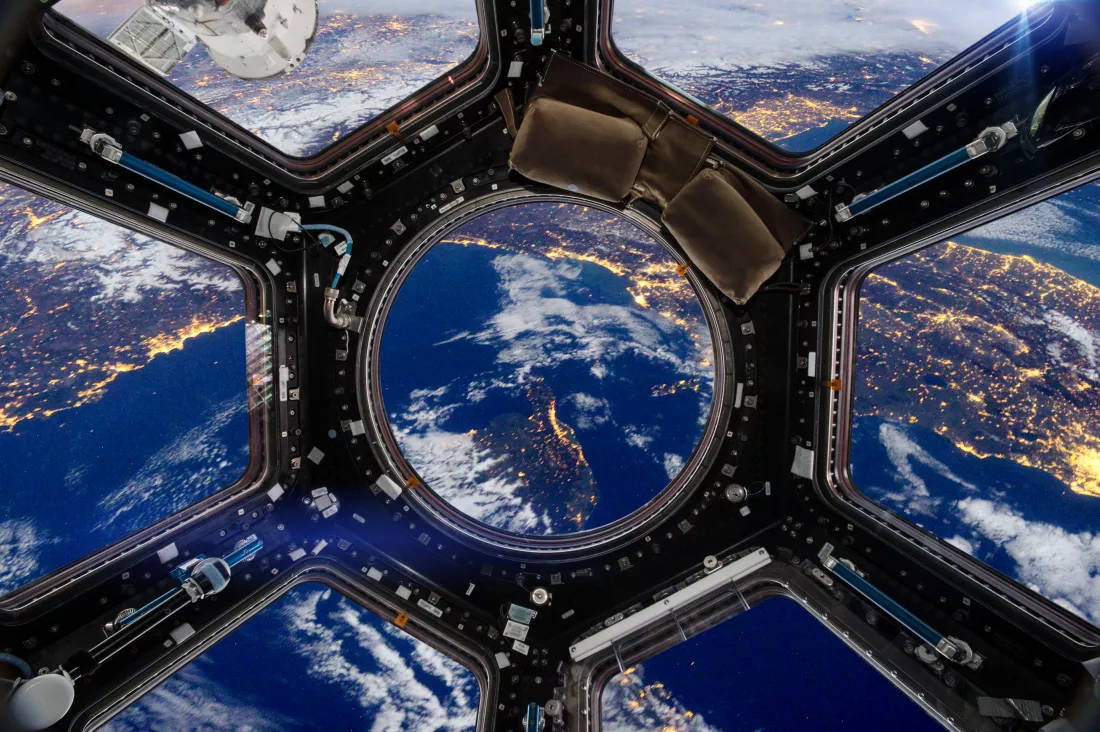
earth-spacecraft-elements-this-image-furnished-by-nasa

Space Technologies at AGH

Language: EnglishStudies in English
Subject area: engineering and engineering trades
Kind of studies: full-time studies
  • Description:

  • pl

Why study Space Technologies at AGH?

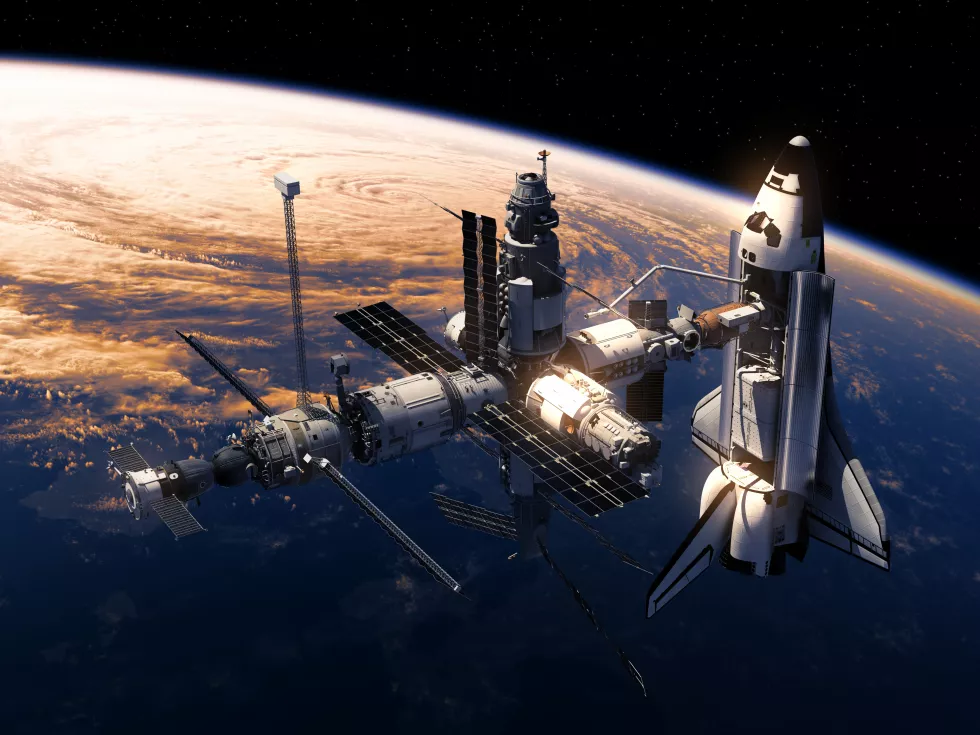
space-shuttle-space-station-orbiting-earth
Why It's Worth It:

Unrivaled Competencies in a Future-Oriented Sector

The Space Technologies program, conducted by the AGH University of Science and Technology in Krakow, is a pioneering educational initiative that responds to the dynamic growth of the global space industry. These studies offer students a unique opportunity to acquire interdisciplinary knowledge, combining advanced engineering, data analytics, and modern medical technologies. By studying at a renowned institution like AGH, participants in the program become part of an elite group of specialists prepared to work on the most innovative projects with an international reach.

Expert Faculty and Global Standards

The study program is conducted entirely in English, which naturally introduces students to the realities of the global labor market, where proficiency in this terminology is essential. Classes are taught not only by experienced academic staff from the university but also by experts from leading space agencies and representatives of the technology industry. This combination ensures that the knowledge transferred is up-to-date, embedded in the real needs of the sector, and consistent with the highest world standards of engineering education.

Practical Approach to Learning

The program places a special emphasis on practical classes, including team projects, laboratories, and discussion seminars. Students have the opportunity to work on real design and analytical problems, which allows for the development of skills in independently solving complex engineering challenges. Cooperation between the university and companies from the space industry allows participants to gain valuable professional experience already at the study stage, which significantly facilitates a later career start in innovative enterprises.

Development Paths Tailored to Passion

As part of their education, students have the opportunity to choose specialized tracks that allow them to explore specific areas of space technology. Some participants focus on the design and construction of systems sent into extraterrestrial space, others concentrate on advanced processing and analysis of satellite data, and still others research the impact of space conditions on the human body. This program structure allows for a precise adjustment of the competency profile to individual interests and planned professional careers.

Modern Research Facilities

Studying in this field involves access to modern research infrastructure and laboratories equipped with high-end apparatus. Students can carry out their research projects using the support of experienced mentors and the resources of a dedicated department. As a result, the didactic process is not limited solely to theory but becomes a fascinating adventure with science, allowing for the testing of one's own ideas and innovations in a controlled, professional technical environment.

International Environment and Networking

The studies attract candidates from different parts of the world, which fosters a multicultural atmosphere and the establishment of valuable international contacts. Working in diverse teams teaches communication and cooperation, which are key in large projects implemented by agencies such as ESA. Graduates of the program at AGH University leave the university not only with a diploma but also with an extensive network of professional relationships that often become the foundation of their future successes in the global high-tech sector.

Broad Professional Career Perspectives

The dynamic growth in the importance of space technologies means that the demand for qualified experts is constantly increasing. Graduates are prepared to take up work in research and development centers, aerospace sector companies, institutions dealing with environmental monitoring, or extreme medicine. The solid technical education gained in this field also opens doors to continuing education within doctoral studies and running one's own innovative start-up ventures in the high-technology industry.


Test: check whether Space Technologies is the right major for you!

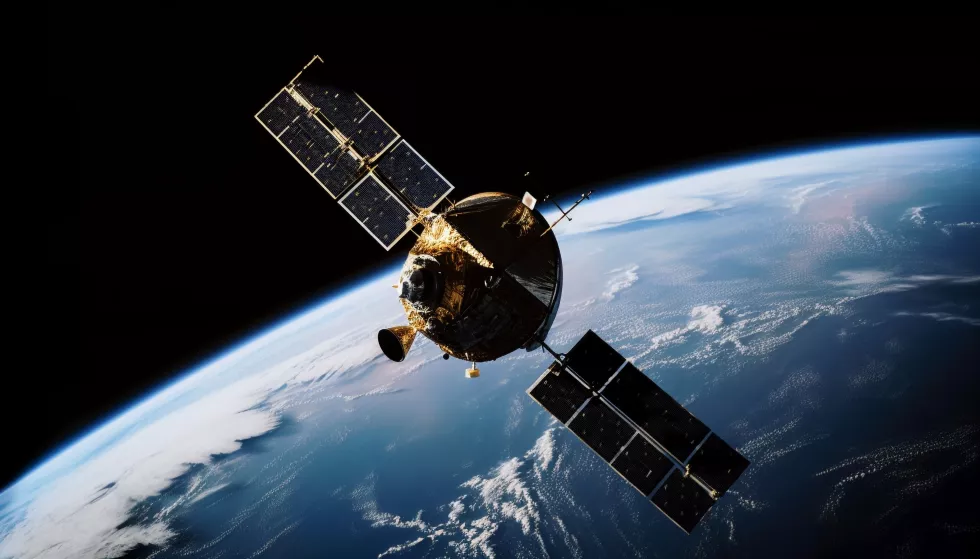
spacecraft-orbiting-planet-earth-global-communications-generated-by-ai

Answer all questions to see if Space Technologies (Master's) is the right fit for you!

1. Are you passionate about designing, building, or operating systems that work in space environments?

2. Do you want to develop expertise in satellite technologies, propulsion, or orbital mechanics?

3. Are you interested in integrating software, sensors, and communication systems for space missions?

4. Are you willing to work on challenges like radiation tolerance, thermal control, or autonomy in extreme environments?

5. Do you believe a two-year master’s degree will substantially increase your ability to contribute to space technology projects?

6. Are you interested in space systems' data analysis, mission planning, or ground control operations?

7. Do you want to develop skills in designing resilient and reliable systems for long-duration missions?

8. Are you prepared to collaborate with aerospace engineers, computer scientists, physicists, and mission designers?

9. Are you interested in emerging areas such as space sustainability, small satellites, or space debris mitigation?

10. What motivates you most to pursue a master’s in Space Technologies?

Definitions and quotes

Space
Space is the boundless three-dimensional extent in which objects and events have relative position and direction. Physical space is often conceived in three linear dimensions, although modern physicists usually consider it, with time, to be part of a boundless four-dimensional continuum known as spacetime. The concept of space is considered to be of fundamental importance to an understanding of the physical universe. However, disagreement continues between philosophers over whether it is itself an entity, a relationship between entities, or part of a conceptual framework.
Space
Once the threshold is crossed when there is a self-sustaining level of life in space, then life's long-range future will be secure irrespective of any of the risks on Earth (with the single exception of the catastrophic destruction of space itself). Will this happen before our technical civilisation disintegrates, leaving this as a might-have-been? Will the self-sustaining space communities be established before a catastrophe sets back the prospect of any such enterprise, perhaps foreclosing it for ever? We live at what could be a defining moment for the cosmos, not just for our Earth.
Martin Rees, Our Final Hour: A Scientist's Warning, New York: Basic Books, 18 March 2003, LCC CB161.R38 2003, ISBN 9780465068623 
Space
I experience the same sense of absurdity when I listen to a cosmologist like Stephen Hawking telling us that the universe began with a big bang fifteen billion years ago, and that physics will shortly create a 'theory of everything' that will answer every possible question about our universe; this entails the corollary that God is an unnecessary hypothesis. Then I think of the day when I suddenly realized that I did not know where space ended, and it becomes obvious that Hawking is also burying his head in the sand. God may be an unnecessary hypothesis for all I know, and I do not have the least objection to Hawking dispensing with him, but until we can understand why there is existence rather than nonexistence, then we simply have no right to make such statements. It is unscientific. The same applies to the biologist Richard Dawkins, with his belief that strict Darwinism can explain everything, and that life is an accidental product of matter. I feel that he is trying to answer the ultimate question by pretending it does not exist.
Colin Wilson in Alien Dawn, pp. 301-302
Space
Why are the heavens not filled with light? Why is the universe plunged into darkness?
Edward Robert Harrison, Darkness at Night: a Riddle of the Universe (1987), p. 1

Contact:

30 Mickiewicza Av.
30-059 Krakow
Centre for International Students

Regular studies
P: +48 12 617 50 92
P: +48 12 617 46 15
F: +48 12 617 52 39
E: international.students@agh.edu.pl

Exchange programmes
P: +48 12 617 52 37
P: +48 12 617 52 38
F: +48 12 617 52 39
E: exchange@agh.edu.pl
Privacy Policy