

Cracow, Poland

Metallurgical Engineering

Master's
Table of contents
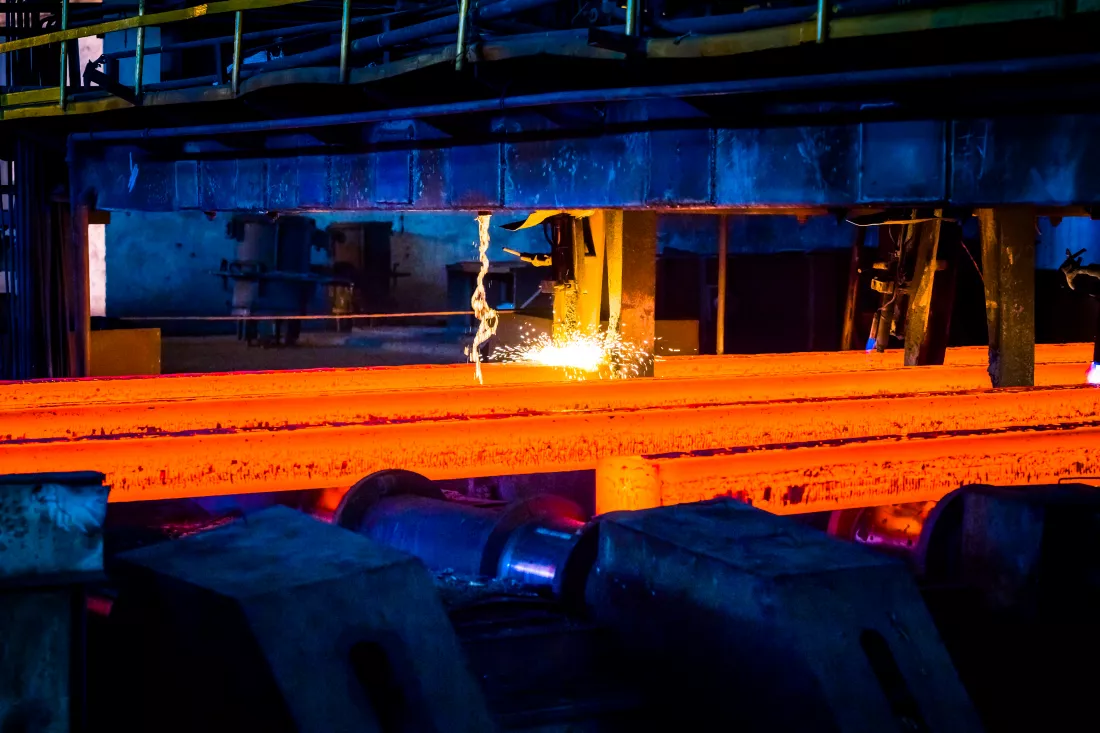
interior-view-steel-factory(1)

⇑Metallurgical Engineering at AGH

Language: EnglishStudies in English
Subject area: engineering and engineering trades
Kind of studies: full-time studies
  • Description:

  • pl

⇑Why study Metallurgical Engineering (Master's) at AGH?

dlaczego-warto-studiowac-na-AGH
Why study it:

Metallurgical Engineering at AGH University of Krakow is a second-cycle programme in modern extractive metallurgy, covering metal production from raw material preparation through alloy production to the ingot. Its first semester levels out the basics, so it suits graduates with different undergraduate backgrounds who want to work in the metallurgical industry and related sectors.

Programme: from raw materials to the ingot

The programme focuses on how metallurgical production equipment is built and works, and on the techniques of the processes themselves. You also gain theoretical knowledge of the physical phenomena in extraction processes and of high-temperature chemical reactions, including their thermodynamics and kinetics.

Semester 1 covers general engineering topics in extractive metallurgy, casting, plastic processing and shaping the properties of metal products, summarising the basics for students from different undergraduate programmes. In semesters 2 and 3 specialised subjects follow: modern design of metallurgical equipment and process technologies for iron, steel and non-ferrous metals production – for example hydrogen reduction processes, the modernised electric arc furnace and processing metallurgical waste in a closed-loop economy.

Specialisation: a final semester built around your thesis

The last semester includes only one specialist subject, a diploma seminar and work on the diploma thesis. This is where you acquire highly specialised knowledge in your chosen diploma subject. You carry out research, perform experiments and analyse the results to formulate your own conclusions.

Graduates gain the knowledge and experience required in the modern metallurgical industry and in related industries.

As of the 2026/27 admissions, based on the programme page at rekrutacja.agh.edu.pl.
⇑Test: check whether Metallurgical Engineering is the right major for you!

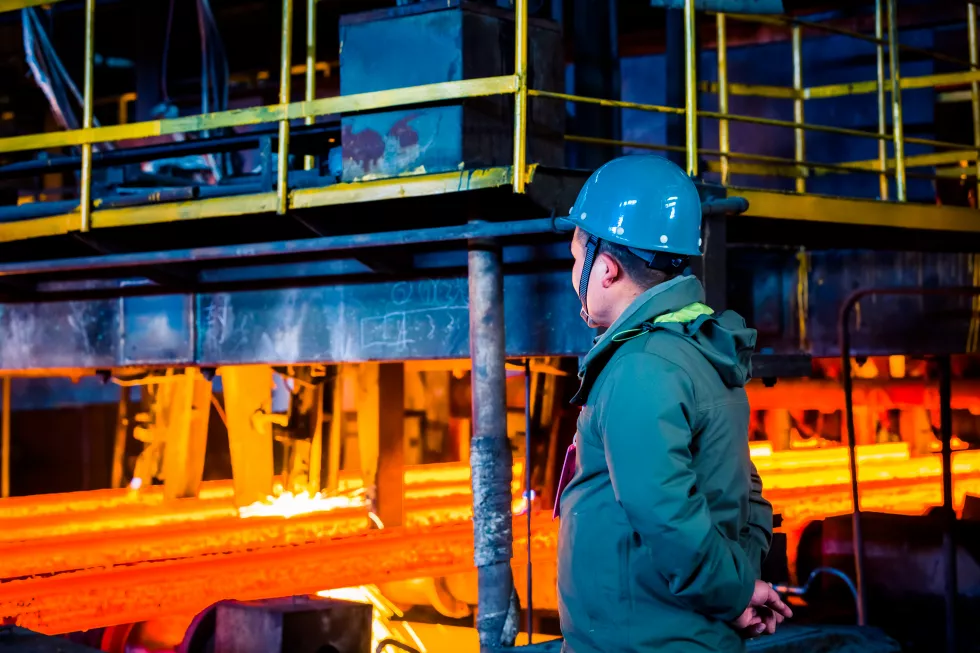
interior-view-steel-factory

Answer all questions to see if Metallurgical Engineering (Master's) is the right fit for you!

1. Are you passionate about applying engineering principles to design, control, and improve metal production and processing?

2. Do you want to develop expertise in alloy design, thermomechanical processing, and phase transformation control?

3. Are you interested in using advanced characterization and modeling to predict and control metal microstructure and properties?

4. Are you willing to integrate sustainability into metallurgical engineering, such as recycling, energy efficiency, and emissions reduction?

5. Do you believe a two-year master’s degree will significantly improve your ability to lead or innovate in metallurgical projects?

6. Are you interested in process control, quality assurance, and failure analysis for metallic systems?

7. Do you want to develop skills in emerging metallurgical technologies like additive manufacturing of metals or high-entropy alloys?

8. Are you prepared to collaborate with mechanical engineers, materials scientists, and industrial stakeholders to apply metallurgical solutions?

9. Are you interested in scaling lab-scale metallurgical innovations into robust industrial processes?

10. What motivates you most to pursue a master’s in Metallurgical Engineering?

⇑Definitions and quotes

Engineering
Engineering is the creative application of science, mathematical methods, and empirical evidence to the innovation, design, construction, operation and maintenance of structures, machines, materials, devices, systems, processes, and organizations. The discipline of engineering encompasses a broad range of more specialized fields of engineering, each with a more specific emphasis on particular areas of applied mathematics, applied science, and types of application. See glossary of engineering.
Engineering
Engineering is the art of directing the great sources of power in nature for the use and convenience of man.
Thomas Tredgold (1828), used in the Royal Charter of the Institution of Civil Engineers (ICE) published in: The Times, London, article CS102127326, 30 June 1828.
Engineering
A good scientist is a person with original ideas. A good engineer is a person who makes a design that works with as few original ideas as possible. There are no prima donnas in engineering.
Freeman Dyson in Freeman J. Dyson. Disturbing the universe. Harper & Row. ISBN 978-0-06-090771-6. 
Engineering
Engineering is the conscious application of science to the problem of economic production.
Halbert Powers Gillette (1910). cited in: T.J. Hoover & J.C. Lounsbury Fish. The Engineering Profession. Stanford University Press, 1941. p. 463

Contact:

30 Mickiewicza Av.
30-059 Krakow
Centre for International Students

Regular studies
P: +48 12 617 50 92
P: +48 12 617 46 15
F: +48 12 617 52 39
E: international.students@agh.edu.pl

Exchange programmes
P: +48 12 617 52 37
P: +48 12 617 52 38
F: +48 12 617 52 39
E: exchange@agh.edu.pl
StudentNews Group Websites for students and future students — in Poland since 2007, across Europe since 2014. Over 50 websites and millions of users a year (Google Analytics). Studies in Europe Universities in Europe Bachelor’s Master’s Doctorate MBA Study guide Work abroad Travel For partners Advertising and cooperation Reach (online report) Contact advertising@studentnews.eu © 2003–2026 Grupa StudentNews.pl sp. z o.o., Modlnica, Poland
Privacy Policy