Cracow, Poland

Mechanical Engineering

Bachelor's - engineer
Table of contents
259

⇑Mechanical Engineering at AGH

Language: EnglishStudies in English
Subject area: engineering and engineering trades
Kind of studies: full-time studies
  • Description:

  • pl

⇑Why study Mechanical Engineering at AGH?

gears-cogs-mechanism-industrial-machine-engine-closeup-macro-3d-illustration
Why It's Worth It:

⇑World-class education in engineering

The Mechanical Engineering program at the AGH University of Krakow is a premier field of study designed for those who want to master the art of modern engineering. As one of the top-ranked programs in Poland according to prestigious academic rankings, it offers a curriculum that is constantly updated to meet the evolving challenges of the global industry. Students at AGH University gain a solid foundation in mechanics, allowing them to solve complex technical problems with precision and innovation.

⇑Comprehensive curriculum and practical skills

The educational path focuses on providing students with versatile skills in designing, analyzing, and maintaining mechanical systems. The program covers essential topics such as material strength, thermodynamics, fluid mechanics, and manufacturing technologies. Participants learn how to use professional computer-aided design tools and modern software, which are crucial in today's digital engineering landscape. This combination of theoretical knowledge and hands-on laboratory experience ensures that graduates are well-prepared for the technical demands of the market.

⇑Innovation through research and development

The university places a strong emphasis on integrating research with education. Students have access to advanced laboratory facilities where they can conduct experiments, test prototypes, and work on innovative projects. This environment encourages a proactive approach to learning, supporting student scientific movements and international cooperation. By participating in research-led teaching, future engineers at the institution develop a mindset focused on continuous improvement and the application of new materials and technologies.

⇑International perspectives and mobility

Studying Mechanical Engineering in English opens doors to a global career and provides a unique opportunity for international academic exchange. Students can benefit from various mobility programs, such as Erasmus+, which allow them to spend part of their studies at renowned partner universities across Europe. This exposure to different cultures and engineering standards enhances their communication skills and broadens their professional network, making them competitive candidates in the international job market.

⇑Diverse specialization and career paths

Throughout the course of their studies, students can explore various areas of interest, ranging from automotive engineering to power systems and advanced manufacturing. The program is designed to be flexible, allowing participants to focus on specialized modules that align with their career goals. This modular approach ensures that graduates possess both broad engineering competencies and deep expertise in specific technical domains, enabling them to lead projects in diverse industrial sectors.

⇑Excellent employment prospects

Graduates of this program are highly sought after by leading global corporations and local enterprises. Statistics show that a vast majority of alumni find employment within just a few months of graduation, often securing positions in the automotive, aerospace, energy, and mining industries. Companies such as Valeo, Delphi, ABB, and KGHM regularly recruit from the pool of talented engineers educated at the university. The skills acquired during the studies allow for careers as designers, production engineers, technical supervisors, or researchers.

⇑Professional environment and networking

The faculty fosters a professional atmosphere where students interact with experienced academic staff and industry experts. This collaborative environment helps students develop essential soft skills, such as teamwork, leadership, and project management. Being part of the AGH University community also means having access to an extensive alumni network and career services that support students in finding internships and starting their professional journeys in the most prestigious engineering firms worldwide.


⇑Test: check whether Mechanical Engineering is the right major for you!

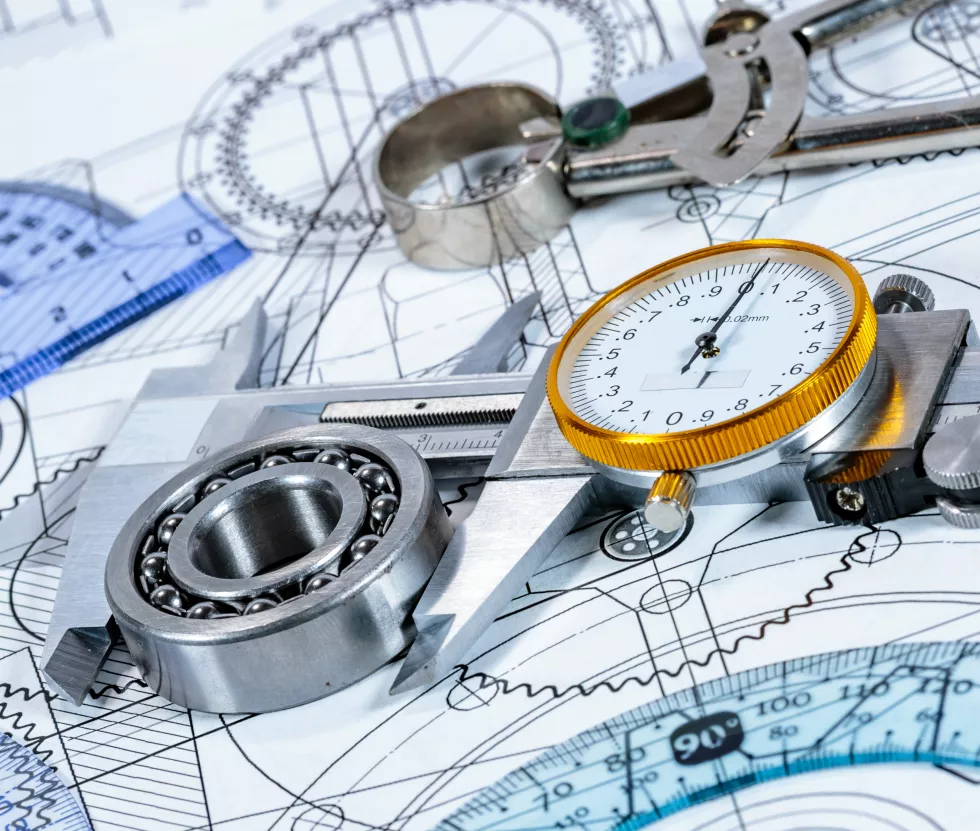
technical-drawing-tools

1. Do you enjoy understanding how machines and physical systems function and interact?

2. Are you interested in applying principles of dynamics, mechanics, and thermodynamics to solve engineering problems?

3. Do you enjoy designing parts or systems, including using CAD tools and iterating prototypes?

4. Are you drawn to manufacturing, material selection, and understanding how products are made?

5. Do you like solving multi-step problems that combine analysis, modeling, and practical constraints?

6. Are you interested in energy systems, heat transfer, or fluid mechanics?

7. Do you value precision, testing, and verifying that designs perform as expected?

8. Are you comfortable working in teams to bring a mechanical product from concept to reality?

9. Are you interested in incorporating automation, control, or smart systems into mechanical designs?

10. Do you care about sustainable design, efficiency, and reducing environmental impact in engineering?

⇑Definitions and quotes

Engineering
Engineering is the creative application of science, mathematical methods, and empirical evidence to the innovation, design, construction, operation and maintenance of structures, machines, materials, devices, systems, processes, and organizations. The discipline of engineering encompasses a broad range of more specialized fields of engineering, each with a more specific emphasis on particular areas of applied mathematics, applied science, and types of application. See glossary of engineering.
Mechanical Engineering
Mechanical engineering is the discipline that applies engineering, physics, engineering mathematics, and materials science principles to design, analyze, manufacture, and maintain mechanical systems. It is one of the oldest and broadest of the engineering disciplines.
Mechanical Engineering
Engineering is no longer just an industrial discipline or technology — it is also a concept of statesmanship and of humanitarianism and a challenge worthy of our best. Mechanical Engineering is a career which follows a never-setting sun.
: The Journal of the American Society of Mechanical Engineers (1963) Vol 85. p. 93
Mechanical Engineering
The field of mechanical engineering is frankly as old as human life itself. Fire, the wheel, the printing press, and many of the life- changing discoveries and inventions of the past few centuries are simply applications of mechanical engineering in order to solve everyday problems.
‎Dr. Vook Ph.D and Charles River Editors (2011) Mechanical Engineering 101: The TextVook
Mechanical Engineering
The work before us is a proof that the doctrine of mechanics is of the utmost importance to mankind in general, and to civil society in particular, which could hardly subsist without it.
The author of this work is Mr. W. Emerson who is well known in the literary world, from several ingenious writings with which he has obliged the public; some of which have passed under our consideration since the commencement of the Review. In this treatise Mr. Emerson has laid down the fundamental principles both of theory and practice, and demonstrated most of them from the common elementary geometry, and the rest from the common rules of algebra; which is certainly the best method of rendering a treatise of this kind useful to the generality of readers, the fluxionary calculus being too difficult for them to understand.
The work is divided into thirteen sections: the 1st. contains the general laws of motion. 2. The laws of gravity, the descent of heavy bodies, and the motion of projectiles. 3. The properties of the mechanical powers; the balance, the leaver, the wheel, the pulley, the screw, and the wedge. 4. The descent of bodies upon inclined planes, and in curve surfaces; and the motion of pendulums. 5. The center of gravity, and its properties. 6. The centers of percussion, oscillation, and gyration. 7. The quantity and direction of the pressure of beams of timber, by their weight; and the forces necessary to sustain them. 8. The strength of beams of timber in all positions; and their stress by any weight acting upon them, or by any forces applied to them. 9. The properties of fluids, the principles of hydrostatics, hydraulics, and pneumatics, 10. The resistance of fluids, their forces and actions upon bodies; the motions of ships, and the positions of their fails. 11. Methods of communicating, directing, and regulating any motion in the practice of mechanics. 12. The powers and properties of compound engines; of forces acting within the machines; and concerning friction. 13. The description of compound machines or engines, and the methods of computing their powers or forces; with some account as the advantages or disadvantages of their construction.
Ralph Griffiths, ‎George Edward Griffiths (1754) The Monthly Review. Vol 11. p. 490-491

Contact:

30 Mickiewicza Av.
30-059 Krakow
Centre for International Students

Regular studies
P: +48 12 617 50 92
P: +48 12 617 46 15
F: +48 12 617 52 39
E: international.students@agh.edu.pl

Exchange programmes
P: +48 12 617 52 37
P: +48 12 617 52 38
F: +48 12 617 52 39
E: exchange@agh.edu.pl
Privacy Policy