Gliwice, Poland

Industrial and Engineering Chemistry

Master's
Table of contents
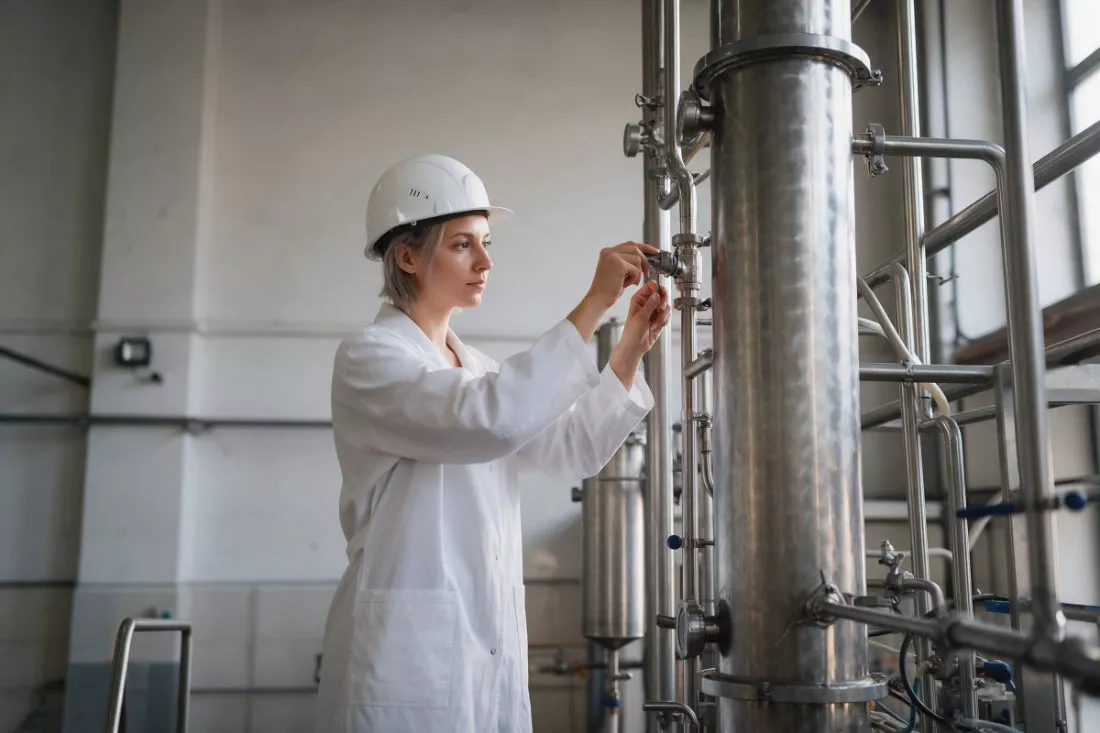
studentka-chemii-przy-kolumnie-destylacyjnej

⇑Industrial and Engineering Chemistry at PŚ

Language: EnglishStudies in English
Subject area: engineering and engineering trades
Kind of studies: full-time studies
University website: www.polsl.pl/en

⇑Test: Is Industrial and Engineering Chemistry the right fit for you?

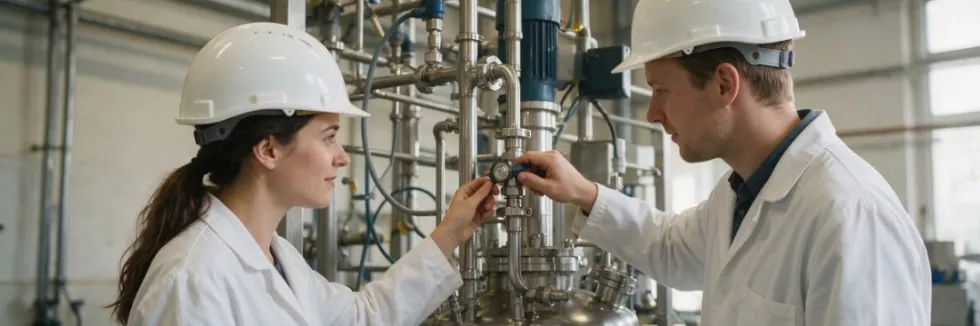
chemical-engineering-students-checking-a-pilot-scale-reactor

10 questions · two minutes

1. During an internship at a chemical plant, you notice that a reaction which ran perfectly in the lab gives a noticeably lower yield in a full-scale reactor. What do you do?

2. How do you feel about engineering calculations – mass and energy balances, thermodynamics, reaction kinetics?

3. Your team is designing a new process step that uses a flammable solvent. Where do you start?

4. You’ll read research papers and technical standards, write reports and defend projects in English, working in teams with people from many countries. How does that sound?

5. A company wants to cut waste and energy use at one of its plants. What’s your idea?

6. How do you feel about simulating chemical processes on a computer?

7. A batch of product fails its quality specifications. What do you do?

8. You’re choosing a topic for your Master’s thesis. What appeals to you most?

9. On a project, you’re working with mechanical engineers, automation specialists and economists. How do you find it?

10. What motivates you most to pursue a Master’s degree in Industrial and Engineering Chemistry?

⇑Definitions and quotes

Chemistry
Chemistry is the scientific discipline involved with compounds composed of atoms, i.e. elements, and molecules, i.e. combinations of atoms: their composition, structure, properties, behavior and the changes they undergo during a reaction with other compounds. Chemistry addresses topics such as how atoms and molecules interact via chemical bonds to form new chemical compounds. There are four types of chemical bonds: covalent bonds, in which compounds share one or more electron(s); ionic bonds, in which a compound donates one or more electrons to another compound to produce ions (cations and anions); hydrogen bonds; and Van der Waals force bonds.
Engineering
Engineering is the creative application of science, mathematical methods, and empirical evidence to the innovation, design, construction, operation and maintenance of structures, machines, materials, devices, systems, processes, and organizations. The discipline of engineering encompasses a broad range of more specialized fields of engineering, each with a more specific emphasis on particular areas of applied mathematics, applied science, and types of application. See glossary of engineering.
Chemistry
Once you are there you'll be like a drop of water in a piece of rock crystal- your medium will dignify your commonness.
Thomas Hardy, A Pair of Blue Eyes, 1873
Chemistry
I was an atheist, finding no reason to postulate the existence of any truths outside of mathematics, physics and chemistry. But then I went to medical school, and encountered life and death issues at the bedsides of my patients. Challenged by one of those patients, who asked "What do you believe, doctor?", I began searching for answers.
Francis Collins, a geneticist who led the U.S. government’s effort to decipher the human genome (DNA). cnn.com
Engineering
Architects and engineers are among the most fortunate of men since they build their own monuments with public consent, public approval and often public money.
John Prebble, in Disaster at Dundee, 1956. p. 16
Privacy Policy