Aeronautics
Aeronautics (from the ancient Greek words ὰήρ āēr, which means "air", and ναυτική nautikē which means "navigation", i.e. "navigation into the air") is the science or art involved with the study, design, and manufacturing of air flight capable machines, and the techniques of operating aircraft and rockets within the atmosphere. The British Royal Aeronautical Society identifies the aspects of "aeronautical Art, Science and Engineering" and "the profession of Aeronautics (which expression includes Astronautics)."
Aerospace
Aerospace is the human effort in science, engineering and business to fly in the atmosphere of Earth (aeronautics) and surrounding space (astronautics). Aerospace organizations research, design, manufacture, operate, or maintain aircraft or spacecraft. Aerospace activity is very diverse, with a multitude of commercial, industrial and military applications.
Aerospace Engineering
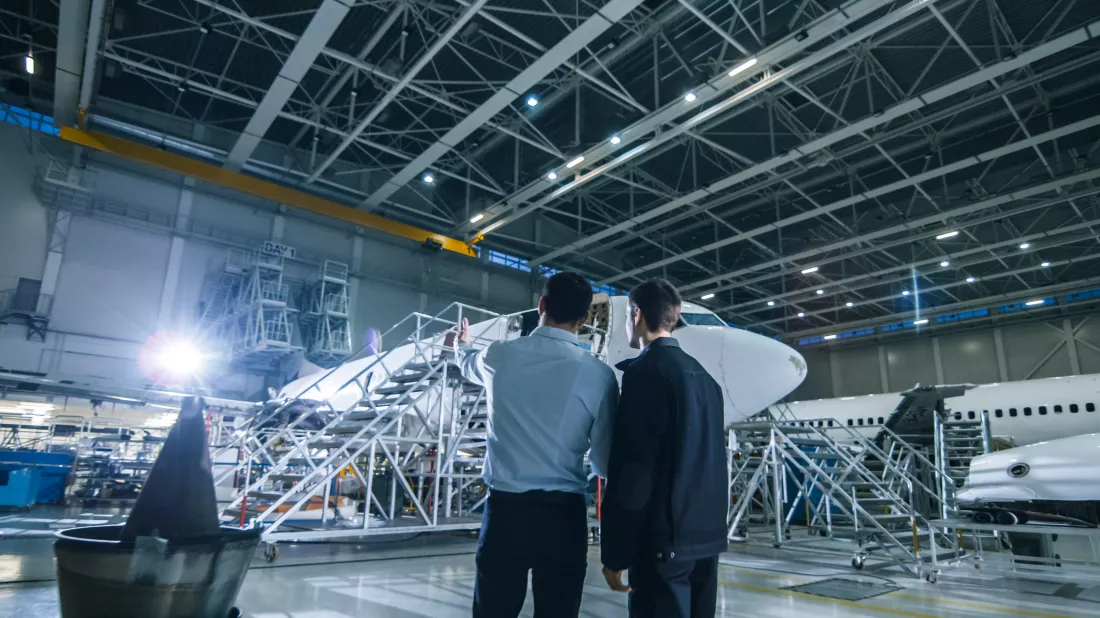
Aerospace engineering is the primary field of engineering concerned with the development of aircraft and spacecraft. It has two major and overlapping branches: Aeronautical engineering and Astronautical Engineering. Avionics engineering is similar, but deals with the electronics side of aerospace engineering.
Engineering
Engineering is the creative application of science, mathematical methods, and empirical evidence to the innovation, design, construction, operation and maintenance of structures, machines, materials, devices, systems, processes, and organizations. The discipline of engineering encompasses a broad range of more specialized fields of engineering, each with a more specific emphasis on particular areas of applied mathematics, applied science, and types of application. See glossary of engineering.
Engineering
A key characteristic of the engineering culture is that the individual engineer’s commitment is to technical challenge rather than to a given company. There is no intrinsic loyalty to an employer as such. An employer is good only for providing the sandbox in which to play. If there is no challenge or if resources fail to be provided, the engineer will seek employment elsewhere. In the engineering culture, people, organization, and bureaucracy are constraints to be overcome. In the ideal organization everything is automated so that people cannot screw it up. There is a joke that says it all. A plant is being managed by one man and one dog. It is the job of the man to feed the dog, and it is the job of the dog to keep the man from touching the equipment. Or, as two Boeing engineers were overheard to say during a landing at Seattle, “What a waste it is to have those people in the cockpit when the plane could land itself perfectly well.” Just as there is no loyalty to an employer, there is no loyalty to the customer. As we will see later, if trade-offs had to be made between building the next generation of “fun” computers and meeting the needs of “dumb” customers who wanted turnkey products, the engineers at DEC always opted for technological advancement and paid attention only to those customers who provided a technical challenge.
Edgar H. Schein (2010). Dec Is Dead, Long Live Dec: The Lasting Legacy of Digital Equiment Corporation. p. 60
Aeronautics
For I dipt into the future far as human eye could see,
Saw the Vision of the world, and all the wonder that would be;
Saw the heavens fill with commerce, argosies of magic sails,
Pilots of the purple twilight, dropping down with costly bales;
Heard the heavens fill with shouting, and there rain'd a ghastly dew
From the nations' airy navies grappling in the central blue.
Alfred Tennyson, Locksley Hall (1835, published 1842), 117.
Aeronautics
Let brisker youths their active nerves prepare
Fit their light silken wings and skim the buxom air.
Richard Owen Cambridge, in the Scriblerad (1751).



 EN
EN 
 CS
CS DE
DE ES
ES FR
FR HU
HU IT
IT PL
PL PT
PT РУ
РУ SK
SK TR
TR УК
УК AR
AR 中文
中文