Siedlce, Poland

State Security
(field of studies: National Security)

Master's
Table of contents
male-security-guard-outdoors

⇑State Security at UwS

Field of studies: National Security
Language: EnglishStudies in English
Subject area: security services
Kind of studies: full-time studies
  • Description:

  • pl
University website: www.uws.edu.pl/en/

⇑Test: Is State Security the right fit for you?

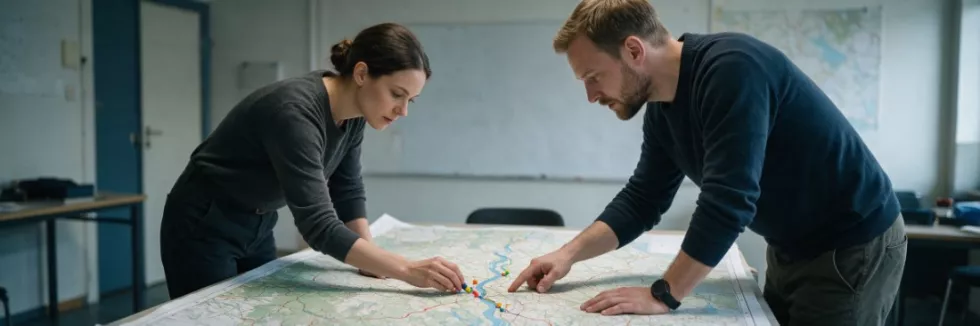
security-analysts-planning-a-crisis-response-over-a-map

10 questions · two minutes

1. You receive scattered reports about unusual activity near a power plant. How do you approach them?

2. How do you feel about studying the legal framework of security – constitutional law, emergency powers, oversight of security services?

3. In a crisis simulation, a flood cuts off a region while disinformation spreads online. Which role would you take?

4. How do you feel about analysing hybrid threats – cyber attacks, disinformation campaigns, economic pressure?

5. You’re asked to write a policy brief on improving the protection of energy supplies. How do you react?

6. Which statement best describes your attitude to confidential information?

7. How do you feel about balancing civil liberties against security needs, for example in surveillance?

8. The programme is taught in English, and you’ll work on case studies with students from many countries. How do you see that?

9. Which future role appeals to you most?

10. What motivates you most to pursue a Master’s degree in State Security?

⇑Definitions and quotes

Security
Security is freedom from, or resilience against, potential harm (or other unwanted coercive change) from external forces. Beneficiaries (technically referents) of security may be persons and social groups, objects and institutions, ecosystems, and any other entity or phenomenon vulnerable to unwanted change by its environment.
Security
To bargain freedom for security is the devil's bargain. Having made the bargain, one enjoys neither freedom nor security.
Gerry Spence, Give Me Liberty! Freeing Ourselves in the Twenty-First Century, Ch. 16 : Security, the One-Way Ticket to Slavery, p. 174 (1998)
State
We have entered a time of global transition marked by uniquely contradictory trends. Regional and continental associations of States are evolving ways to deepen cooperation and ease some of the contentious characteristics of sovereign and nationalistic rivalries. National boundaries are blurred by advanced communications and global commerce, and by the decisions of States to yield some sovereign prerogatives to larger, common political associations. At the same time, however, fierce new assertions of nationalism and sovereignty spring up, and the cohesion of States is threatened by brutal ethnic, religious, social, cultural or linguistic strife. Social peace is challenged on the one hand by new assertions of discrimination and exclusion and, on the other, by acts of terrorism seeking to undermine evolution and change through democratic means.
Boutros Boutros-Ghali, An Agenda for Peace: Preventive diplomacy, peacemaking and peace-keeping (1992)
State
The complex notion of the ‘provisional’ character of the State is the reason why the attitude of the first Christians toward the State is not unitary, but rather appears to be contradictory. I emphasize, that it appears to be so. We need only mention Romans 13:1, ‘Let every man be subject to the powers that be ... ,’ alongside Revelation 13: the State as the beast from the abyss.
Oscar Cullmann, The State in the New Testament.
Privacy Policy