Katowice, Poland

Industrial Design

Master's
Table of contents
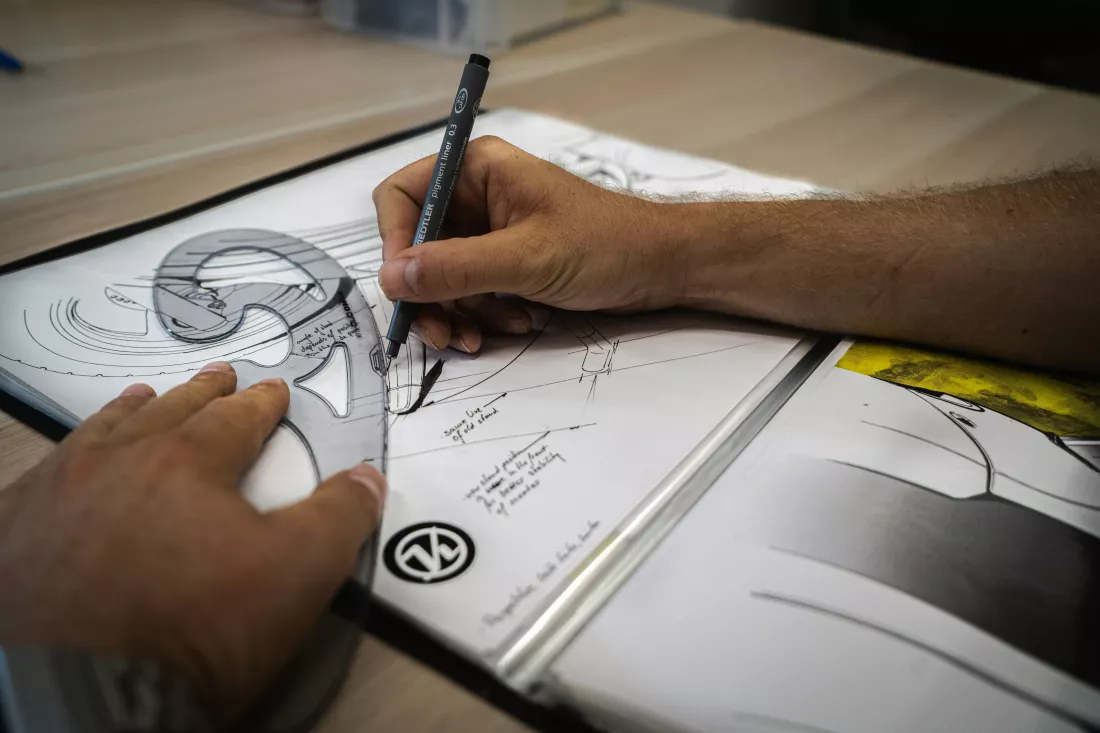
kumpan-electric-MeTEZ0Uk99c-unsplash

Industrial Design at ASP Katowice

Language: EnglishStudies in English
Subject area: engineering and engineering trades
Kind of studies: full-time studies
University website: asp.katowice.pl/en

Definitions and quotes

Design
Design is the creation of a plan or convention for the construction of an object, system or measurable human interaction (as in architectural blueprints, engineering drawings, business processes, circuit diagrams, and sewing patterns). Design has different connotations in different fields (see design disciplines below). In some cases, the direct construction of an object (as in pottery, engineering, management, coding, and graphic design) is also considered to use design thinking.
Industrial Design
Industrial design is a process of design applied to products that are to be manufactured through techniques of mass production. Its key characteristic is that design is separated from manufacture: the creative act of determining and defining a product's form and features takes place in advance of the physical act of making a product, which consists purely of repeated, often automated, replication. This distinguishes industrial design from craft-based design, where the form of the product is determined by the product's creator at the time of its creation.
Design
The urge for good design is the same as the urge to go on living. The assumption is that somewhere, hidden, is a better way of doing things.
Attributed to Harry Bertoia, Knoll Design, p. 66 in: Carlotte & Peter Fiell (2005) 1000 Chairs. Introduction
Design
Good design is also an act of communication between the designer and the user, except that all the communication has to come about by the appearance of the device itself. The device must explain itself.
Donald Norman (2002), The Design of Everyday Things, Introduction to the 2002 Edition
Design
The design process involves a series of operations. In map design, it is convenient to break this sequence into three stages. In the first stage, you draw heavily on imagination and creativity. You think of various graphic possibilities, consider alternative ways...
Arthur H. Robinson (1953) Elements of Cartography p. 318
Privacy Policy