
Warsaw, Poland

Space (Spatial Design)
(field of studies: Design)

Bachelor's
Table of contents
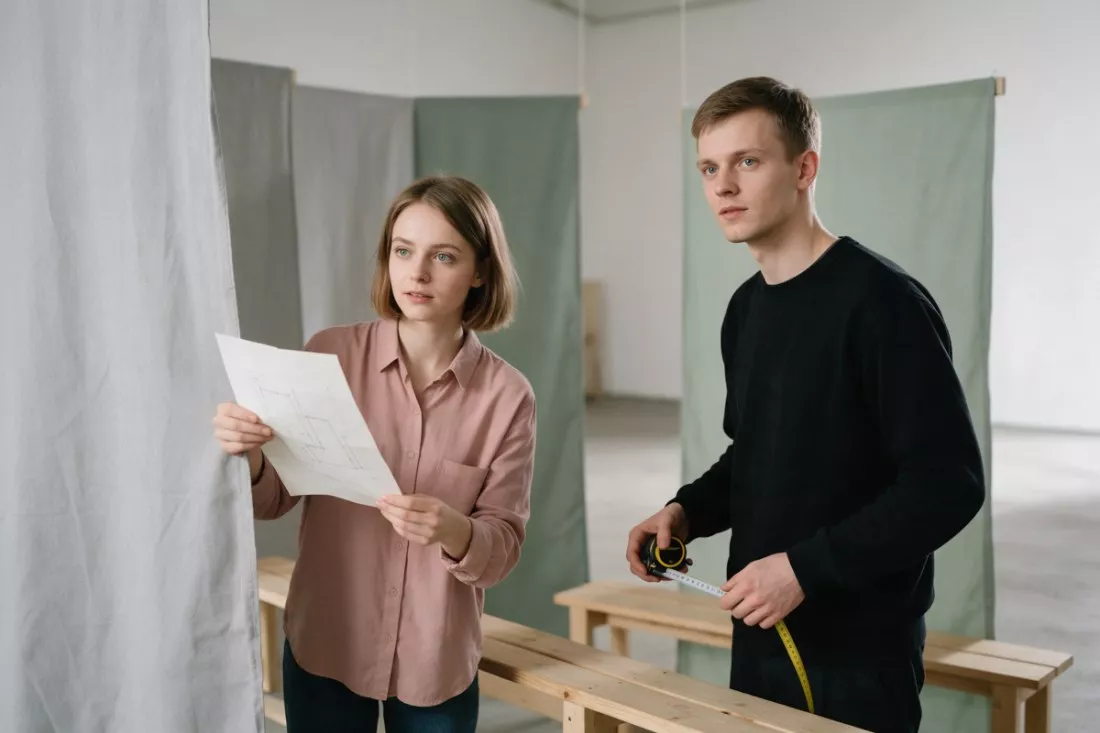
studenci-aranzuja-przestrzen-wystawowa

⇑Space (Spatial Design) at SWPS

Field of studies: Design
Language: EnglishStudies in English
Subject area: arts
Kind of studies: full-time studies
  • Description:

  • pl
University website: english.swps.pl

⇑Why choose the Space (Spatial Design) specialisation at SWPS University?

Dlaczego warto studiować na Uniwersytecie SWPS
Why study it:

Space (Spatial Design) turns design towards places rather than single objects. It is one of three paths you can follow on the Design degree at SWPS University after your first year.

Programme: teachers who know buildings and exhibitions

Your lecturers bring knowledge that suits spatial work: the history of interior design and its trends, mechanics and construction fundamentals, and the design and production of exhibitions. Others teach philosophy, psychology and parametric design, so you look at a place from the side of both structure and people.

Specialisation: places for people

Space focuses on designing:

  • short-lived architecture, such as pavilions
  • interiors
  • public spaces
  • venues where people work, enjoy culture or relax

Labs: building and digital workshops

The woodworking and metal workshops let you work with real materials, and each is led by a dedicated head.

On the digital side you have the digital workshop, the KUKA robotics workshop, the computer lab and the AI Open Lab.

Did you know? One of the assistants in the digital workshop studied architecture and urban planning and describes himself as a huge fan of Lego.

Based on the programme pages at swps.pl.
⇑Test: Is Space (Spatial Design) the right fit for you?

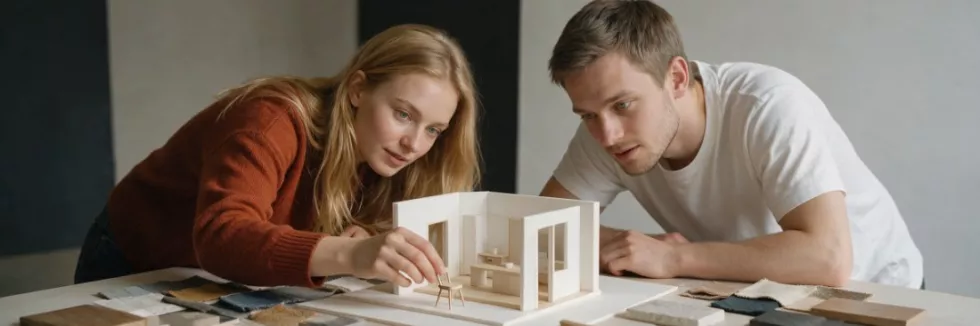
students-building-an-interior-model-in-a-design-studio

10 questions · two minutes

1. You walk into a new café. What do you notice?

2. You’re rearranging your bedroom. How do you go about it?

3. Your school is putting on an exhibition of students’ work. What do you want to do?

4. Studio projects, critiques and presentations will all be in English, and you’ll be working alongside students from different countries. How does that sound?

5. Drawing, model-making, working with materials – how much do you do?

6. What do you think of 3D modelling software?

7. The bus shelter near your home is so uncomfortable that people wait next to it instead. What goes through your mind?

8. Your art teacher criticises your project. How do you react?

9. What kind of project would you love to create one day?

10. What motivates you most to study Space (Spatial Design)?

⇑Definitions and quotes

Design
Design is the creation of a plan or convention for the construction of an object, system or measurable human interaction (as in architectural blueprints, engineering drawings, business processes, circuit diagrams, and sewing patterns). Design has different connotations in different fields (see design disciplines below). In some cases, the direct construction of an object (as in pottery, engineering, management, coding, and graphic design) is also considered to use design thinking.
Space
Space is the boundless three-dimensional extent in which objects and events have relative position and direction. Physical space is often conceived in three linear dimensions, although modern physicists usually consider it, with time, to be part of a boundless four-dimensional continuum known as spacetime. The concept of space is considered to be of fundamental importance to an understanding of the physical universe. However, disagreement continues between philosophers over whether it is itself an entity, a relationship between entities, or part of a conceptual framework.
Design
Good design looks right. It is simple (clear and uncomplicated). Good design is also elegant, and does not look contrived. A map should be aesthetically pleasing, thought provoking, and communicative
Arthur H. Robinson (1953) Elements of Cartography p. 318
Design
From a structural point of view, design is totally useless... I tried to give my products a little sense and energy. But even when I gave the best of myself, it was absurd.
Philippe Starck (2008) in: "Les doutes existentiels de Philippe Starck", Marie-Douce Albert, Le Figaro, March 28, 2008, p. 32
Design
This is exactly the meaning of design: the conflict between form and content, form being the problem. [...] It is the coming together of form and content that is the realization of design.
Paul Rand (2008), Conversations with Students p. 32

Contact:

Chodakowska 19/31 str.
03-815 Warszawa
tel. + 48 22 103 26 30
StudentNews Group Websites for students and future students — in Poland since 2007, across Europe since 2014. Over 50 websites and millions of users a year (Google Analytics). Studies in Europe Universities in Europe Bachelor’s Master’s Doctorate MBA Study guide Work abroad Travel For partners Advertising and cooperation Reach (online report) Contact advertising@studentnews.eu © 2003–2026 Grupa StudentNews.pl sp. z o.o., Modlnica, Poland
Privacy Policy