
Warsaw, Poland

Object (Product Design)
(field of studies: Design)

Bachelor's
Table of contents
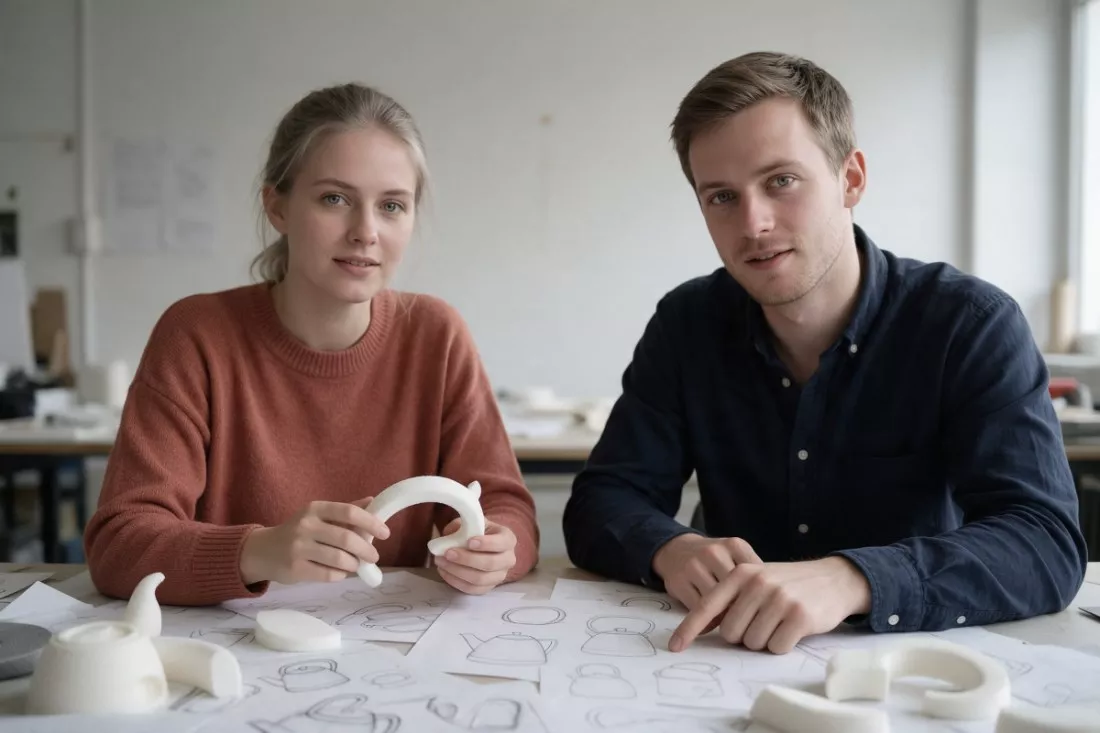
studenci-wzornictwa-porownuja-szkice-i-modele-czajnika

⇑Object (Product Design) at SWPS

Field of studies: Design
Language: EnglishStudies in English
Subject area: arts
Kind of studies: full-time studies
  • Description:

  • pl
University website: english.swps.pl

⇑Why choose the Object (Product Design) specialisation at SWPS University?

Dlaczego warto studiować na Uniwersytecie SWPS
Why study it:

Object (Product Design) is one of three paths you can take on the Design degree at SWPS University, and you enter it after your first year. It is aimed at people who are drawn to tangible things, from furniture to utensils.

Programme: teachers from engineering and the humanities

Teaching reaches well beyond making. Lecturers cover parametric design, mechanics and construction fundamentals, philosophy, psychology and art anthropology, and the staff also includes a sociologist who researches design. A designer of objects therefore draws on engineering and the humanities alike, and you hear both perspectives in class.

Specialisation: furniture, utensils, materials

Object concentrates on shaping the three-dimensional world around us.

Its subject matter is furniture, utensils and everyday objects, together with the materials and processes they are made from.

Labs: wood, metal, clay, textile and robotics

Materials are not only discussed but handled, because the programme has:

  • a woodworking workshop and a metal workshop, each with its own head
  • a ceramics studio, where a graduate of the school works as assistant
  • a sewing workshop run by a master tailor
  • a robotics workshop built around KUKA machines

Based on the programme pages at swps.pl.
⇑Test: Is Object (Product Design) the right fit for you?

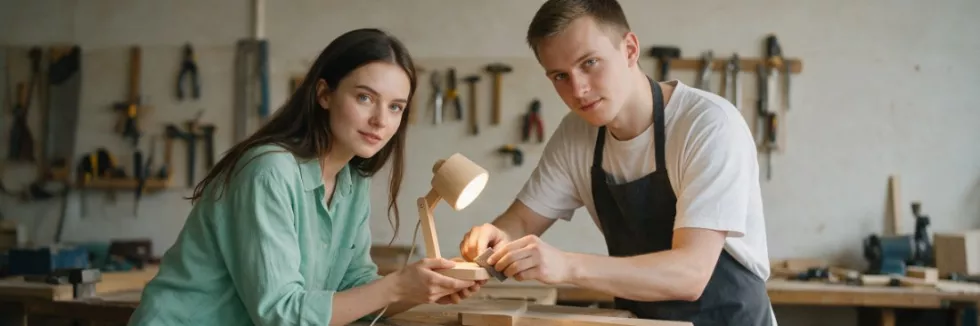
students-sanding-a-wooden-lamp-prototype-in-a-workshop

10 questions · two minutes

1. You use an everyday object that’s just awkward – say, a kettle that drips when you pour. What do you do?

2. How often do you draw or sketch objects?

3. Do you like making things with your hands?

4. You’re asked to design a TV remote for an older person. Where do you start?

5. You’ll study in an international environment, in English: classes, project presentations and critiques, sharing studios with students from many countries. How does that sound?

6. You’re choosing a material for a lamp design. What do you take into account?

7. Your first prototype doesn’t work the way you intended. What do you do?

8. You end up at a design exhibition. How do you go round it?

9. What kind of work can you see yourself doing in future?

10. What motivates you most to study Object (Product Design)?

⇑Definitions and quotes

Design
Design is the creation of a plan or convention for the construction of an object, system or measurable human interaction (as in architectural blueprints, engineering drawings, business processes, circuit diagrams, and sewing patterns). Design has different connotations in different fields (see design disciplines below). In some cases, the direct construction of an object (as in pottery, engineering, management, coding, and graphic design) is also considered to use design thinking.
Product Design
Product design as a verb is to create a new product to be sold by a business to its customers. A very broad concept, it is essentially the efficient and effective generation and development of ideas through a process that leads to new products. Thus, it is a major aspect of new product development.
Design
Good design is also an act of communication between the designer and the user, except that all the communication has to come about by the appearance of the device itself. The device must explain itself.
Donald Norman (2002), The Design of Everyday Things, Introduction to the 2002 Edition
Design
The urge for good design is the same as the urge to go on living. The assumption is that somewhere, hidden, is a better way of doing things.
Attributed to Harry Bertoia, Knoll Design, p. 66 in: Carlotte & Peter Fiell (2005) 1000 Chairs. Introduction
Design
If the chief rules of good design were understood by the masses as they might be, nothing would do more to promote beauty, improve workmanship, add to the value of manufactures, and in many other ways further the general welfare and prosperity of the country. They are simple, easy to acquire, and should be taught with the alphabet.
Ernest Flagg, Small Houses: Their Economic Design and Construction (1922)

Contact:

Chodakowska 19/31 str.
03-815 Warszawa
tel. + 48 22 103 26 30
StudentNews Group Websites for students and future students — in Poland since 2007, across Europe since 2014. Over 50 websites and millions of users a year (Google Analytics). Studies in Europe Universities in Europe Bachelor’s Master’s Doctorate MBA Study guide Work abroad Travel For partners Advertising and cooperation Reach (online report) Contact advertising@studentnews.eu © 2003–2026 Grupa StudentNews.pl sp. z o.o., Modlnica, Poland
Privacy Policy